Sunday, 25 November 2012

Richard III and me

An article has appeared in The Washington Post about the debate surrounding the reburial of Richard III's alleged remains. In the very short time since it has gone up online, I have received several e-mails and comments asking me to clarify my views on Richard III, because in the article I am very briefly quoted as calling him out-and-out "a child-killer." I have also received several less-than-pleasant e-mails from die-hard Ricardians, because the article referred to me as "no friend to Richard III." To which I can only say: grow up.

To be quite clear, I bear no animus towards Richard III personally. When set in context, I actually pointed out that he has never been satisfactorily cleared of the charge of participating in his nephews' disappearance. That reburying him with a state funeral, when he could be guilty of such a crime would surely be a risk to the credibility of both the crown and the nation. There is, and there must be, a strong presumption of guilt when it comes to Richard III - as there would be on any responsible adult who was entrusted with the well-being to two teenagers who disappeared while in his care. The garish and often silly romanticisation of Richard III is something I find personally bizarre, but while it is my own opinion that he was complicit in Edward V's murder, I accept that there is room for debate. That room, however, cuts both ways and it should preclude us from either lionising or demonising the last Yorkist king.

In any case, if I could make a point to my unsought-for correspondents: simply because I do not agree with you does not mean that I was planted here by Satan or Margaret Beaufort to spin lies about Richard of Gloucester. I am not a friend of Richard III, no; my friends tend to have been born in the twentieth century, not the fifteenth. I did not, however, approach the question of his remains because I am in the pay of Henry VII; I answered it honestly. From my own studies - and I could be wrong! - I think Richard III did know about, and quite probably ordered, the murder of King Edward V and Richard, Duke of York, in 1483.

However, my point about all this is not to focus on whether or not Richard III actually did it, but to look at what it tells us about our own attempts to subvert and ignore the complexities of history in order to suit our own need for fairy tales, what ifs and conspiracy theories.

My articles on Richard III and the debate surrounding him are here: -


Saturday, 24 November 2012

24th November, 1326: The Execution of Hugh Despenser


On the twenty-fourth day of November, 1326, a sharp, glistening, silver knife sliced into the flesh of an emaciated man called Hugh Despenser, who had spent the last two weeks on hunger strike in a dingy county jail in Oxford. This man had once been one of the mightiest lords of his generation, enjoying the special favor of England’s king, Edward II. No-one looking at that poor, starving, screaming wreck of a human being could possibly have doubted the old Biblical saying, ‘O, how the mighty are fallen.’

Hugh Despenser was stripped naked by the time the assault on his body began. He had to be. The law had sentenced him to be castrated before being hanged and cut into quarters. Like most executions in the Middle Ages, Despenser's death happened in public. Executions were like a kind of theatre for the local population. Like bullfighting or dog-fights, a living creature was trapped in the centre of the ring and the spectacle would only be over once that creature had died in the most hideous and traumatic way imaginable. Medieval parents would often bring their children along to watch these executions. It set a good example for the little ones, because it showed them what could happen to anyone who broke the law, disobeyed the King or angered the Church.

A terrible scream tore from Hugh Despenser’s ravaged throat, in the same moment as an almighty cheer erupted from the crowd. The dying man had not been a popular figure with the general population. There were rumors that his relationship with King Edward had been much closer than it seemed; too close, some said. Even if it hadn’t been, Lord Despenser had been too rich, too powerful and too arrogant. It was fun for the good people of Hereford town to see someone so pompous being brought back down to earth. As the awful, terrible ritual of the castration continued, the crowd kept chanting and jeering and singing.

One woman, however, did not cheer or clap or cry as Hugh Despenser’s life was ripped from him. She sat on a specially-constructed viewing gallery and watched the death of her enemy with hardly any sign of outward emotion. She was strikingly lovely to look at; even if her sumptuous gown and jewels hadn’t made her stand out from the crowd, her beauty would have. Her skin was as white and smooth as ivory, her hair was sun-kissed blonde and her body was tight, trim and slender, even after four pregnancies. Her name was Isabella of France, Queen of England and Lady of Ireland. They called her ‘the beauty of beauties.’ She was thirty-one years old and it was she who had orchestrated Hugh Despenser’s execution.

Royal wives in the Middle Ages were expected to be gracious, loving, well-bred, obedient, merciful and charitable. No woman had ever ruled England in her own right; the only queens in English history so far were those who held their titles because they had married a king. It was men who were supposed to lead the government, not women. It was the queen’s job to obey him and to have babies who could carry on the family’s rule into the next generation. Some queens obeyed the rules; some did not. Isabella was the twelfth queen of England since the Norman armies had conquered the country in 1066 and in that time, there had been some remarkable women who wore the crown. There had been queens who were so intelligent that their husbands could not make any major political decisions without them. There had been queens who had been able to beg or bully favours from popes and warriors. There had been queens whose ambition for their children knew no limits. One queen of England was so intensely religious that she drank the dirty bath water used by lepers, hoping to imitate the loving humility of Jesus Christ. There had been queens who had married for love, some for money and many for politics. There had been beautiful queens, ugly queens, happy queens and miserable queens. Despite the constraints placed upon them by their title and by royal protocol, each had managed to carve out a life and an identity for herself. None, however, had done it quite like Isabella. She had schemed, she had lied, she had raised an army and driven her husband off the throne, and now she was watching the public torturing to death of the man who many, including Isabella herself, believed had been her husband’s lover. Even if Hugh hadn’t been Isabella’s competition for Edward’s love, he had still been competition for his money, land and power. And in Isabella’s books that was just as upsetting. Maybe even more so.

Far from being the crying effeminate weakling imagined by movies like Braveheart, Edward II had been tall, muscular and physically vital. Whatever his sexual preferences had been, he had done his duty by fathering four children with his beautiful French queen. Earlier on in his reign, Edward's lover, Piers Gaveston, was horribly murdered by rebels and Edward had nurtured a cancerous hatred of his nobles since that day. Increasingly tyrannical, he had alienated many of the upper classes and played into Isabella's hands. By the time he replaced Gaveston with the equally greedy and unpopular Despenser, Isabella was ready to liaise with her brother, the King of France, and her own lover, Roger Mortimer, to create a rebellion that would finally topple Edward from his throne and hand de facto power to Isabella and Roger. With Edward falling, Hugh Despenser soon found himself robbed of royal protection and defenceless in the face of widespread hatred. Few tried to save him when Isabella's army caught up with him and hurled him into jail. Knowing Isabella as he did, it says a lot that Hugh Despenser tried to starve himself to death rather than submit to her and her executioners. 

Hugh Despenser did not die an easy death. As he was hacked to pieces, Isabella hosted a small picnic in the viewing gallery for her friends and ladies-in-waiting. When, at long last, Hugh’s mutilated body lay dead, silently spewing blood into the cobblestones of Hereford marketplace, Isabella stood-up and left. At her command, the dead man’s head was taken back to London and displayed on a pike on top of Tower Bridge, as a symbol of the Queen’s power over her enemies. After two hundred and fifty years, an English queen had dared to seize power for herself. Her son, Edward, was only a boy and Isabella could hope to hold power until he reached adulthood. Slipping out of the gown she had watched Despenser’s execution in, Isabella changed into her dress for the evening, as the executioners cleared up the mess outside, made by the grizzly death of a man who had defied her.

Wednesday, 21 November 2012

21st November, 1920: Ireland's Bloody Sunday


Today is the anniversary of the so-called "Bloody Sunday" of 1920. It was a gruesome day in the middle of the Irish War of Independence, or the Anglo-Irish War, depending on one's terminology, in which thirty-one people lost their lives in a cycle of increasingly-unhinged violence. It was neither the first time, nor the last time, that such a thing would occur.

Since the end of the First World War, just over two years earlier, Ireland had slid inexorably into violence. Like most of Ireland's historical violence, it was presented as a conflict between two rival nations - Ireland and Britain - when, in fact, it bore all the hallmarks of a civil war. The failure of the republican Easter Rising of 1916 and the British administration's lethally incompetent, and cruel, repression of it had radicalised Irish nationalism and pushed many into the arms of the republican paramilitary movements. In the northern province of Ulster, Protestant hysteria at the proposed implementation of Home Rule for Ireland had led to widespread sectarian violence, particularly in rural areas, and there was little doubt in the British government's mind that any attempt to force the northern-most six counties to participate in any form of all-island independence would result in unparalleled civil unrest - if not a bloodbath. 

In the south, the who's who and the what's left of the Irish aristocracy, known as the Ascendancy, were quietly preparing themselves for the liquidation of their way of life and the whole island suffered through attacks and counter-attacks. In Dublin, the British-born and Ascendancy-related Lord Lieutenant of Ireland, Lord French, was struggling to hold on to power through increasingly desperate measures, all the while being undermined by the hunger strike-suicides of republican prisoners, republican-led spy-rings inside Dublin Castle, various attempts on his life and assassinations of numerous politicians, military service personnel and policemen. The main party of Irish republicanism, Sinn Féin, had been outlawed; many of its leaders were in jail. In retaliation, republicanism's military wings, like the IRA and the Volunteers, had carried out numerous night-time attacks. In Sligo, Mayo and Clare, the homes of the local aristocracy were torched to the ground, leading some of the Ascendancy to characterise the republican movement as the second coming of the French Revolution. The Volunteers' newspaper, An t Óglach, had declared that its supporters should used "all legitimate methods of warfare against the soldiers and policemen of the English usurper" and "slay them if necessary". The behaviour of a supplementary force of British ex-soliders, known as the Auxiliaries or "the Black and Tans," because of the colour of their uniforms, was borderline psychotic and capriciously cruel. Earlier in the year, they had burned the entire southern city of Cork to the ground, reminding many Irish nationalists of the dark legends of Oliver Cromwell and the inherent cruelty of the British.

It was in this environment of death, civil war, repression and reprisal, that Bloody Sunday took place.

Sunday, 18 November 2012

17th November, 1558: The accession of Elizabeth I


Mary Tudor's five-year reign came to an end at about seven o'clock in the morning of 17th November, 1558. The Queen was forty-two years-old and she had just finished hearing morning Mass. She had been bedridden for some time and, after Mass, the Queen had slipped into what, at first, seemed like a sleep. Her devoted ladies-in-waiting did not initially realise that Queen Mary had died. Twelve hours later, her friend and cousin, Cardinal Reginald Pole, the last Catholic Archbishop of Canterbury, passed away, as well. The queen and the archbishop's deaths removed the two great champions of English Catholicism in the space of a single day and this paved the way for Mary's Protestant sister, Elizabeth (above), to mount the throne and install her mother's former chaplain, Matthew Parker, as Pole's successor. Together, the new queen and Parker would try to find a via media, or compromise, to the thorny question of England's national religion, which Mary had died believing was a non-negotiable.

Elizabeth Tudor heard the news that she was now ruler over England, Wales and Ireland at her countryside palace of Hatfield. It had been hers since childhood and over the last few weeks, courtiers had begun migrating towards it, eager to prove their allegiance to the new queen, even as the old one lay dying at Saint James's. Elizabeth needed their support, but she was privately disgusted by their fecklessness. The Spanish ambassador, Count de Feria, who also visited her, was alarmed at the princess's confidence and her refusal to acknowledge that she owed any of her future success to her brother-in-law, King Philip II. Instead, she rather tartly informed de Feria that she would rule because of God's will and the people's love for her, not because of Spain's support. "She is much attached to the people," de Feria wrote, "and she is very confident that they are all on her side; which is indeed true." The councillors who arrived at Hatfield on the afternoon of the 17th found their new monarch underneath an oak tree; as they pressed Mary's coronation ring into her hands, confirming that Mary was dead and Elizabeth had succeeded, Elizabeth is supposed to have quoted the Bible in Latin, saying "This is the Lord's doing, and it is marvellous in our eyes." Later, as she called her first council meeting, she did manage to find some kind words to say about her late sister, before swiftly moving on to fire most of Mary's advisers. The new dominant power on the council would be Elizabeth's old friend and ally, Sir William Cecil, a convinced Protestant whom Elizabeth nicknamed "My Spirit," because she trusted his advice so implicitly. Meanwhile, back in London, the body of the old queen was prepared for its lying in state.

Elizabeth's ambivalent attitude to her predecessor was hardly surprising. The two sisters were separated by an age gap of seventeen years and Elizabeth's mother and Mary had been enemies back in the 1530s. Although there had been a point when Henry VIII's two daughters were apparently quite affectionate to one another, this sisterly solidarity had evaporated once Mary became queen in 1553. An early rebellion against her rule in 1554 had made Mary suspect that Elizabeth was in league with the rebels and the princess had spent some time in the Tower as a result, vehemently protesting her innocence. Elizabeth had then gone along with a shambolic fake conversion to Catholicism, during which time she often pretended to faint or groan while attending Mass - an attitude not designed to endear her to the deeply devout Mary. For most of Mary's reign, Elizabeth had either been under house arrest or in disgrace. It was an humiliation which Elizabeth felt keenly and she was not alone in assuming that it was only her popularity with the people, and the lack of evidence, which prevented Mary from punishing Elizabeth in the same way she had their cousin, Lady Jane Grey.

Elizabeth's prevarication and dishonesty was matched by Mary's pettiness. The Queen sank to a new low by telling everyone that Elizabeth was not really Henry VIII's daughter, but actually the biological love-child of Mark Smeaton, a young musician who had been executed for allegedly committing adultery with Anne Boleyn back in 1536. Smeaton had been tortured and then executed for the crime and his confession was used to send Elizabeth's mother and four other men to their deaths, as well. It was a ludicrous accusation, but mud, however unjustly flung, usually sticks. As queen, Mary proclaimed that she could actually see a resemblance between Elizabeth and Smeaton. Some historians have taken her claim seriously, but it's worth remembering that Mary Tudor could never actually have met Mark Smeaton. Smeaton only came to court in the late 1520s, by which time Mary was no longer resident there, and he began his service in the household of Cardinal Wolsey - not the king's. By the time Smeaton was in regular attendance on the royal family, Mary had been banished from court and by the time she came back, in late 1536, Smeaton was dead. Even if she had seen him, it can only have been at a distance and as one of the dozens of musicians who lived at Henry VIII's court. The Queen's suggestion that she could see a clear resemblance between her younger sister and Smeaton was therefore nothing more than a vindictive and vicious lie.

Elizabeth I's accession was one of those moments in English history - along with Canute trying to turn back the tide and Charles II hiding in an oak tree from Cromwell's soldiers - that historical illustrators came to love. It was an arresting image of a young and intellectually brilliant princess, freeing her subjects from the religious oppression of her maniac-sister. It was not quite that simple, of course, and although Mary I was not generally popular at the time of her death, there were many who had regarded her burning to death of three hundred Protestants with something akin to indifference, if not downright approval. Elizabeth I thus inherited a country fraught with sectarian tension, a foreign policy that was in a shambles, a less-than-stable economy and a divided nobility. Both she and de Feria were right, though, when they stated that despite the difficulties, the new Queen came to the throne on a wave of popularity. Despite increasing hostility from the palace-bound aristocracy in her later years, Elizabeth, with her flare for drama and public relations, was by and large to keep that love throughout her forty-five year reign.

Monday, 12 November 2012

Director Benoît Jacquet discusses the lesbian undercurrents in "Les adieux à la reine"


The stunning movie Les adieux à la reine, or Farewell, My Queen, in English, has caused quite the stir because it allegedly depicts Marie-Antoinette (Diane Kruger) as being a lesbian or bisexual, who was in love with her gorgeous best friend, the Duchesse de Polignac (above right, played by Virginie Ledoyen.) Told from the point of view of a palace servant in the days immediately after the fall of the Bastille prison, the movie is based on the novel by acclaimed French historian, Professor Chantal Thomas.

In this interview, the movie's director, Benoît Jacquet, discusses the lesbian undercurrent in the movie and how the intense nature of aristocratic friendships in the eighteenth century may have led to confusion over the relationship between Gabrielle and the Queen. Personally, I think the movie's ambiguity is kept quite nicely - although I don't for a moment think there anything even remotely sexual in Marie-Antoinette's relationship with Gabrielle de Polignac. From what I can tell, Jacquet himself does actually believe that it's possible that Marie-Antoinette was a (repressed) lesbian or, at the very least, in love with Gabrielle; whereas the actress who played the Queen, Diane Kruger, does not and believes the story was one of intense, but platonic, love. Either way, Les adieux à la reine is a beautiful movie and Diane Kruger's performance is exceptional, as is her physical resemblance to Marie-Antoinette.


Saturday, 3 November 2012

Thy Choicest Gifts in Store: The ten longest reigning monarchs in English history


With a brief eleven-year exception in the middle of the seventeenth century, the British Isles has seen monarchical rule since the days of the Roman Empire. It was not until the aftermath of the Second World War that republicanism would once again make itself felt in the isles, thanks to the proclamation of the independent Irish republic. This is a list of the ten monarchs who have reigned for the longest period of time.

1. Victoria (1837 - 1901) (64 years) Princess Victoria of Kent was eighteen-years-old when she was woken in the middle of the night to be told that her elderly uncle, King William IV, had died and she was now Queen of the United Kingdom. Her first words as queen were apparently, "I will be good." She married her handsome German cousin, Prince Albert of Saxe-Coburg-Gotha, and they had nine children together. Victoria's popularity briefly dipped in the aftermath of Albert's death, when her mourning for him was so intense that she withdrew from public life. However, Victoria's reign saw the rapid expansion of Britain's power and wealth and the Queen became inextricably linked with imperial prosperity in most of her subjects' minds. Her Golden Jubilee in 1887 and her Diamond Jubilee in 1897 were extremely popular, proving that the monarchy had recovered from the Queen's earlier breakdown. Respected and admired, she died at the age of eighty-one at her island summer palace on the Isle of Wight in January 1901. She was succeeded by her eldest son, who became King Edward VII. Her grandchildren included King George V of Britain, Kaiser Wilhelm II of Germany, Tsarina Alexandra of Russia, Queen Maud of Norway and Queen Victoria-Eugenia of Spain.

2. Elizabeth II (1952 -) (60 years+) The current Queen succeeded to the throne following her father's death from lung cancer in February 1952. Pretty and conscientious, Elizabeth II came to the throne at a time when Britain's empire and economy were collapsing under the after-effects of the Second World War. Her reign has witnessed perhaps some of the most profound social, political, cultural, demographic and economic changes to the country in history; yet, throughout them, the Queen has remained consistently popular. Support for the monarchy has never dipped below 70% during her time as Sovereign. Although respect for the institution did waver in the 1990s, thanks largely to scandals surrounding the Queen's children and their spouses. The marriage of her grandson, the Duke of Cambridge, to Catherine Middleton in 2011 and the national rejoicing surrounding the Queen's Diamond Jubilee in 2012 showed the depth of affection that still surrounds the royal family in the United Kingdom. The Queen's Christian faith, tireless work ethic, appreciation for the constitutional limitations on her office and her support for the Commonwealth have also earned her the respect of the country's political leaders and the wider international political community. Should Elizabeth II reign beyond 2016, she will become the longest-reigning sovereign in British history, besting the record of her great-great-grandmother, Queen Victoria.

Thursday, 1 November 2012

Uneasy Lies the Head... the ten shortest reigns in English history


At the time of HRH the Duke of Edinburgh's ninetieth birthday, I posted two posts about the longest- and shortest-serving royal consorts in English history. This is a list of the ten shortest reigns on Saint Edward's throne since 1066.

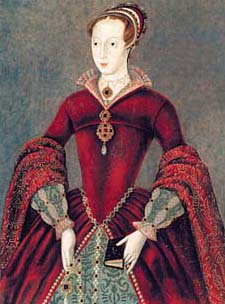
1. Jane ("Lady Jane Grey") (July 1553) Jane's reign was so short that it became her historical nickname - "the nine-day queen." She was placed on the throne by a palace coup in the summer of 1553, when the death of her teen cousin, Edward VI, threatened to end the Protestant Reformation in England. Edward's presumed successor was his sister Mary, a devout Catholic. However, on his deathbed, Edward altered the succession laws in favour of his sixteen year-old cousin, Jane. Jane was intellectually brilliant and certainly one of England's most intelligent rulers. She was also a fiery "born-again" Christian, who despised the Catholic religion and who could be counted upon to nurture the growing extremism of the Edwardian reformation. However, the chop-and-change attitude to the succession did not please the common people, who rallied to support the Princess Mary in overwhelming numbers. Jane was deposed after less than two weeks on the throne, as Mary entered London at the head of a triumphal army. Offered her life if she would abandon her Protestant faith, Jane refused and she was executed at the age of seventeen in February 1554. Victorians were obsessed with her story and portrayed her as the quintessential sacrificed young maiden. Modern research indicates that Jane was a good deal feistier than the romantic legend of her life suggested. In the sixteenth and seventeenth centuries, she was regarded as a Protestant martyr. Her husband, Lord Guildford Dudley, was beheaded on the same day as his wife. Her father and father-in-law had already been executed for their part in putting her on the throne. 
Related Posts with Thumbnails