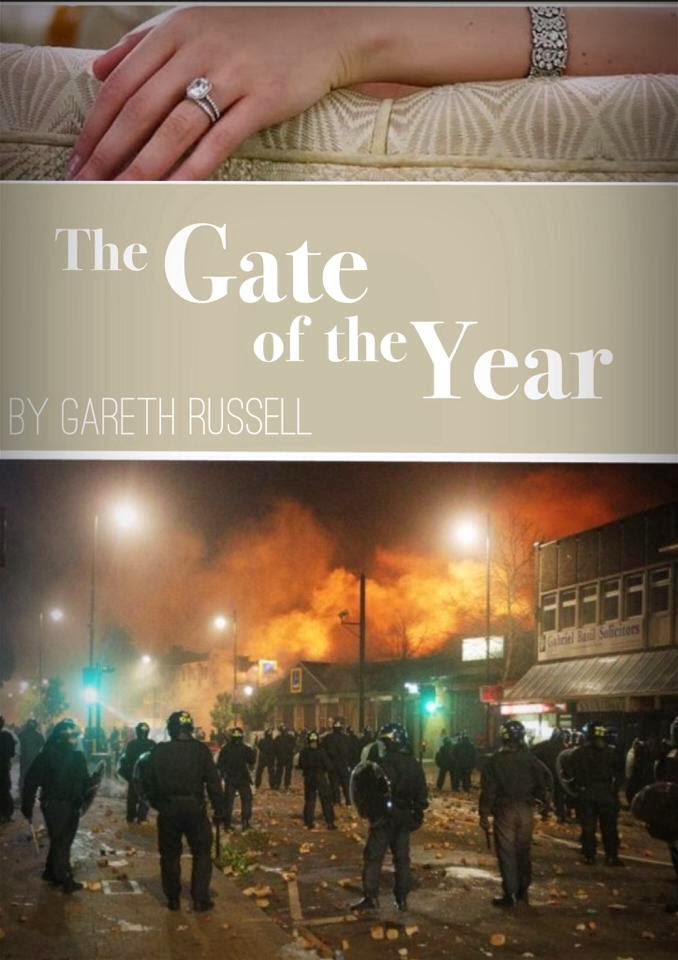
Thursday, 20 March 2014

"The man who could have saved the French monarchy"?: Amos McCormack gives an interview about playing a modernised version of Monsieur Necker


With his name Anglicised to Jack Necker and his vocation modernised into one of television interviews and mass party rallies, The Gate of the Year's interpretation of Louis XVI's penultimate prime minister before the storming of the Bastille is certainly very different to the original. Born in Switzerland in 1732, Jacques Necker emerged as the shining light of French finance in the early part of Louis XVI's reign before public acclaim spurred his appointment as first minister. The move split the Court, with the ultra-royalists horrified that even the Queen, Marie-Antoinette, had supported the promotion of Necker, who was a foreigner, a Protestant and a liberal. If one believed his critics in the palace, he went even further than that and was secretly hoping to turn France into a republic, like his homeland. Actor Amos McCormack played Necker in The Gate of the Year and he's kindly shared his thoughts about the man presented by some as an egotistical opportunist and by others as the pre-revolutionary monarchy's great missed chance; a "what if" that might have prevented the revolution entirely.


Amos, tell us a little bit about your character in The Gate of the Year?

Jack Necker is a smart, wealthy businessman who comes to France from Switzerland. He had a very successful banking career before immersing himself in French politics. Known internationally as an economic genius, Louis XVI had initially hired him as Finance Minister to help curb France’s debt and fund their involvement in the American Revolution; however he became somewhat unpopular with the those he was working for when he made their spending public in his Report to the King, angering a lot of the public; it is sometimes believed to be one of the events that triggered the French Revolution. He was eventually brought back as Prime Minister to once again help lift the county from the uncomfortable situation it had found itself in, in the lead up to the Revolution.

The original frontispiece of Jacques Necker's extraordinarily controversial Report to the King, which royalists claimed was nothing more than a tissue of self-serving lies. 

Necker becomes very angry in Act I, scene vii when he remembers the level of religious discrimination that existed under ancien régime. How much of his personality do you think is defined by a sense of being an outsider?

This aspect was very important to me while playing him. All of the characters I interacted with in the play come from this completely different world, that of the monarchy, which in his eyes had only served to oppress his Protestantism and create a difficult life for those who shared his faith. He steps into the role of Prime Minister knowing full well that he is not welcome and not considered one of them. In all my scenes, this was always in the back of my mind, because I believed it to be extremely important to Necker’s intentions: to make the monarchy aware of how their current system was seen by many groups as a harsh, dominating regime. In this scene where I lose my temper my inner thoughts are made clear; I lay out clearly before all to see the rage that their discrimination creates. In this moment Necker not only becomes the spokesman for all the dissatisfied Protestants under the monarchy, but also the mad crowds of people who will soon attack the ruling monarchy and storm the Bastille.


What parts of Necker's personality did you warm to?

I admire his ambition and determination to succeed, which shines brightly despite the unwelcome environment he finds himself in. He has a strong sense of self-confidence, arguing for his beliefs and what he knows is right, even though he is often standing alone in his opinions. He has straightforwardness about him, firmly speaking out when he wishes to be heard, arriving immediately at the point of what he’s trying to say and not succumbing to ‘beating around the bush’ as it were. Ultimately, I warmed to his strong desire to step in and aid France in its time of need and his attempt to create a system that would be compatible for all.

Duplessis's portrait of the original Jacques Necker
Jacques Necker has been called "the man who could have saved the French monarchy", do you think he believed that?
Yes. It shows in his self-assuredness, his arrogance and in his words. Something which is mentioned in the play but not dwelt upon as much was the fact that this wasn’t the first time Necker had been called to provide service for France in desperate situations. He had been fired and re-hired numerous times and I hold no doubt that this encouraged a self-belief that he was the saviour of France. He was popular with the people and had a plan that showed positive signs of being successful. He had a strong conviction that the absolute monarchy had run its course, and a change would be strongly welcomed.

Amos with Rebecca Lenaghan in rehearsals in Belfast, practicing a scene between Necker and Madame de Polignac
Throughout the play, Necker bears a special animus towards Gabrielle de Polignac (played by Rebecca Lenaghan). What is it about her that you think made him feel that way?
One of the things that I’ve taken from this play is how easy it is for figures in history to become demonised; to be continually portrayed as lacking in compassion or having no respect for human life whatsoever. The members of the French monarchy are often seen in this light: uncaring; aloof; worried only about their wealth and position. For Necker, his dislike of this class of people is embodied in Gabrielle. He sees only the beautiful dresses, the palaces, the luxurious lifestyle. He can’t see past the firm monarchist beliefs or the Catholic faith. Perhaps he knows of her animosity towards him and his policies and sees an enemy in her. Most likely it is also her cleverness in the political field, and the influence she has which irks him as well. I found it unfortunate while playing this character, that there was a certain stubbornness to him; an inability to fully appreciate and recognise the goodness that was inherent in all those whom he met in Versailles, including Gabrielle.

Sunday, 16 March 2014

"His God and his country": David Paulin's interview on playing the prince who inspired the ultra-Right

David Paulin as the prince who became Charles X in The Gate of the Year

In the glittering world of high society before the revolution, few stars burned brighter than Louis XVI's youngest brother, Charles. Tall, handsome, athletic, boundlessly exuberant, he was known for his impeccable dress sense, his numerous affairs and constant parties. Gambling, horse racing, the opera, the theatre, balls and banquets were his milieu. He was constantly seen in the company of his charismatic sister-in-law, Marie-Antoinette of Austria, and together they were the poster children for the half a decade after Louis XVI succeeded to the throne in which, in the words of the historian Antal Szerb, they symbolised "the financial self-confidence of an entire generation, or indeed the whole country." But a decade later, the party was over and as the recession birthed a new era of political extremes, Charles (the Comte d'Artois in the original biography, but updated to the Duke of Artois in The Gate of the Year) allied himself firmly with the Right. Detested by the revolutionaries, who prohibited the colour green from appearing in the new French flag because it was the colour of Charles's livery, he quickly emerged as one of the most divisive figures of the early revolution.

Belfast actor David Paulin, who played Cameron Matthews in The Immaculate Deception and the title role in the festival-nominated political satire Clarence, played Charles in The Gate of the Year, the story of the early French Revolution updated to the modern day. Here, he has taken the time to answer questions about the man who was called by one historian "someone who helped destroy the French monarchy, twice" and by another as "a butterfly, broken by reality".

David, what attracted you to the role of Charles in The Gate of the Year?
Charles is an extremely “grey” character in the play. He is neither good nor bad, and he constantly edges the line between heroic acts and villainy. I always find that the audience reaction to a character like that is very interesting and mostly split; it’s that very real and human characteristic of people not being able to make their mind up about a person, and that is very exciting to portray onstage.

What research did you undertake during the rehearsal process?
I read a history of the French Revolution from a Roman Catholic perspective, because I felt that Charles’s faith was so important and I wanted to get that slant on the events. I was lucky enough to be able to meet with David Anderson MBE MVO and he spoke to us about etiquette, which was invaluable. To supplement this, I also read extracts from etiquette books that were extremely interesting. Throughout the rehearsal process, Gareth also would speak to us about various events surrounding the revolution and also in depth about what the characters lives would have been like, which I found incredibly useful in developing the character.
Charles has almost a universally dire reputation amongst historians, even today. What about him surprised you the most?
When I first read the character of Charles I was astounded by his belief in his god and his country. I think it would be easy to mistake this as self-belief but I found that beneath all of the bravado and grandeur Charles was actually an extremely self-doubting and insecure man. I think it is a feeling of uselessness that now plagues Charles in his thirties, once he has grown out of the playboy prince persona he had crafted in his twenties, and I believe that it's this worry of living without purpose which drives most of Charles’s actions in the play. It was when that clicked with me that I found certain elements of his relationships with other characters onstage much easier to portray, especially his relationship with Gabrielle [de Polignac] which was played with perfection by Rebecca Lenaghan (below).

Tell us a little about your favourite scene to play.
I had several scenes that I loved in the play but if I had to choose a favourite it would probably be in the middle of act two - Charles has an incredibly painful and intense scene with his brother Louis. (From the performance, below) It's just an incredible outpouring of emotion about a very complicated relationship and the audience almost sees them for a minute as two little boys fighting over a toy. Even though it's staged against the flames of revolution in Paris, all that falls away and leaves a stripped back and extremely visceral, human scene.

"Because I despise you..."
Which character did you ultimately find the most sympathetic?
I felt a wealth of sympathy for King Louis, who was played excellently by comedian Tom Flight. I think it was something in his very believable performance that transformed Louis from a character who, on the page, I felt an immense amount of frustration towards, into a more sad, sympathetic and human character caught up in a terrible time in French history. I think the added layer of mental illness brought to the character in the way of his clinical depression that is referenced in the play makes him even more sympathetic, because we see him suffer from such a debilitating and misunderstood illness that is barely understood today, let alone years ago.

If you were to return to the role and could add in any scene unseen in The Gate of the Year, what would it be and why?
I think I would want the audience to see Charles after he received the news of the King and Queen’s execution. Although not in the play’s timeline of events, I think it would show a very raw emotion from Charles and reveal the depths of his empathy and compassion for others.

Friday, 14 March 2014

Emma Taylor talks about Marie-Antoinette and "The Gate of the Year"

"I would rather die bravely than live without honour": Emma Taylor as Marie-Antoinette in Act II of The Gate of the Year

After playing Imogen Dawson, the flamboyant party girl in Popular and The Immaculate Deception, Emma Taylor played France's doomed and iconic queen, Marie-Antoinette, in my new play The Gate of the Year, the story of the events of 1789 updated to the modern day. In the second of the cast's interviews about their characters and the show, Emma talks about her role and why it meant so much to her.

Emma, tell us a bit about the Marie-Antoinette we encounter in “The Gate of the Year”?
The Marie-Antoinette we encounter in The Gate of the Year is a very different person to the image most people have, of the frivolous young queen lying around in her jewels, drinking and gambling her nights away. She is a mother, a wife, and a very dedicated Queen. She is just beginning to develop into the strong, decisive woman we see by the end of the Revolution, and she's incredibly observant, charming and accommodating. Marie-Antoinette is such a well-known character in history, and yet I feel as if so much of her true personality has been completely passed over in so many aspects – but I think The Gate of the Year really gives her back that respect, presenting her not as a villain and or the triumphing heroine, but as an extraordinary woman who lived, breathed and loved the same as any other.

Wednesday, 12 March 2014

Rebecca Lenaghan talks playing Madame de Polignac


Revered as one of the most iconic beauties of the eighteenth century and reviled as a symbol of pre-revolutionary society's elitism, Gabrielle de Polignac, a duchess who befriended Marie-Antoinette, has had a chequered history. In The Gate of the Year, the story of Gabrielle and the revolution was updated to the modern day and the Northern Irish actress who played her, Rebecca Lenaghan (above, right), is the first among the cast to answer a few questions about the show.

1. Rebecca, on-stage the character of Jack Necker describes Gabrielle de Polignac as a “self-absorbed socialite”. That seems to be a pervasive view of her. Do you think it’s fair?

Jack Necker’s comment is a superficial, heated jibe at Gabrielle and it is most unfair to the complexities of her character. Necker provides the phrase in an attempt to guide an equally juvenile response; however, the Duchess’s composed reaction is indicative of her sure knowledge (as well as my own) that the remark is ridiculous. She does not need to respond because she knows, like Necker, that his words are neither fair nor true. The play is littered with examples of Gabrielle’s genuine affection for the people who matter most, both her friends and her family, despite the somewhat aloof exterior she presents to characters like the Prime Minister.

Rose Byrne (left) as Gabrielle in the 2006 movie Marie Antoinette, opposite Kirsten Dunst

2. She’s played by on-screen by actresses like Rose Byrne and Virginie Ledoyen, how did you approach playing her yourself and making your own?


Both actresses played their characters differently in Marie Antoinette and Farewell, My Queen and I wanted to change her again. My main focus in making my Gabrielle different from theirs was to approach her from a more sympathetic angle, especially knowing the audience might be sceptical of high aristocratic society. I wanted the audience to understand the human horror faced by the residents of Versailles and to do this, I tried to make her enjoyable; someone who members of the audience would want to befriend. Through trying to make her likeable and passionate, I wanted the audience to feel the poignancy in the play’s concluding scenes, that a character they had so thoroughly enjoyed watching could face such a harrowing end.


3. Are there any similarities between you and Gabrielle?

At the beginning of the rehearsal process, I didn’t think so but as I got to know her more, various similarities appeared. We are certainly both prepared to fight for what we want, regardless of the thoughts of others as well as the importance of family and friends in our lives. I would like to think I could relate to her self-determination and inability to lie to herself. Gabrielle’s strength and surety of her character encourages my own and I hope this continues. And, of course, we both love Marie-Antoinette.


Rebecca on-stage in The Gate of the Year with David Paulin as Charles

4. Many of your scenes on-stage take place with David Paulin, who plays the King’s younger brother, Charles. Did you enjoy creating their relationship?

Unexpectedly, I really did enjoy developing this relationship. I had thought that Gabrielle’s rapport with the Queen would be my favourite but, in the end, I think her friendship with Charles won. Our first rehearsal of a Charles and Gabrielle scene definitely helped in shaping their relationship throughout the play. We did some very enjoyable improvisations, with the addition of Gabrielle’s brother Oscar, which created a bit of background to their friendship and meant that we could share more understanding on-stage with each other than we could with other characters.


5. You spoke in rehearsal of how much you had enjoyed playing her: was there any moment that always stood out as a personal favourite?

I loved playing Gabrielle. I think my favourite moment in the play was her line to Necker “most people who didn’t go to boarding school pronounce it that way” in response to his pronunciation of “oxymoron”. It captures her wicked humour, her astute intelligence in social situations and her ability to flawlessly deliver such an acerbic line with a sumptuous smile.
In rehearsal with Amos McCormack as Jack Necker

6. Would you ever want to play her again?

If I got the opportunity, I would love nothing more than to play her again. Even though the play has ended; she still very much seems to be a part of me and I’m not sure I’m quite ready to let her go yet.

Saturday, 8 March 2014

"The Gate of the Year" review

David Paulin (left) as Charles of Artois and Jordan Dunbar as the Count d'Adhemar de Montfalcon in The Gate of the Year, the story of the French Revolution updated to the modern day.

Ireland's wonderful Eile magazine very kindly called my new play The Gate of the Year " one of the most insightful, powerful and thought-provoking pieces of drama to come out of Northern Ireland for quite some time". You can read the full very kind review, here

"The story of this play is quite loyal to real historical events – France is on the brink of revolution and of ending its age as an absolute monarchy – yet the modern adaptation makes for an interesting analysis on today’s society. The Catholic royal family and their friends are somewhat bemused by the new Protestant Prime Minister of France, Jacques Necker, who is by all standards a commoner in the eyes of the Aristocracy. Necker represents a class of people that most of the Catholic elite avoid, yet his role in connecting with the people of France is crucial, as riots by left-wing republicans are becoming a nuisance in Paris. The riots are only set to get worse, and as Necker advises the conscientious King Louis XVI to make France a constitutional monarchy, chaos is about to take its toll on everyone, not just the commoners."

Sunday, 2 March 2014

"The Gate of the Year"


This week, my newest play The Gate of the Year is premiering in the Belvoir Players' Studio in south Belfast. The Gate of the Year imagines the events of the French Revolution from a few months before the famous attack on the Bastille fortress until a few days before the fall of the palace in October, as if they had taken place in the modern-day. It focuses on the high court nobility, led by the King's youngest brother the Duke of Artois (played by Belfast actor David Paulin) and his friend, the elegant but manipulative Duchesse de Polignac (played by Rebecca Lenaghan), as they struggle against the growing forces of the revolution. It also contains the storyline of the notorious journalist Jean-Paul Marat (Conor Doran) and the young idealistic republican Charlotte Corday (Nuala Davies).

One of the joys of writing The Gate of the Year after writing the story of the actual events of the French Revolution, The Audacity of Ideas, a few years ago, is to re-imagine the events and personalities to fit with a more modern setting. Marie-Antoinette, played here by the wonderful Emma Taylor who played Imogen in both stage versions of Popular, was seen by many as the inventor of what later came to be called haute couture, by public fascination with her soon turned ugly and in this alternate reality, she becomes the victim of invasive and crushing media attention. Trying to keep the ghosts of Grace Kelly and Princess Diana at bay was tricky, but luckily Marie-Antoinette's own involvement, last-minute, in the politics of the French monarchy meant her story took on a very different hue regardless of her modern-day similarities.

History, I think, has eternal themes and balancing those with the characters of those who lived and died in the 1790s has been a hugely rewarding experience and one of the highlights of any challenge I have faced as a writer thus far. In this world, The Marriage of Figaro controversy becomes about the same-sex marriage debate and Marie-Antoinette complains of the paparazzi, but words like "recession" and "hunger strikers", words that have such an immediate emotional impact on people today, particularly in Northern Ireland, slotted right into the story with surprising ease. 

From left-to-right. In rehearsal for The Gate of the Year, Emma Taylor as Queen Marie-Antoinette, David Paulin as the Duke of Artois and Tom Flight as Louis XVI. 
The French Revolution casts a long shadow over the two centuries that came after it and perhaps the most surprising thing is not how much needed to be changed but how much could remain the same. The events of The Gate of the Year are very different to the chronology of what happened in 1789 - with modern technology, it was impossible to have Louis XVI (Tom Flight) and Marie-Antoinette's eldest son die of tuberculosis as he did in 1789, here, they are the parents of four surviving children - but at the end of it all, I can't help but think that the feeling of what that euphoric and horrific summer must have been like for the people living through it has remained the same.

The Gate of the Year is open to the public at the Belvoir Players' Studio Theatre in Belfast on Friday 7th March at 8 p.m. and Saturday 8th March at 8 p.m. An industry performance is taking place on Thursday 6th. For more information, you can visit the theatre's booking page here. 

Saturday, 28 December 2013

Some of my favourite reads of 2013

Tudor: The Family Story by Leanda de Lisle. Leanda's biography of Lady Jane Grey and her sisters Katherine and Mary is my favourite historical biography and I loved this take on the well-trodden story of England's most dysfunctional Royal family. De Lisle's writing style is so delicious that if it were edible, you'd almost certainly end up the size of a house and/or Henry VIII, the porky sovereign who for once is not allowed to stand centre stage in this dynastic tale of wife-changing, religious revolution and palaces more blinged up than an MTV crib. The women and minor members of the family are allowed their day in the metaphorical sun and de Lisle's refusal to play favourites guarantees fair treatment for all. Buy it, read it and I'm sure you'll love it. 

Cloud Atlas by David Mitchell. Originally published in 2004, I half-read it at my friend Colin's suggestion at university but returned to it when the wonderful movie adaptation (below) starring Tom Hanks, Halle Berry, Jim Sturgess, Doona Bae, Susan Sarandon, Jim Broadbent, Hugh Grant, Hugo Weaving, James D'Arcy and Ben Whishaw was released. The story of various reincarnated souls passing through the centuries from pre-abolition America, the inter-war years in Britain, a nightmarish twenty-second century Korea and a dystopian future is haunting, clever, nimble, beautifully written and very moving. If the story of Sonmi-451 doesn't devastate you, see a therapist immediately.


A Place of Greater Safety by Hilary Mantel. Once you can get past the trademark horrors that Hilary Mantel seems to make of all her female characters, this 1992 novel inspired by the biographies of three male revolutionaries - Georges Danton, Camille Desmoulins, and Maximilien Robespierre - is actually a beautiful novel that captures perfectly how even the leaders of the Great Revolution of 1789 began to fear its strength and wonder how it would all end. (Hint - not happily for more or less anybody involved whose surname wasn't Bonaparte.) A Place of Greater Safety even manages to make Desmoulins interesting, charismatic and almost sympathetic - no mean achievement. A wonderful example of historical fiction.

The Night's Dark Shade by Elena Maria Vidal. The festering underbelly of the Cathar movement and the clash between two rival faiths in thirteenth-century France make this novel very interesting, very enjoyable and, reading for pleasure this time, one of the most intriguing takes on religious controversies of the Middle Ages. If you are a fan of medieval stories, then this one is certainly worth picking up.


A Night to Remember by Walter Lord. Famous for inspiring the 1958 movie of the same title (above), I had never actually read this minute-by-minute dramatisation of the Titanic disaster of 1912. Lord interviewed many of the survivors, had previously travelled on the Titanic's nearly-identical sister ship the Olympic, and approached the story of the sinking with a respect that bordered on the reverential. Unlike the 1997 take on the story, there are no fictitious love stories at the centre of Lord's novel. Instead, it's a gripping and almost forensic account of one of the greatest tragedies in maritime history. It also manages to capture the syntax and attitudes of 1912 perfectly. I loved this book and I wish I had read it earlier. 

Shiverton Hall by Emerald Fennell. Released early this year by Bloomsbury, this children's story is, and I kid you not, actually as close as I can come to the horror genre without suffering nightmares and/or dousing my room with water from Walsingham. A glorious return to the Victoriana world of camp macabre and horror, Shiverton Hall is the perfect book for a child who loves to read, anyone who enjoys a good boarding school tale or, for the adults in your life like me, who like to be scared but only within due reason. There'll be no Norman Bates meets Emily-Rose in my nightmares, I can assure you.

The War that Ended Peace: How Europe abandoned Peace for the First World War by Margaret Macmillan. No one but Margaret Macmillan could have approached the story of how "Europe's century" ended in the horrors birthed by 1914 and produced something so compulsively readable. Focusing on both the wider social context of the Gilded Age and the political figures who helped make the terrible decisions which resulted in a global conflict, Macmillan has produced a book that is irreverent, thoughtful and wonderfully written. 

The Creation of Anne Boleyn: In Search of the Tudors' Most Notorious Queen by Susan Bordo is a cultural biography of how Anne Boleyn acquired posthumous immortality, what attracted her legion of modern-day fans and critics, and how her story has been used and abused by subsequent generations. With interviews with two of the actresses most famous for bringing Boleyn to life on screen, this is a fascinating book with its finger kept firmly on the pulse of modern culture. Scholarly, but also funny, wry, sarcastic and emotive. And as the UK cover proves, we always knew Annie B could rock a pair of aviators. Once a fashionista...

The Assassination of the Archduke: Sarajevo 1914 and the Murder the Changed the World by Greg King and Susan Woolmans. Any suspect story about Archduke Franz Ferdinand is perhaps rightly declared as something to be treated with caution and scepticism in this book, while similarly improbable and damning anecdotes about any of his blood relatives are repeated as fact. Thus, the title figure emerges as a devoted family man, while his elderly uncle is described as a border-line autistic syphilitic and Franz Ferdinand's brother, Otto, was apparently a sadomasochistic pervert if Viennese gossip was to be believed. It's one standard for Ferdy and another for the rest of the Hapsburgs, which is a shame because otherwise this was a fascinating and wonderful biography of a man who is probably the most important assassination victim in history. Greg King and Susan Woolmans deserve great praise for rescuing his personality and his tragic love story with Sophie Chotek from obscurity. Fast moving, sympathetic and engagingly written, The Assassination of the Archduke was a truly gripping biography of the first victim of the First World War. Highly recommended.

Counting One's Blessings: The Selected Letters of Queen Elizabeth the Queen Mother by William Shawcross. The late Queen Elizabeth's biographer returns with a volume of her selected letters, chosen from across the remarkable century of her life and eight decades in the public eye. The late Queen's wit, impish sense of humour and inimitably effervescent mode of expression come across alongside her steely determination, quick intelligence and pathological ability to avoid anything too unpleasant until the last possible moment. A beautiful book from the pen of a celebrated and popular Royal, Counting One's Blessing was a joy to read. And made me hanker for a gin in the Highlands.


Related Posts with Thumbnails