Showing posts with label Belfast. Show all posts

Sunday, 2 March 2014

"The Gate of the Year"


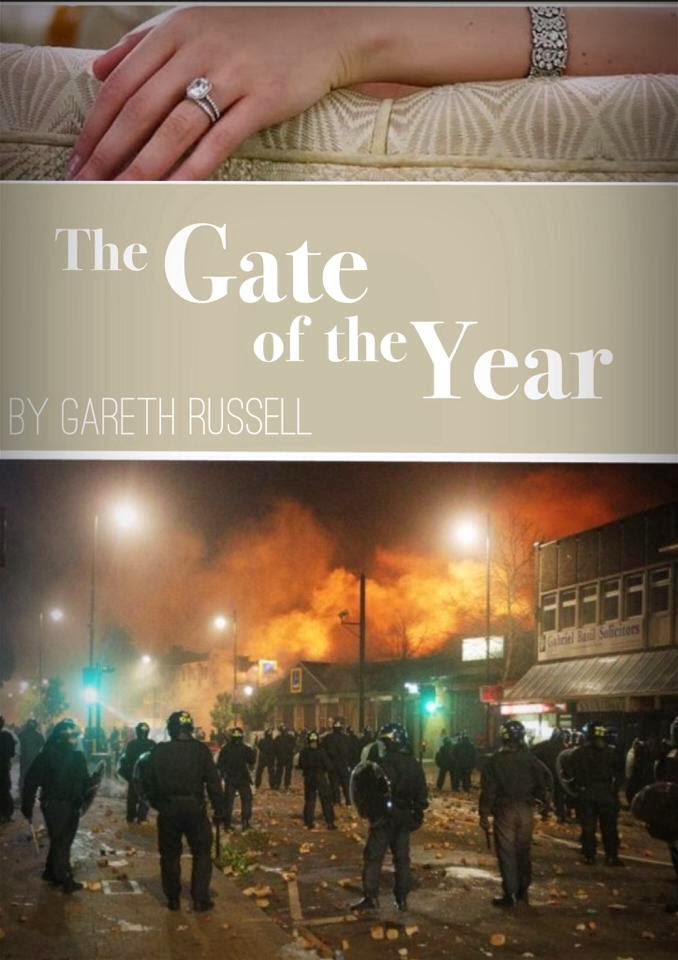
This week, my newest play The Gate of the Year is premiering in the Belvoir Players' Studio in south Belfast. The Gate of the Year imagines the events of the French Revolution from a few months before the famous attack on the Bastille fortress until a few days before the fall of the palace in October, as if they had taken place in the modern-day. It focuses on the high court nobility, led by the King's youngest brother the Duke of Artois (played by Belfast actor David Paulin) and his friend, the elegant but manipulative Duchesse de Polignac (played by Rebecca Lenaghan), as they struggle against the growing forces of the revolution. It also contains the storyline of the notorious journalist Jean-Paul Marat (Conor Doran) and the young idealistic republican Charlotte Corday (Nuala Davies).

One of the joys of writing The Gate of the Year after writing the story of the actual events of the French Revolution, The Audacity of Ideas, a few years ago, is to re-imagine the events and personalities to fit with a more modern setting. Marie-Antoinette, played here by the wonderful Emma Taylor who played Imogen in both stage versions of Popular, was seen by many as the inventor of what later came to be called haute couture, by public fascination with her soon turned ugly and in this alternate reality, she becomes the victim of invasive and crushing media attention. Trying to keep the ghosts of Grace Kelly and Princess Diana at bay was tricky, but luckily Marie-Antoinette's own involvement, last-minute, in the politics of the French monarchy meant her story took on a very different hue regardless of her modern-day similarities.

History, I think, has eternal themes and balancing those with the characters of those who lived and died in the 1790s has been a hugely rewarding experience and one of the highlights of any challenge I have faced as a writer thus far. In this world, The Marriage of Figaro controversy becomes about the same-sex marriage debate and Marie-Antoinette complains of the paparazzi, but words like "recession" and "hunger strikers", words that have such an immediate emotional impact on people today, particularly in Northern Ireland, slotted right into the story with surprising ease. 

From left-to-right. In rehearsal for The Gate of the Year, Emma Taylor as Queen Marie-Antoinette, David Paulin as the Duke of Artois and Tom Flight as Louis XVI. 
The French Revolution casts a long shadow over the two centuries that came after it and perhaps the most surprising thing is not how much needed to be changed but how much could remain the same. The events of The Gate of the Year are very different to the chronology of what happened in 1789 - with modern technology, it was impossible to have Louis XVI (Tom Flight) and Marie-Antoinette's eldest son die of tuberculosis as he did in 1789, here, they are the parents of four surviving children - but at the end of it all, I can't help but think that the feeling of what that euphoric and horrific summer must have been like for the people living through it has remained the same.

The Gate of the Year is open to the public at the Belvoir Players' Studio Theatre in Belfast on Friday 7th March at 8 p.m. and Saturday 8th March at 8 p.m. An industry performance is taking place on Thursday 6th. For more information, you can visit the theatre's booking page here. 

Friday, 11 January 2013

"Too rich or too thin": a regular reader of this blog who didn't expect to enjoy it, reviews "Popular"

I'm very aware that for many regular readers of this blog, the topic of my first novel, Popular, and its recently-published sequel The Immaculate Deception, seems a bit off-key. This is a blog about history, but the two novels are the first installments in a series dealing with the ups-and-downs of teenagers living in modern-day Belfast. At the moment, I'm actually writing a piece for The Anne Boleyn Files about how history influenced the way Popular's story progressed and was written, but for now, I'd just like to say a huge thank you to Robyn, who downloaded a copy of Popular after regularly reading this blog. She reviewed the book and I'd like to share it with you. Hopefully, it'll help explain why the leap from Ci-Devant to Popular and The Immaculate Deception needn't seem so big!

"Wallis, Duchess of Windsor, famously said, “You can never be too rich or too thin,” and Meredith Harper believes this fervently... I found out about this book from the author, whose blog I have followed for well over two years now. I find him a thoughtful, clever writer with a real sense of history and poetry in his writing. Fortunately for me, there are some traces of Gareth the historian in this book. Both Meredith and Kerry are fans of historical queens (Anne Boleyn and Marie Antoinette, respectively, both frequent topics on Gareth’s historical blog), and the Romanovs, Elizabeth I, and the Bubonic Plague are also mentioned. Beyond that, the writing in Popular is clever and thoughtful, though perhaps without the same poetic beauty as his historical posts. (I refer you to his telling of the execution of Anne Boleyn.)... In all honesty, I set out to read Popular mostly just to support a blogger I enjoyed, but I was pleasantly surprised by how much I enjoyed the book. If you like your stone-cold witches with a good dose of humor, or if you would like to try a Gossip Girl-type story set in a new location that isn’t in America, you will probably enjoy this book, too."

For the full review, click HERE and enjoy!

To order Popular on Kindle click here (UK) or here (US.) In paperback, here for the UK and here for the US.

Its sequel, The Immaculate Deception, which picks up where Popular left off, can be bought from Kindle in the US here or UK here. In paperback, from Amazon US or Amazon UK.

Thursday, 10 January 2013

The Protestants of Ireland know nothing of their history and this is the price we pay


Part of the reason why I'm still a unionist is because I'm convinced it must be right in some way, because how else could it have survived for so long given its leaders? It has been Irish unionism's fate to be led, and controlled, by a combination of people who are either unpleasant, incompetent or both. No other political creed in history has enjoyed such longevity, whilst also being led by such a gallery of grotesques. Its survival is also all the more remarkable when one considers that, unlike Irish nationalism, Irish unionism has no real links to its past; only vague, and often confusing, messages, almost all of which resort to defining itself in opposition to nationalism. In a nutshell, what nationalism is, unionism is not. It has, moreover, no real heroes - again, unlike nationalism, most unionists know next-to-nothing about the great "heroes" of the unionist past. While figures like William III and Sir Edward Carson may gaze out haughtily from the banners of the Orange Orders or from six-foot-tall murals, the details of these men's biographies are practically unknown. Devoid of political folklore, unionism therefore resorts to putting much of its cultural identity into symbols, rather than people - the monarchy, the army, the RUC, the Poppy, the parades and, above all else, so it would seem, the flag. Once you understand that, you begin to understand why they're so protective of things that seem trivial to outsiders.

On 3rd December 2012, Belfast City Council voted to remove the British flag from flying above City Hall. A majority of councillors wanted it to remain, but a republican-backed initiative to have it taken down forced a split in the unionist vote and the resulting decision was that it should fly only on designated days, like state holidays or royal birthdays. The corresponding explosion of sentiment across Northern Ireland took everyone by surprise. But it shouldn't have. This has been coming, in one way or the other, for years. Like a penny machine in an old arcade, there was always going to be something that pushed everything right over the edge. And on 3rd December, we found out what that was.

Riots swept the city, particularly in the working-class and Protestant-dominated east. The estimated cost, so far, to local businesses is somewhere in the region of £15 million in losses. And while life ticked along as normal in the city's wealthier quadrants, like Malone, Stranmillis or Ballyhackamore, and the vicious drip-drip-drip of unionism's thinly-suppressed snobbery (even for its own compatriots) led everyone there to dismiss the riots as the actions of ill-educated, jobless and tracksuit-wearing scum, to anyone who knows (or cares) about unionism and loyalism's increasingly-unstable sense of identity, these riots were not only a long-time coming but a warning. A warning that everyone is doing their level best to ignore. 

When the Good Friday Agreement of 1998 brought the Troubles to an end, the onus was very much on the Protestants of Northern Ireland to make the concessions. For years, they had been (and still were) the majority; it had been in deference to their wishes and the aftermath of the First World War that Northern Ireland had been created in the first place back in 1921. They had squandered much of this honour by creating a state apparatus that served their own interests first and the Catholic minority's second. That is reductive and it is not the entire truth, but there is much truth in it. Many of the symbols of old Northern Ireland were, fairly or unfairly, loathed or mistrusted by Ulster's nationalist population. Attempts were made to reform this in the 1960s, but the Troubles took over. By 1998, in order to create a functioning pluralist democracy, some of the symbols of "old" or "unionist" Northern Ireland were quite simply going to have to go. The bitterest pill to swallow for many unionists was the dismantling of the police force, the Royal Ulster Constabulary, and its replacement with the less-unionist-sounding Police Service of Northern Ireland. As far as unionism had a folklore, the RUC was woven into it. Stories of bombs under cars, young constables ambushed by IRA men hiding in bushes after answering false burglary calls and maimed veterans walking in the Remembrance Day service, had all elevated the RUC to the status of the de facto heroes of Northern Irish Protestantism - particularly to the upper and middle-classes. When it went, as everyone knew it must go to gain nationalist support for the peace process, Unionists regarded it as the ultimate sacrifice - the ultimate pledge of good faith, if you like, in the shared future. History would teach us that all these things - a new police force, a power-sharing executive, amnesty for ex-terrorists (oh, how that one stuck in the throat for thousands and not just unionists) - were part of a process of compromise. Peace was the prize; compromise was the price. Unionists may have muttered, bitterly in some quarters, but they ultimately accepted that it had to happen if they wanted their children to grow-up in a world where army road blocks were not a feature of everyday life. Why then, after accepting all that with only a few murmurings, did the working-class sections of Irish loyalism explode into petrol-bomb-throwing wrath over the issue of a single flag over one building in the city centre which can still fly on certain designated days? They hadn't been anywhere close to this angry when an ex-IRA commander was appointed Minister of Education back in 1999. What was it about the flag, years after the peace agreement, that made them so angry? 

Well, part of it is that the flag issue seems like a deliberate slap in the face from Sinn Fein, the major party of Irish republicanism. Why, unionists ask, when the flag had been there for years did they try to take it down now? Why, when so much has been given up already and at a time when thousands of young Northern Irish men and women are abroad serving to defend that flag in Afghanistan and Iraq, did the nationalist parties decide to pick a fight over the city hall standard? Why did the liberal Alliance Party "help" them? And why, oh why, did the unionist leadership not do more to stop it? These are all valid questions and, for what it's worth, I think far less of Sinn Fein for kicking the hornet's nest. (I think far less of the DUP for not trying to calm the hornet's nest, but then I have no faith, really, in any of our political parties anymore.) Anyway, while we can maybe reach an understanding of why the vote happened in the way it did, no-one seems to be asking why so many working-class Protestants have been so terrifyingly angry about this one flag?

Part of it is, undoubtedly, that most of the rioters come from disadvantaged backgrounds, in which they cannot find work, have little education, few opportunities and an inveterate distrust not just of authority, but also of the hated outsiders. In their case, heartbreaking to say, outsiders equate with Catholics. Equally, the unionist leadership has never been able to control the working-class segment of its electorate. Anyone with a good knowledge of Irish history would recall how Southern unionism had struggled to rein in the dragon of the Orange Order at the end of the nineteenth century, only to lose spectacularly. The unionist leadership's deafening silence about these riots is a tribute not just to their cowardice, but also to their uselessness. They fear that they will not be listened to. So rather than take the risk, they do nothing and hope the problem will eventually go away. But there is a bigger issue here and it speaks right to the heart of both the tragedy and the folly of Irish unionism. Where nationalism is built far, far too much on its own concept of its history, unionism does not teach its history, does not know it and definitely does not understand it. 

Many Catholic schools in Northern Ireland should be wrapped harshly over the knuckles for the frankly shocking way in which some teach Irish history. In many schools, but by no means all, it can often amount to little more than a party election broadcast for the ghosts of Michael Collins, Eamon de Valera or Cathal Brugha. Equally, many state schools should be wrapped even more harshly for the fact that they don't teach it, at all. When they do teach twentieth century Irish history, they generally teach the nationalist movement, but they teach it in a curiously passionless way. Unionism, if it's mentioned at all, is the sideshow. A policy which I'm sure has a lot of students gaping in confusion when 1921 rolls around and 1/3 of Ireland was preparing to burn itself to the ground rather than be separated from Britain. The upshot of this dereliction of duty by  our country's educationalists is that Irish nationalism still has a cultural tendency to not consider unionists to be "real" Irishmen and women, it makes next-to-no effort to understand any of Irish Protestantism's attachment to the military or the monarchy, and it has completely written unionism out of the grand narrative of Irish history - which always seems to start with the words "800 years ago," and then a never-ending list of the wrongs done on Hibernia from Henry II to Cromwell to Thatcher, all of them, apparently, sprung from the same heartless vortex of Hell as Judas and Nero. 

But if nationalism knows too much of its own history, then loyalism does not know enough and because of this it is allowed to trundle on like some sluggish dinosaur, carrying all of its old bigotries and prejudice because it's never been properly educated about what really happened in this island's past. There is much to be proud of or, at the very least, interested in. The achievements of the Ascendancy in the eighteenth century are nothing to be sniffed at; neither is the industrial miracle of Ulster and Belfast in the nineteenth and twentieth centuries or the heroism of the Irish battalions in the great wars. There were also brave and noble men from Ireland who believed deeply and truly in the unionist message - that unity within the British Isles could bring more benefits than separation. Men and women who believed that it was possible to maintain an Irish identity, whilst also keeping British loyalties. A firmer knowledge of their past - and pride in its better moments - would give all unionists, whether rioters or not, something to focus on and an appreciation of Ireland's complex history. As it is, most unionists operate under the festering fear that once a united Ireland happens, they'll have to flee for their lives and every bit of their culture will be swept away in a relentless torrent of nationalist triumphalism. That may be a paranoiac fear, but things like the flag vote fan it; they speak right to the deepest of unionism's fears. A fear which, I think, has kept its pulse beating for years. 

A knowledge of Ireland's Protestant history, however, could also teach and warn, as much as it could inspire. After all, isn't that the point of history? Just as nationalism must eventually confront the darker side of its history, unionism could learn much from looking back at its less savoury moments. The Protestant Ascendancy's role in kick-starting the Gaelic Revival might allow Ulster Protestants to stop reacting with such revulsion and anger to things like the Irish language or arts; a knowledge of Edward Carson's plea that the new Northern Ireland should not become a sectarian state could show them that unionism was once-upon-a-time supposed to be a creed for all religions, not just one; Lord Craigavon's repulsive proclamation that he had fashioned a Protestant country for a Protestant people could finally allow Protestants to understand that mistakes had been made and that the bitterness of sectarianism can only poison for generations; Lord Brookborough's petty and vindictive sectarian legislation; Protestant nationalists; Catholic unionists; agnostics (here's looking at you, King Billy, and that handsome young chap you liked to go everywhere with. Don't tell the DUP, though...); the nobility and purpose of many nationalist politicians and figures; moments of compromise between both sides; the forgotten legacy of southern unionism. All of this could let loyalists see that this is not a "them and us" situation, it's not a simple situation and that parts of unionism once tried to overcome the bigotry of many of its followers. So far, only the Alliance Party has made any real and concerted effort to put that principle into practice. 

There is much, in any community's history, to be proud of and to be ashamed of. There is much simply to be interested in. These riots spring from a community that does not know enough about its own past but fears that one day, when the last British flag is taken down in this part of Ireland, that they and everything they know will vanish. Although they do not know it, they are carrying with them the greatest of Irish Protestant fears - the fear that sprang from the massacres of 1641. But they don't know that date, or what it means, even though it's shaped every moment of their political lives and every major piece of Unionist action for the last four hundred years. They don't know anything about themselves, not really, or the people they're allegedly fighting against. It's ignorance and fear - blind and stupid, vicious and lethal - that has prompted this community to take to the streets in a repulsive display of lawlessness and cruelty. They're clinging desperately to that flag because they don't think they have anything else left. 

Irish unionism's history is one of great achievements and repellent prejudice. But then, so is Irish nationalism's. And it's only once you understand that that you can begin to understand that all these big questions - British crown or Irish republic - have to be decided on the basis of today and tomorrow, not yesterday. It's only once you understand history that you can let it go. But because we don't understand it and because we've reduced it to a myth, oft-repeated but seldom-understood, we can't let it go. This strange, bastard, butchered version of history is all that most of us have in Ireland. So we cling to it. We cling to things like the flag, because it's where we came from. And because many of us still think that one day, somehow, one side in Northern Ireland has to "win". But we're not going to win if we keep trying to score one-up on each other. There haven't been any winners in Irish history, not really - not for the last century or so, if not longer. Next time you look into the masked face of a boy barely more than a child as he hurls bricks at a police officer's head, remember that. We are all paying a heavy price for our ignorance, but they're paying the highest. For them, this folly is all they have. 

Saturday, 5 January 2013

A guide to Belfast slang


My new website for the Popular series (www.thepopularseries.com) has just uploaded two audio recordings of me reading aloud the author's note to my first novel and a guide to the vocabulary (slang, geographical and academic) used in Popular.

You can listen to them here and I hope you enjoy them!

There'll be more to come.

Monday, 20 August 2012

The White Star sisters


By 1907, Britain's White Star Line had an impressive fleet of liners that enabled the company to connect Britain with both its imperial colonies and with the rest of the world. Advertising maps alerted the public to the vast geographical remit of the White Star company and its corresponding ability to move passengers across the globe in comfort, speed and security. The most prestigious of all routes was the transatlantic passenger lane between England and America. Like their rivals at the Cunard Line, some White Star ships left from Liverpool and some connected to American ports like Boston, but the flagships of the line left from the southern port of Southampton, with stop-overs at Cherbourg in France and Queenstown in Ireland, before heading across the ocean to New York. White Star vessels were known for the comfort of their accommodation and the company's impressive safety record - its only major sinking had been the loss of the Republic in 1909, which had taken over a day to sink, enabling a full evacuation. There were five prestigious ships that operated the transatlantic route in 1907 for White Star - the Oceanic and the four sisters known as "the Big Four," the Cedric, Celtic, Baltic and Adriatic. The Oceanic had been nicknamed the "Queen of the Ocean" when she was launched in Belfast in 1899, at a ceremony watched by the cream of the Irish Protestant Ascendancy - including the Duke of Abercorn, the Marquess of Londonderry and the Marquess of Dufferin. 

But by 1907, the arrival of Cunard's awe-inspiring Lusitania and Mauretania had removed the sparkle from White Star's commercial crown. Not only were the new Cunarders the largest ships afloat, but they were also the fastest and the most luxurious, as well as using the famous four funnel design previously reserved for German ships. With the funding of their new de facto owner, the wealthy American financier J.P. Morgan, White Star Line's chairman, J. Bruce Ismay, met with the former Lord Mayor of Belfast, Lord Pirrie, one of the controlling partners of the world-famous Belfast shipyards, Harland and Wolff. They agreed to combat the Cunard threat by building two new ships in quick succession that would dwarf the Cunard sisters in terms of size and in the comfort offered to its passengers. In order to do that, both Ismay and Lord Pirrie realised that speed would have to be sacrificed. Deciding to make a virtue out of a necessity, they later marketed that the White Star's journey across the Atlantic - which usually took a full day longer than the Mauretania's - could be done so in much greater comfort and stability. A third sister was planned for a later date, which would have re-established White Star's monopoly of the British transatlantic trade - had the plan worked. As with the building of the Oceanic, Ismay's directive was summed up in the phrase, "Nothing but the best."


Thousands of workers toiled for three years to build the first of the Olympic-class liners. Most of the men came from the Protestant-dominated working-class districts of east Belfast, where the Harland and Wolff yards were (and are.) The Olympic was launched in 1910 and sailed on her maiden voyage, to great media ballyhoo, in May 1911 (above). Nearly half again as large as the Mauretania, she was also much more attractive in terms of her outward appearance and she was deliberately designed to have the sleek, elegant exterior favoured by European royalty when it came to designing their enormous private yachts. White Star's hopes that their new queen would corner the lucrative upper-class transatlantic market was shown by the fact that there was room for over one thousand first class passengers. They had access to the ship's grand staircase (now legendary because of the number of times it's featured in movies about the Titanic), lounges and restaurants based on the royal apartments at the Palace of Versailles, a smoking room that rivaled the best gentlemen's clubs in London with its fireplace, leather armchairs, mahogany walls and stained glass windows. There were verandas that were based on the winter gardens made popular on German ships, wide promenade decks, an enormous dining saloon that could sit five hundred people at one sitting, reception rooms based on Jacobean country houses, Turkish baths inspired by the decadence of the Ottoman sultans, a gymnasium, a squash court and the world's first ever swimming pool onboard a luxury liner. The first class staterooms were decorated in a variety of historical styles and there was a huge range of prices, moving from the fairly basic cabins on A-Deck to the lavish parlour suites on B-Deck. Second class accommodation was sombre, comfortable and very obviously Edwardian (below) and third class was spacious, clean and comfortable. The prices, of course, for all three classes were correspondingly quite a bit higher than they were for other ships. It added to the Olympic's intentional sense of distinctive superiority over her rivals.


All of this positive publicity - and, some would say, the White Star Line itself - was dealt a death blow eleven months later, when the slightly larger Titanic sailed on her maiden voyage. She was practically identical to the Olympic and only ocean liner buffs can recognise the difference between the two from photographs (the Titanic enclosed part of its promenade deck, expanded the Louis XVI restaurant, added in an extra cafe for first class passengers and added an extra layer of exclusive luxury suites on B-Deck, hence why she was just over a thousand tons heavier than her sister.) Four days into her first voyage, the Titanic sustained a side-on collision with an iceberg and sank just under three hours later, with the loss of over fifteen hundred lives. It was, at that point, the worst maritime disaster in history and it caused a media sensation, that has never quite gone away. The White Star sustained a huge financial loss, but what was arguably even more damaging was the image the Titanic created of a company that was either callous or incompetent. Perhaps both.

With the benefit of hindsight, it does seem as if White Star was doomed from the moment its flagship became the most famous disaster in history. The shadow of the Titanic was a long one that would cast a darkness over the company for the rest of its existence, but it seems slightly simplistic to assume that from the moment Titanic hit the iceberg, White Star's own demise was also inevitable. 


The third of the White Star sisters, the patriotically-named Britannic, was launched in 1914. Larger than the Titanic and kitted-up with enough lifeboats and the latest safety provisions, Britannic might have helped restore the White Star's reputation, had she had the chance. But when the First World came, the Olympic was pulled out of service and turned into a troop transport for the Royal Navy and the incomplete Britannic became a hospital ship. The Olympic had a stellar war-time service record and she was nicknamed "Old Reliable." But the Britannic sank in 1916 after hitting a German mine in the Mediterranean. Until 1936, she was the largest ship built on British soil; she is still the largest British passenger liner to actually have sunk at sea in a shipwreck.


When the war ended in 1918, White Star had lost a great number of its ships to the Allied war effort, and with only the Olympic left out of its three super-ships, the company was facing a bleak feature until the British government decided to honour its promise to reward the firms that had served it so faithfully during the war. Ocean liners were being taken from Germany under the terms of the peace treaties as a form of reparations and public feeling in Germany, like everything to do with the Versailles peace settlement, was outraged by it. A medium-sized liner called Columbus, which had been built in 1913 for the Nordeutscher Lloyd company, was seized and given to the White Star Line, who re-named her Homeric. With two funnels and a gross tonnage of just over 35,000, Homeric (above) was a pleasing ship, with a conservative aesthetic and comfortable accommodation (below - one of the first class corridors). A renovation was ordered in Belfast shortly after, when it was decided that her 18 knots sailing speed was too slow for White Star to maintain its weekly schedule of Atlantic sailings, but apart from that the Homeric proved a very popular running mate to the Olympic when she entered service for White Star in 1922.


But the Homeric, although pretty and popular, was not enough to replace the mighty Britannic, which would have been White Star's pride and joy if she hadn't been lost in Britain's campaign against the Germans and Ottoman Empire. The chosen replacement was the largest ship built in German history, so far, which would ameliorate the sting of having lost the largest ship built in British history, so far - at least, for the British. She was the 56,000-ton Bismarck, named after the statesman who had helped unite Germany in the 1870s. Her smaller sisters, the Imperator and Vaterland, had already been seized. Imperator had become Cunard's Berengaria and Vaterland had gone to become the United States's first major transatlantic luxury liner, Leviathan. Bismarck had never been finished and now she was finished for the White Star Line, under her new name, Majestic (below). She entered service in 1922 as the largest ship in the world and immediately helped re-solidify White Star's former reputation for size, luxury and security. 


With the Majestic, Olympic and Homeric now in service as running mates, White Star was able to start operating one of the most financially successful routes on the north Atlantic. Having three ships  meant that one ship would always be at sea or being re-provisioned, whilst the others were leaving New York and Southampton on a weekly basis to complete in-tandem crossings of the Atlantic. The Olympic remained one of the most consistently popular ships of the decade, which rather dispels the myth that the Titanic continued to haunt the ocean-going public's mind. The Majestic, with her cavernous first class rooms (below), also helped attract a loyal clientele in the economically-prosperous 1920s. However, when the Great Depression hit in the early 1930s, the transatlantic market temporarily imploded and ships that had been designed for point-to-point travel across the often-rough Atlantic, like the Majestic or Olympic, struggled to adjust to the indignity of short hot-weather cruises, desperately designed to turn some kind of profit.


By 1934, it was clear that White Star's days were financially numbered. Its fleet was made up of ships that were either too old, too big or both. There were a number of collisions, power-cuts, a huge drop in booking numbers and a new spate of edgy-chic superships were emerging from Germany, France and Italy which made British ships seem antiquated and fusty. The Olympic, alone, managed to keep up respectable (if not exactly healthy) booking numbers - a testament to the affection she was still held in - but her days were numbered and White Star began to look on her enormous running costs, frequent technological difficulties and occasional collisions as a headache. In 1934, the company merged with their old enemies, Cunard, to form the Cunard-White Star Line - all their resources would now be pooled into creating a glamorous new liner to modernise Britain's transatlantic image and counter the humiliation posed by Germany's Bremen, Italy's Rex or France's forthcoming Normandie.

There were clear signs from the beginning that Cunard was the dominant force in the new "partnership." Of the six prestigious ships the new company now had at its disposal for the premier run across the Atlantic - the Majestic, Olympic, Homeric, Berengaria, Mauretania and Aquitania - three would have to go, immediately. Two more would be kept around to run alongside the Queen Mary, until her new sister-ship, Queen Elizabeth, was completed in 1939/1940. Both the Mauretania and Olympic, as the oldest of the set and the ones most in trouble, were quickly agreed upon as the first two that had to go. There was a public campaign to keep one, or both, as floating hotels or museums and it's difficult not to groan at the financial and historical mistake that was made in not preserving the Olympic. In the age of Titanic mania that began in the 1950s and has continued ever since, it would surely have been a goldmine to whoever owned it. As well as a fascinating one for subsequent generations.

Signs of the pro-Cunard bias of the new merger came when a decision had to be reached about which of the two companies' flagships - the 52,000-ton Berengaria or 56,000-ton Majestic - should be kept on to serve until the Queen Elizabeth was ready. Despite the fact that the Majestic was larger, younger and safer than the Berengaria, it was Majestic who was sold for scrap and the Berengaria which was kept on. The Homeric survived long enough to participate in the festivities to mark King George V's Silver Jubilee in 1935, but as the slowest and smallest of the six ships, it did make sense that she should be scrapped too.

With its three former ships having completely vanished into scrap metal and scattered pieces of furnishing, the White Star's last two surviving ships were the motor ships Georgic and a new Britannic. They continued to sail under the White Star colours until their careers ended in 1956 and 1960, respectively. Cunard, however, dropped the White Star name in 1949 and today the company's name survives in a commercial sense solely as a kind of white-gloved service exclusively reserved for those occupying the most expensive suites on the current Cunard ships, Queen Mary 2, Queen Victoria and Queen Elizabeth. Once a year, on the anniversary of the sinking of the Titanic, those three ships hoist the White Star flag for the day.

Sunday, 22 July 2012

Famous Shipping Disasters: The sinking of the "Britannic" (1916)


When news reached Belfast in 1912 that the Titanic had sunk on her maiden voyage with such an enormous loss of life, the Harland & Wolff shipyards in the city were quick to learn lessons from the tragedy. When the findings of the American and then the British inquiries were published, numerous changes were made in the building of the Titanic's incomplete younger sister. Designed to be the third of three luxurious transatlantic liners for the White Star Line, most of east Belfast's workforce were still toiling away on building this ship when changes were made to prevent a repeat of what had happened with the Titanic. Both the Titanic and the first sister, Olympic, had been named after powerful figures in Greek mythology - the Olympic after the fictional gods of Mount Olympus and Titanic after the titans, a race of younger gods gifted with incredible strength. The third and largest of the three sisters was apparently originally intended to be named Gigantic, which had the same triumphalist air as the name Titanic. Desperate to put as much distance between their new ship and the disaster of 1912, White Star stealthily had the name changed to the more patriotic Britannic and then denied there had ever been any serious intention of christening her Gigantic.

Weighing in at 50,000 tons, the Britannic was the largest ship ever built in the British Isles at the time of her launch in 1914. She was four thousand tons heavier than her unlucky sister Titanic and five thousand heavier than her eldest sister, and future running mate, Olympic. Together, the two surviving sisters were intended to operate a weekly crossing of the north Atlantic - with one leaving from New York, at the same time another would leave from Southampton in England. Unlike her sisters, however, the Britannic was not the largest ship in the world at the time of her construction. That honour had already gone to a 52,000-ton German liner, the Imperator, and would soon go to her sister, the 54,000-ton Vaterland - which, like Britannic, was pandering to the ultra-patriotic environment of 1914. However, she was to remain the largest ship built on British soil until the Queen Mary in 1936 - quite the achievement for Harland & Wolff.

Britannic took to the water in Belfast for the first time on 26th February 1914. Some of the proposed changes included extending the watertight bulkhead divisions, making it easier for steerage class passengers to reach the lifeboats and nearly quadrupling the number of lifeboats. There were also more cosmetic alterations, including expanding the ship's famous grand staircase, its first class Louis XVI restaurant, adding a Parisian coffee house like the one the Titanic had and making various expansions to the top private suites in first class.

However, the Britannic was destined never to see commercial service and when the First World War came in August 1914, the new ship was hastily converted into a hospital ship on the government's orders. Now formally serving as His Majesty's Hospital Ship Britannic, HMHS Britannic's first tour of duty involved her evacuating the numerous British and Commonwealth casualties from the military campaign in the Dardanelles, against the Ottoman Empire. 

After safely depositing thousands of invalids in Greece, the Britannic was returning to collect more soldiers, under the command of Captain Bartlett and with a combined crew and medical staff of just over one thousand people on-board. There had been some trouble with the weather earlier in the week, but by the morning of 26th November 1916, the Britannic was steaming through a glorious Mediterranean winter's morning. At about twenty minutes past eight, a massive explosion shook the liner. The ship had struck a German mine and soon began listing rapidly on her side. None of her new safety features, designed to protect her from the kind of natural disaster which had destroyed her sister, could feasibly cope with the technological attack from a military mine. 

Captain Bartlett's response was rapid and within ten minutes, the first lifeboats were leaving the Britannic. In a truly horrifying moment however, the Captain's tactical decision to try and race the ship closer to the shallows and thus run her aground to save her, meant that one lifeboat was torn to pieces by the still-turning propellers. Fifty-five minutes after being struck, the Britannic suddenly turned over on her side and vanished into the crystal blue waters. One of the nurses, Violet Jessop, who had once served as a stewardess on the Titanic, later wrote, "She dipped her head a little, then a little lower and still lower. All the deck machinery fell into the sea like a child's toys. Then she took a fearful plunge, her stern rearing hundreds of feet into the air until with a final roar, she disappeared into the depths, the noise of her going resounding through the water with undreamt-of violence...."

Had the Britannic hit the mine on her way back from her mission, when she was filled with injured soldiers, it's likely that her sinking would have constituted one of the worst humanitarian disasters in maritime history. As it was, the disaster cost "only" thirty lives. The survivors were soon picked up by the British Royal Navy and conspiracy theories later circulated that the ship had been deliberately targeted by either a German spy or a German torpedo. However, given the scale of the damage inflicted on the wreck, it seems clear that it was a mine which sank the Britannic.

After the war, White Star Line were rewarded for their service to the British war effort and for the loss of the Britannic. Under the terms of the Treaty of Versailles, Germany was forced to reimburse Britain for her lost liners. The 56,000-ton Bismarck, then the largest liner in the world, was given to White Star and renamed Majestic (below.) She became the flagship of the White Star Line and the largest passenger ship in the world for over a decade, until the French Line's Normandie was designed by a former Tsarist naval architect in 1935.


Today, the Britannic lies on her side at the bottom of the Mediterranean. Her wreck was discovered by the famous oceanographer Jacques Cousteau in 1976. All that remains on dry land of her fabulous interiors, which were never completed or installed because of the war, is the lavish philharmonic organ that was intended to add a 'Baroque' feel to her grand staircase. It is on display at the Swiss National Museum in Seewen. 

Wednesday, 25 April 2012

Belfast's Lord Mayor to resign early in order to avoid meeting the Queen

Only a few weeks after officially unveiling the city's beautiful new memorial gardens to mark the centenary of the Titanic disaster, the Lord Mayor of Belfast, Niall O Donnghaile (26), the youngest incumbent of the office in history, is to resign early from his post in order to avoid meeting Her Majesty the Queen during the 2012 Diamond Jubilee celebrations. An official visit by the Sovereign to Northern Ireland will be an accepted part of the Jubilee festivities, although Buckingham Palace has not yet confirmed a date.

Mr O Donnghaile is a member of Sinn Fein, the left-wing republican party strongly in favour of Irish unification. It is currently the second largest political party in Northern Ireland, with 29 seats in the Northern Ireland Assembly. (The largest party is the right-wing, pro-British Democratic Unionist Party, with 38 seats; in third place is another conservative, pro-British party, the Ulster Unionists, with 18.) Mr O Donnghaile's successor is tipped to be a member of the DUP, Mr Gavin Robinson, but Mr O Donnghaile's refusal to associate himself with the monarchist Jubilee means that the election for his replacement has been moved forward to Friday June 1st, the day before the official nationwide Jubilee celebrations begin.

Sources from within Belfast City Hall have confirmed that for the first time in Belfast's history standing orders have been changed to allow the new Lord Mayor to be elected at a meeting on that Friday.  Normally, only special meetings are held on Fridays.

Speaking on behalf of Sinn Fein, Mr J. McVeigh, the group's party leader on Belfast City Council, said: “We knew that the Jubilee celebrations were coming up and had a discussion with the DUP about that. We were happy to come out of that role and they were happy to come in a little bit early because of the issue of the anniversary. We as republicans obviously are not keen to celebrate the Jubilee in any shape or form. But, we have supported the recent round of funding when it came before council and we are happy for unionists to celebrate if they so wish. But, it is not something that we would be involved in as republicans. This is as much about accommodating the unionists as about us not wanting to be part of the Jubilee celebrations. We are republicans and have no great love for the royalty in any shape or form. We do not want to be part of the celebrations. A unionist Mayor would love to be on that seat when a member of the Royalty or maybe even the Queen herself comes to Belfast.”

Apparently, since Mr O Donnghaile's term was nearly up anyway, the decision was reached by general consensus between the unionists and republicans on the council. In February, many of the Sinn Fein councillors had voted to approve the spending of £56,000 (about USD 90,000) towards local community organisations across Belfast who wanted to organise their own celebrations for the Diamond Jubilee.

Some other unionists, however, are apparently angry at Mr O Donnghaile's decision and describe it as a snub to the apparently apolitical nature of the Lord Mayor's office and to the wider Protestant community in Belfast. Last year, one of the most prominent figures in Sinn Fein, Martin McGuinness, unsuccessfully ran for the presidency of the Irish republic; when asked in interviews if he would meet the Queen when she made a state visit to Ireland, McGuinness replied that, as prospective President, he would. In light of his colleague's promise to honour the office before personal political predilection, some unionist criticism of Mr O Donnghaile has been correspondingly severe. And not for the first time. 

Last year, the current Lord Mayor sparked another political storm in Northern Ireland after he refused to present a certificate to a 14-year-old Army cadet during a Duke of Edinburgh awards ceremony. The Army cadets prepare young people for a career in the Armed Forces and the Duke of Edinburgh awards scheme was one established by the Queen's husband, His Royal Highness Prince Philip, the Duke of Edinburgh. The Award programme offers chances to participate in physical, mental and skills-based improvement programmes across the United Kingdom to young people aged between fourteen and twenty-four, regardless of ability or background. The Duke's award offers a huge range of such programmes and Mr O Donnghaile had handed out certificates to many participants, but refused to for the 14 year-old Army cadet. The backlash against the decision was strong, even from many Irish nationalist politicians. He also caused outrage amongst unionists and liberals when he became Lord Mayor of Belfast last year and insisted upon removing royal portraits from his parlour.


Speaking of his decision to step-down a few weeks early, the former Lord Mayor of Belfast, Jim Rodgers, a member of the centre-right Ulster Unionist Party, said, "It is definitely a snub... When I was Lord Mayor I met a wide range of people from both sides. I was criticised both publicly and privately for it — but I believe you have to lead to the city and you have to be above politics. Unfortunately this current Lord Mayor has been one of the most political that I can remember in more than 20 years in council." 

Monday, 30 January 2012

Famous Shipping Disasters: The sinking of the "Titanic" (1912)

With the centenary approaching, the Titanic is once again big news, particularly in Belfast, where a host of festivities are being designed to mark the opening of the world's largest (and long-overdue) Titanic visitors' attraction. Built in Harland & Wolff as the second of three sister ships for the White Star Line, the Titanic is today probably the most famous ship in history - eclipsing Noah's Ark and Cleopatra's Barge. With several Hollywood blockbusters and television movies made (the most accurate is the brilliant 1958 A Night to Remember) and the discovery of its broken, eerie and rotting wreck at the bottom of the Atlantic in 1985, the Titanic shows little sign of diminishing its hold over the world's imagination.

Much of what happened, or is supposed to have happened, on board the Titanic as she sank has achieved the status of twentieth-century legend - the boasts that she was "unsinkable" (grossly exaggerated and never made by the White Star Line itself), its luxurious first class accommodation, its undiminished speed as it entered the ice field, the bravery of the band as it continued playing throughout the sinking, the insufficient numbers of lifeboats, "Women and Children" first, the high casualty levels in Steerage and the tragic loss of life.

At the time, however, the Titanic did not garner nearly so much media attention as her elder sister ship, the Olympic, which went into service in May 1911, eleven months before Titanic. Titanic's maiden voyage from Southampton on April 10th 1912 did not quite have the same fanfare as Olympic's, but five days later when news broke that the vessel's inaugural trip had ended in the worst maritime disaster, to date, the Titanic shot into her place in popular culture and never left it. Her very name is still synonymous with disaster.

For a more in-depth post on the sinking of the Titanic, click here. This blog has also posted about life in the ship's first, second and third-class accommodation.

Sunday, 9 October 2011

"Scathingly witty": Elena Maria Vidal's review of "Popular"


Regular readers of this blog may have read my reviews of Trianon and Madame Royale by American writer, Elena Maria Vidal. Now, Elena has very kindly posted her review of my novel Popular, which you can read in full by clicking HERE.

"Released in July 2011, Popular by Northern Irish writer Gareth Russell, is a scathingly witty and humorous romp dealing with privileged teenagers in Belfast. Now I must admit that before meeting Gareth and reading his novel I had a quite different picture of Belfast than I have now. Most of what I knew about Northern Ireland were the news stories of civil strife and terroristic violence which I heard throughout my life, and which made me resolve never to go there.
... It would be a mistake to classify Popular as another piece of trite teen fiction or chick-lit; it is much more. Popular, although it is a novel, has much in common with a comedy of manners, a drama which satirizes the manners and affectations of a particular social class with the emphasis on comic and witty dialog. It follows in the tradition of Molière's Le Misanthrope, Goldsmith's She Stoops to Conquer, Sheridan's School for Scandal and even the novels of Jane Austen. Most especially, Popular reminded me of such works of Oscar Wilde as The Importance of Being Earnest for its sheer entertainment quality and unapologetic aristocratic flair. Not surprisingly, Popular has already made the transition from book to stage play." 

Saturday, 1 October 2011

My interview in THE IRISH TIMES


My interview with THE SUNDAY TIMES was published in July 2011. The interview is by Pavel Barter, the photograph by Kelvin Boyes.

"A BOY WHO'S DOWN WITH THE MEAN GIRLS"

Friends trashed his idea for a bitchy teen-fiction novel set in Belfast, but Gareth Russell's savagely witty debut wins out in the popularity stakes, says Pavel Barter.

When Gareth Russell said he wanted to write a novel about wealthy high-school kids in Belfast, everyone told him to wise up. Spoilt debutantes, popping into Victoria Square shopping centre for a spot of retail therapy, getting manicures, wearing Ralph Lauren, and sipping martinis at high-society functions? Not images you associate with Belfast.

The negativity bothered him. "Parents of friends told me that nobody would ever publish a book about being popular or a socialite set in Belfast," he says. "If it's not about the potato famine, the Titanic or the Troubles, no one cares. I thought, 'We'll see.' There is so much more to Belfast than  lot of literature and cinema has shown. It was great to set a comedy here. You can have craic in Belfast that you couldn't in New York, Miami, London or LA."

So Russell ignored the naysayers and the setting proved ideal. Popular, the 24-year-old's debut, is set in the fictional Mount Olivet Grammar School, on Belfast's Malone Park, a real-life private avenue. Sitting in the bar of the Europa hotel, the writer takes a gulp of Evian, and wonders if he should send the city's upwardly mobile princesses a thank-you note for providing his inspiration.

Cliques are commonplace in Northern Irish schools, Russell explains. An Oxford graduate, he is co-directing a stage adaptation for Belfast's Belvoir Players Studio, to be staged in early September. The cast includes Imogen ("the hot one"), Kerry ("she has Daddy's credit card") and queen bee, Meredith ("the one who'll kill you as you sleep"). With their token male pal Cameron, these filthy-rich beauty queens undergo rivalries, tantrums and faux emotional breakdowns. Popularity is considered the key to happiness; weakness is preyed upon. It's a ruthless social hierarchy, similar to prison, only with Marie Antoinette-themed parties and Gucci handbags.

In most high-school movies, prom queens are either villains or a plot device to teach the protagonist the error of her ways. This was the case in Mean Girls, which starred Lindsay Lohan, while in Clueless and The Breakfast Club the rich girls are vain yet good-natured at heart. In Popular, on the other hand, the characters are unrepentantly egotistical and superficial, owing more to reality fares such as The Hills, Perez Hilton blogs and Paris Hilton.


Russell has an affection for his characters, but understands if the reader loathes them. "There are times when I'm talking about the characters and people look at me with horror," he laughs. "Meredith and Imogen have their own fans, which, in a way, is a devastating reflection on [today's] morality."

His characters were created as a reaction to the political correctness that has crept into high-school fiction. "Glee went further down the line of feeling it had to tick every box," he says. "I wanted to write someone like Meredith who could say the things a lot of us secretly wish we could get away with. She's not particularly interested in what boys think of her. Meredith is much more interested in what girls think of her. She is a woman's woman."

Russell was inspired to create such an unapologetically savage character after reading a Julie Burchill article in which the journalist mourned the passing of the classic Hollywood bitch. "One of my favourite books is Gone with the Wind. You're not supposed to like Scarlett O'Hara at all because she's a husband-stealing, gold-digging, social-climbing hound," he says.

What Popular lacks in redeemable characters, it makes up for in humour. The writer excels at capturing the ability of teenagers to coin expressions and venomous put-downs. Case in point: "I hate her hair... It looks like someone stuck pubic hair on top of a potato." Popular's characters are routinely cruel, but the writer insists there is a difference between bitchiness and being a bully. It's also one of the few Irish teen novels to deal with gay themes, in the form of Cameron's awakening homosexuality.

Some of the incidences in Popular are gleaned from Russell's own experiences as a student in Downpatrick, but the story is not entirely autobiographical. It's as much influence by his history studies at Oxford University and his interest in Tudor history; Anne Boleyn, the second wife of Henry VIII, in particular. "There is a steel-butterfly element to her personality that I warm to," says Russell "In a strange way, she influenced Popular [by being] a good example of you can be bitchy without being evil. I liked the pageantry [of the Tudors] and their self-awareness. They knew everyone was watching them. They believed God was watching them. I found that an interesting idea: how would you live if you thought you were being watched all the time? It's Big Brother, with a change of purgatory at the end. It was a cauldron of big personalities and a society that valued outward appearance more than anything else."

At Oxford, Russell directed and wrote plays, including The Audacity of Ideas, set on the eve of the French Revolution. This experience spurred him to pen Popular after he graduated in 2008. The author received 17 rejection letters from agents before he hit gold. Penguin signed him for two books, and he hopes to write a third.

Russell plans to write a biography of Boleyn in a few years' time. "There is a popular version of her as the femme fatale, and a more recent academic trend to see her as incredibly political, like a 16th-century Margaret Thatcher. I don't think that's something she would have recognised. I'm trying to focus more on her position as a daughter of the aristocracy who had been trained to be pleasing, quick-witted, elegant, charming, but I don't think she was a social climber or a rabid politico."

There is a tactical decision to writing Popular now. The memories are fresh and a few years from now his insights may no longer be relevant. The unrepentant narcissism of these characters still feels like a stumbling block, however. Is there any merit in this lifestyle for teenagers? "It's totally vacuous," he admits. And is popularity really all that important? "No." He takes another sip of water. "In the grand scheme of things, the core clique in Popular are not going to damage your health. They're not promoting drugs or rampant sex [but] the scars they might leave on your confidence are another thing."

Bret Easton Ellis wrote his first book, Less Than Zero, about a similarly spoilt and cloistered gang. It became a grim tale of prostitution, drug addiction and snuff movies. Russell wants to keep a comedic tone - this is fiction for young adults - but plans on visiting darker places in the sequel. "Yes, there's the vacuousness, fabulousness and frivolity, but you have to acknowledge that schemes, rules and intrigues will eventually take their toll on the people doing them," he says.

"Nobody can control gossip. It's a liberated demon. There's no way that you can write a high-school book and not show that sometimes it can turn into the most awful experience imaginable."

Popular is out now from Penguin. 
British and European customers can purchase it here.
Australian readers can purchase here. Borders New Zealand also sells Popular.
Canadian and American readers can purchase here.
South African readers can purchase here.


Monday, 12 September 2011

Tatler's review of "Popular"


"Popular" has been named Book of the Month in the September 2011 edition of Northern Ireland's best-selling society magazine, Ulster Tatler! Given that the magazine features in "Popular" itself, I was really pleased and a huge thanks to Kellie Chambers for her amazing review (below). Kellie and her colleague, Nuala Meenehan, also came to see the industry preview night of Popular's first ever theatre adaptation in Belfast, last week - so another thank you to everyone at Tatler.

"With a tagline that reads, 'Have you got what it takes?', Gareth Russell's new novel focuses on Meredith Harper, a rich, manipulative, popular and unnaturally beautiful 16 year old who rules not only her school but Belfast's social scene with a designer clad fist. Her entourage is composed of best friend Imogen Dawson, a sex-bomb in the making; Kerry Davison, who has a passion for pink and a penchant for 'Fabulous Induced Breakdowns'; and Cameron Matthews, a six-foot tall, blue eyed hottie who is the most popular boy in school. Together they're unfathomably gorgeous and the envy of all their peers. However under the glamorous surface of parties and spa days is a wealth of comforting lies and convenient silences, bitching, break-ups and scandal.
As the first installment of a new series, Popular definitely packs a punch. What makes it such compulsive reading is without a doubt the creation of the fabulously fierce Meredith Harper. She is no way the heroine of the novel, instead she is pure villain. In much the same way Wicked tells the story of what it takes to make a witch wicked, Popular illustrates what it takes to make a 16 year old popular. As Meredith plays one friend against another, actively encourages immoral behaviour to suit her own needs, and openly insults anyone not in her clique, Russell creates a character you will simply love to hate. However I am ashamed to say, at points I was also in awe of her. The main reason for this is that Gareth Russell refused to make her a one dimensional, stereotypical character. Instead Meredith has many layers. As well as being beautiful and rich and manipulative, she is extremely clever and her barbed remarks are legendary. However Russell also allows the reader rare glimpses of Meredith at her most vulnerable and as a result he illustrates the humanity she desperately tries to hide.
Popular illustrates that the villain is often the most enthralling character. The novel has a moral compass in the form of Mark Kingston, a friend of Cameron's and the anthitheses of Meredith. However his life, which seems him hanging out with friends at the front of Belfast City Hall and having a marathon Lord of the Rings session, pales in comparison to the fascinating life Meredith leads attending the province's most fashionable events and appearing in social magazines, including yours truly, Ulster Tatler. In fact, even though Mark despises Meredith with a passion, even he can't help but be drawn to her.
 Packed with wicked humour, glamorous characters and razor sharp dialogue, Popular is likely to draw comparisons to the US hit Gossip Girl. Russell's expertly crafted novel is a hilariously refreshing read which is ingenious, entertaining and like nothing you have ever seen from Northern Ireland before." 

Monday, 25 July 2011

My interview on BBC Radio Ulster's "ArtsExtra"


Last week, I had a fantastic time doing a ten minute interview on BBC Radio Ulster's show "ArtsExtra," hosted by Marie-Louise Muir, who was reading Popular. We talk about my school-days, my inspiration and a little bit of Marie-Antoinette. 

If you go to the ArtsExtra page, you can still listen to the show before it's taken down at the end of the week. Click on the broadcast for 21/7/2011 and either listen the whole way through, or take the marker to the 13:00 mark.

It can be accessed here and enjoy!

Saturday, 9 July 2011

My interview on BBC Radio Ulster


Yesterday, I was very fortunate to be interviewed by Connor Bradford, one of the co-hosts of BBC Radio Ulster's flagship morning radio programme, Good Morning, Ulster. You can access the interview by listening to it on BBC i-player on the link below. I speak at the 2:20 point. Unless, you have a hankering for Northern Irish news, in which feel free to listen away!

The interview, broadcast on July 8th 2011, will be available online for the rest of the week. It can be accessed here.

Friday, 15 April 2011

April 15th, 1912: The Sinking of the RMS "Titanic"


Today marks the ninety-ninth anniversary of the sinking of arguably the most famous ship in history - a 46,000-ton British passenger liner, the Titanic. Built in Belfast by the city's famous Harland & Wolff shipyards, Titanic was the second in a trio of sister ships built for the White Star Line between 1911 and 1915. Her elder sister, the Olympic, had garnered most of the lion's share of press attention for her maiden voyage in May 1911, but there had still been significant enough media interest when the Titanic set sail from Southampton on April 10th 1912, when her high quota of wealthy passengers allegedly led her to being nicknamed "the Millionaires' Special." At the time, she was the largest moving object on earth, eclipsing her big sister by just over one thousand tons thanks to the partial enclosure of the promenade deck and the addition of an  à la Carte restaurant and Parisian-style cafe for the first class passengers. 

Four days later, after stop-overs in Cherbourg, France, and Queenstown, Ireland, the Titanic had collided side-on with an iceberg, resulting in over 300ft of the 882ft-vessel being opened to the freezing Atlantic waters. In keeping with the Board of Trade regulations at the time, the Titanic had woefully few lifeboats for the number of people on-board and due to the initial slow-moving tilt in the sinking ship and the fact that many of the passengers and crew had slept right through the collision, which caused no more than a shudder in most parts of the liner, many of the lifeboats initially left less than half-full.

The collision had occurred at 11:40 p.m. on Sunday April 14th and, as it approached 2 a.m., it became more and more clear to those still trapped on-board that the ship was doomed. As she began to sink further and further beneath the eerily calm waters, bow first, people began to hurl themselves overboard or rush to the stern as it slowly lifted out the ocean. According to an old but, I think believable, legend, the ship's band played the hymn Nearer My God To Thee, as the largest and most luxurious liner in the world disappeared beneath the waves.

Over fifteen hundred people perished when the Titanic sank on her maiden voyage; the seven hundred survivors were picked up at dawn by the Cunard liner, Carpathia, en route for a Mediterranean cruise. My late great-grandfather, who worked as a 7 year-old boy in the shipyards, could remember walking out into the streets of east Belfast on the morning of April 16th 1912 to see his father and all the great, burly men of the yard he worked with, huddled outside the local Presbyterian church sobbing at the news the ship they had built from scratch had sank with the loss of so many lives. Today, a memorial to the Belfast engineers who gave their lives trying to keep the power (i.e. light and heat) going for as long as the Titanic sank, sits outside Belfast City Hall.

Below is one of the most moving dramatisations of the Titanic's final moments from the 1958 movie A Night to Remember, produced by William MacQuitty, a Northern Irish movie producer who had actually seen the original Titanic launched in Belfast back in 1911. A Night to Remember is my personal favourite movie about the Titanic disaster and I would recommend it to anyone. 


Sunday, 6 February 2011

The Prince of Wales in Belfast

With thanks to Lord Belmont in Northern Ireland for his post on the Prince of Wales's current visit to Belfast.


HRH The Prince of Wales yesterday visited Saint Malachy’s Roman Catholic Church (above), Alfred Street, Belfast, to view the result of a £3.5 million restoration project, where he was greeted by Northern Irish sporting hero, Dame Mary Peters, who is currently serving as Her Majesty's Lord-Lieutenant of the County Borough of Belfast.

Outside the chapel, the Prince listened to a brief talk on the restoration work to the outside of the church, which was given by the Curate of Saint Malachy's, Reverend Father Martin Graham. In 1941, during the German air raids on Belfast, a Luftwaffe bomb resulted in extensive damage to the original stained glass windows of Saint Malachy's. Due to economic circumstances during the war, they had to be temporarily repaired using concrete.

In 2006 the Diocese of Down and Connor embarked on a project to restore and modernise Saint Malachy's simultaneously. The red-brick exterior of the chapel and a full internal restoration of both the interior and the windows, based on historic records and research, was to be accompanied by installing full access for disabled parishioners and visitors throughout the church. The project was funded in part by fundraising initiatives organised by the diocese and by a substantial grant from the Northern Ireland Environment Agency's Historic Buildings Grant.

The lavish interior of Saint Malachy's, which is probably the largest Roman Catholic chapel in Belfast city centre, is known for having based part of its design on the Henry VII Chapel in Westminster Abbey, where King Henry VII and his queen, Elizabeth of York, are buried. 


After giving his talk Father Graham escorted the Prince of Wales inside to see Saint Malachy's interior and invited Ms Elizabeth McLaughlin, Secretary of Saint Malachy’s Pastoral Council, to present His Royal Highness with a gift of a montage of photographs depicting Saint Malachy’s Church before, during and after the restoration. Inside, the Prince of Wales also signed the chapel's visitors' book.


After viewing the church's interior, the Prince of Wales was invited to the nearby Parochial House where he met privately with some of the leading members of the Roman Catholic Church in Northern Ireland, including Bishop Treanor and Bishop Walsh, and key members of the Saint Malachy's parish, including Father Curran, Father McGinnity and Father Graham over light refreshments. At a separate meeting later in the day, Prince Charles chaired a discussion with a number of church representatives and other stakeholders to consider the role of redundant and distressed churches and church estates in the heritage-led regeneration of communities.


Related Posts with Thumbnails