Showing posts with label Tudors. Show all posts

Friday, 21 April 2017

My new book: a biography of Queen Catherine Howard


As readers of this blog will know, for the last few years I have been working on a biography of Henry VIII's fifth wife, Queen Catherine Howard. I am so very happy that 2017 is the year of its publication, with Simon & Schuster publishing Young and Damned and Fair in its US and Canadian edition, and HarperCollins publishing it for the UK and most of the Commonwealth. Young and Damned and Fair is also available in audio book, narrated by the wonderful Jenny Funnell.

I would like to take this opportunity to thank any readers of Confessions of a Ci-Devant who took the time to encourage me to write a full-length biography of a Tudor queen. It was a thrillingly exhausting process and I left Catherine's company with reluctance, after so long spent studying the story of her life.

More information is below, with links to the different editions.

***
Young and Damned and Fair by Gareth Russell

About the book
Written with an exciting combination of narrative flair and historical authority, this interpretation of the tragic life of Catherine Howard, fifth wife of Henry VIII, breaks new ground in our understanding of the very young woman who became queen at a time of unprecedented social and political tension and whose terrible errors in judgment quickly led her to the executioner’s block. 
Including a forgotten text of Catherine’s confession in her own words, color illustrations, family tree, map, and extensive notes, Young and Damned and Fair changes our understanding of one of history’s most famous women while telling the compelling and very human story of complex individuals attempting to survive in a dangerous age.


Praise for Young and Damned and Fair


“If you’re going to take these sorts of risks, you need some serious historical heft. This Russell has, and in abundance. To the vivid phrasing of a novelist, he adds a forensic eye for fact and an encyclopaedic knowledge of the personalities of the late Henrician court … Russell is a formidable new talent from whom big things can be expected”. – Sarah Gristwood, author of Game of Queens: The Women who Made Sixteenth-Century Europe, in BBC HISTORY MAGAZINE

“Scholarly yet highly readable...fresh and compelling...a stunning achievement...Catherine is given a makeover so complete that she is virtually unrecognizeable from the hopelessly naive girl of traditional history books.” – Tracy Borman, author of Thomas Cromwell: The untold story of Henry VIII's most faithful servant, in THE SUNDAY TIMES

“Bold...assured...A novelist turned historian, he veers with laudable theatricality between the claustrophobic and the panoramic, from intimate, febrile exchanges in noble and royal households to the public spectacle of courtly high diplomacy...Let us hope he fixes his sharp eye on the further, more opaque past--here is a historian unafraid of the dark, whether of depravity or documentation.” – Minoo Dinshaw, author of Outlandish Knight: The Byzantine Life of Steven Runciman, in THE DAILY TELEGRAPH

“Russell expertly tells a tale of jewels and dancing and thrilling trysts that sees Catherine move dizzily towards the block.” – Jessie Childs, author of Henry VIII's Last Victim: The Life and Times of Henry Howard, Earl of Surrey, in LITERARY REVIEW 

“Russell's is an excellent account, putting the oft-ignored Catherine in her proper historical context....he is a scrupulous historian.” – THE DAILY MAIL

“Russell's portrait effectively underscores the machinations of this volatile court, the treachery of sycophants, and the importance of the all-seeing servants. Dense with material and flavor of the epoch.” – KIRKUS REVIEWS

“The tragic story of Henry VIII’s fifth queen has been covered before but never quite like this. Young and Damned and Fair digs deep into dark and twisted underworld of Tudor nobility” - HISTORY OF ROYALS magazine

“Highly readable and peppered with engrossing stories, this book is also fascinating for its details about what was considered sexually moral in 16-century England. Biography lovers and those intrigued by the lives of the royals will welcome this tragic story of Henry VIII’s fifth wife.” – LIBRARY JOURNAL

"Best Historical Biography Ever ... 
I can't recall loving a non-fictional book so much. The attention to detail, combined with Gareth Russell's exquisite writing, make this biography the dream for history buffs, and an excellent start for people who don't usually give a chance to this genre. Absolutely loved it!" - Waterstones Bookseller Review

"This fascinating and ultimately heartbreaking account of Henry VIII's doomed fifth wife brings to life the cruel, gossip-fueled, backstabbing world of the court in which Catherine Howard rose and fell. The uncommonly talented Gareth Russell has produced a masterly work of Tudor history that is engrossing, sympathetic, suspenseful, and illuminating." - Charlotte Gordon, author of Romantic Outlaws: The Extraordinary Lives of Mary Wollstonecraft and Mary Shelley, winner of the National Book Critics Circle Award for Biography

“Young and Damned and Fair is a gripping account of a young woman’s future destroyed by forces beyond her control. Gareth Russell moves effortlessly between Catherine Howard's private, inner world and the public life of the Henrician court, providing an unparalleled view into this tragic chapter of Tudor history. This is an important and timely book.” - Amanda Foreman, author of Georgiana, Duchess of Devonshire and A World on Fire: An Epic History of Two Nations Divided
 
“Securely rooted in the sources and mercifully devoid of sentiment, this is the most fully rounded, best written biography of Catherine Howard we have so far.” – Julia Fox, author of Jane Boleyn: The True Story of the Infamous Lady Rochford

“In Young and Damned and Fair Gareth Russell marries slick storytelling with a great wealth of learning about sixteenth-century personalities and politics. The result is a book that leads us deep into the nightmarish final years of Henry VIII’s reign, wrenching open the intrigues of a poisonous court in a realm seething with discontent. At the heart of it all is the fragile, tragic figure of Catherine Howard, whose awful fate is almost unbearable to watch as it unfolds. This is authoritative Tudor history written with a novelist’s lightness of touch. A terrific achievement.” – Dan Jones, author of The Plantagenets and The Hollow Crown: The Wars of the Roses and the Rise of the Tudors

“This is a timely and powerful re-examination of Henry's fifth queen … The author has done some beautiful new research to indicate that Catherine was not as foolish as some historians have suggested, and that her death was managed and manipulated by her offended husband, purely for his own revenge. It's particularly strong on the detail of Catherine’s short reign and the reaction of those who tried to defend her. I love it when historians take the women who have been neglected by history seriously and study their lives rather than accepting stereotypes.” – Philippa Gregory, #1 New York Times bestselling author

“A magnificent account of the rise and fall of Henry VIII's tragic fifth queen - compelling, thought-provoking and above all real. In Russell’s meticulously researched narrative Catherine Howard and her household are brought to life as never before.” – Adrian Tinniswood, author of The Long Weekend: Life in the English Country House Between the Wars

“This is now my go-to book on Catherine Howard.” – Claire Ridgway, author of The Fall of Anne Boleyn

“Russell breathes new life into the Tudor world as we know it and I found myself eagerly devouring every delectable morsel, only becoming aware at the end of the page that I had just learned at least five new things without even realizing it. Russell's take on Henry VIII's fifth queen is nothing short of brilliant.” – Adrienne Dillard, author of The Raven’s Widow: A Novel of Jane Boleyn

“Like Eric Ives with Anne Boleyn, Anne Somerset with Elizabeth I and Antonia Fraser on Marie Antoinette, Gareth Russell has written the definitive book on Catherine Howard and deserves to be seen as the authority on this subject.” – James Peacock, President of The Anne Boleyn Society

“A tremendous read … This book is also about human judgement, about fecklessness, about cruelty, about luck, and about a destructive love affair. Gareth Russell's elegant prose has an effortless touch.” - Dominic Pearce, author of Henrietta Maria

"This book deserves to be seen as the bible on Catherine Howard and her life. It is superbly well researched and excellently written." - Samantha Morris, author of Cesare Borgia

Young and Damned and Fair is everything a historical biography should be. Highly recommended.” – Kathryn Warner, author of Edward II: The Unconventional King


***

Young and Damned and Fair is available through most independent bookstores. It is also stocked in the US by Barnes & Noble and Amazon. And in the UK, by chain bookstores, like Waterstones, and online, by Amazon UK.

You can also find the audio book version here (for UK listeners) and here (for US).

Saturday, 19 November 2016

Kyra Kramer discusses Tudor England's "boy king"


As part of MadeGlobal's series of book tours, I have the pleasure of hosting a stop and guest post from medical anthropologist and author, Kyra Kramer. Her first book, Blood Will Tell, examined the torturous health of an ailing Henry VIII. Now, as part of Made Global's In a Nutshell series, Kramer has a new theory about the Tudor dynasty's medical issues, which she explores in her book on Henry VIII's legitimate son and heir, Edward VI, who died at the age of fifteen in 1553. A devout, even zealous, Protestant, Edward VI was eulogised as a lost and godly innocent by subsequent generations of his co-religionists, but in her book, Kyra Kramer not only offers an introduction to those interested in Edward's life and reign, but tries to answer why "that noble imp" died at such a young age.

In this guest post from Kyra, she argues that despite his youth, Edward was a precocious and involved sovereign. 


There's also a giveaway for a reader, with a chance to win a copy of Kyra's new book, after her guest article.


About the Author

Kyra Cornelius Kramer is an author and researcher with undergraduate degrees in both biology and anthropology from the University of Kentucky, as well as a masters degree in medical anthropology from Southern Methodist University. Her work is published in several peer-reviewed journals, including The Historical JournalStudies in Gothic Fiction, and Journal of Popular Romance Studies and she regularly writes for The Tudor Society. Her books include Blood Will Tell: A medical explanation for the tyranny of Henry VIIIThe Jezebel Effect: Why the slut shaming of famous queens still mattersHenry VIII’s Health in a Nutshell and Edward VI in a Nutshell.

Edward VI: A True KingBy Kyra Kramer

Most people assume that King Edward VI, who inherited his crown at age nine and died before he was sixteen, spent his reign as a puppet dancing on strings pulled by powerful dukes. Most people are wrong about that. In my latest book, Edward VI in a Nutshell, I explain how the young king had learned early that he could be used by power-hungry adults, and show the evidence which demonstrates his mastery of his privy councilors by the time he reached his teens:


Edward’s journal, letters, and participation in government paint an undeniable picture of a monarch who was completely aware of the intricacies of ruling and his responsibilities as sovereign. When he felt his councillors weren’t taking his orders seriously, he rebuked them sharply; When someone on the Privy Council failed to rubber-stamp one of Edward’s letters, he “marveled” angrily that anyone would “refuse to signe that bill, or deliver that letter, that I had willed any one about me to write … it should be a great impediment for me to send to al my councell, and I shuld seme to be in bondage” (Nichols, 1857:347-348). Moreover, letters written to Edward from Northumberland and other councilmen are couched in the terms of fulfilling the king’s will, making it clear that Edward had the last word on the matter. Edward was blessed with the same implacable commitment to his sovereign rights as any monarch, Tudor or otherwise, who had come before him.

One the first areas in which Edward started exerting his control was in regards to his eldest sister, Mary:

On 9 August 1551, the king and his council met, where it was resolved that they do something about the recalcitrant former princess allowing her entire household to heat mass against Edward’s dictates and wishes. Ergo, three of Mary’s most important household officers – Sir Robert Rochester, Sir Francis Englefield, and Sir Edward Waldegrave – were arrested and summoned before the council … the three men were incarcerated in the Tower on 23 August. A few days later, on 28 August, Mary received a formal visit from lord chancellor Richard Rich, vice-chamberlain Sir Anthony Wingfield, and secretary of state William Petre. They were there to place Wingfield in Copped Hall as her new comptroller, and to let her know in no uncertain terms that her chaplains were absolutely forbidden to say mass for anyone but herself.

When they appeared before her, they began by going fully into the “dissatisfaction and resentment felt by their master when he saw how firm and pertinacious she remained in the religion that she had observed up to the present. They assured her that the natural affection felt for her by the king had moved him to long-suffering, hoping that one day divine inspiration would show her the better course. Now, however, the prick of conscience and solicitude for his kingdom's welfare, which depended upon implicit obedience of all his subjects, none excepted, to the laws and statutes of the realm, forbade him to put up with her behaviour any longer. Though she had given him so many reasons for ceasing to love her, the king still desired to show her all possible kindness; and with this they brought out all the exhortations and persuasions they could think of to induce her to adopt the religion and ceremonies of England … the king would no longer permit her, or any member of her household, to observe the old religion but that he wished the decrees and laws of the realm to be obeyed inviolably and without exception of persons” (CPS Spain, 12 September 1551).

When she was shown letters from the king commanding her to submit to the law of the realm like every other subject, she “excused herself from making any reply … on account of her indisposition” (CPS Spain, 12 September 1551). She insisted she was of delicate health and that they were literally killing her with their cruelty, saying “if I shall chance to die, I will protest openly that you of the Council to be the causes of my death”.

Mary quickly reported her dilemma to the imperial ambassador, Scheyfve, in the hopes he could sway the king or privy council. He went before the privy council and pleaded with them, and reported that, “they had listened attentively to my words, the Earl of Warwick spoke, and said that my proposal was so important that they must report it to the King and consult his Majesty; and to this he limited himself. I rejoined that my lords were sufficiently informed of the King's intentions, and it was not necessary to consult him further. The Earl replied that the King was now so old that he wished to concern himself with all the public affairs of the kingdom; and at this they rose to go to his Majesty” (CPS Spain, 12 September 1551).

Scheyfve tried using flattery to convince the councillors that they, not the king, were the ones in charge of the kingdom and they could let Mary have her mass without having to bother Edward with this little trifle. At this, the “Marquis of Northampton then retorted that I had requested them to allow the Princess to remain in the old religion until the King came of age, and it appeared from my words that I considered he had already done so. The Earl interrupted here and said he held the King to be as much of age as if he were forty” (CPS Spain, 12 September 1551).

When Scheyfve finally met the king in person to discuss the matter, Edward was “unmoved by any suggestion that letting Mary have mass in her household would make the Emperor Charles V very happy. The emperor could deal with his disappointment. Scheyfve also tried to get Mary’s comptroller and officers released from the Tower, on the excuse that they were simply being imprisoned to hurt Mary, but the ambassador got the same negative results from the king. Edward let it be known that far from being unfair or cruel to Mary by taking away her loyal servants, he “had done nothing but according to a king’s office herein, in observing the laws that were so godly and in punishing the offenders” (Pollnitz, 2015:185). The king remained firm and, as she had done for their father, Mary eventually capitulated.

Edward’s journals made it clear that the king was appalled by the lack of law and order in his kingdom, and was determined to do something to remedy this. Thus, the king crafted an eight-point plan to fix his realm. He wrote:

“Thies sores must be curid with these medecins or plastres: 1. Good education; 2. Devising of good lawes; 3. Executing the lawes justly, without respect of persons; 4. Example of rulers; 5. Punishing of vagaboundis and idel persons; 6. Encouraging the good; 7. Ordering wel the customers; 8. Engendering friendship in al the parts of the commonwealth.”
Edward’s eight-point plan was a splendid idea, based in the hopeful idealism of youth, but with an obvious and present grasp of the realities of kingship and statecraft. Warwick was right; Edward was as much of an age as if he were forty.
The young king was also greatly concerned with the English currency, which had been watered down and debased by his royal father to the point where it was worth only a fraction of what it had been a decade ago before …  Edward educated himself regarding the matter and had a better awareness of the economic influence of the coinage than most of his councillors. What was needed was to align pre-existing money with the value of its precious metal content and to mint new, more trustworthy coins. Edward understood both why this was necessary, and how it could be used for to the crown’s advantage. On 10 April 1551, the king wrote in his journal that “it was appointed to make twenty thousand pound weight for necessity somewhat baser, [in order] to get gains [of] £160,000 clear, by which the debt of the realm might be paid, the country defended from any sudden attempt, and the coin amended”. What this meant was that Edward knew the cost of coin production was defrayed by the relative worth of the coinage minted, and his plans “were both logical and correct … historians should see them as yet another proof of his penetrating grasp of the intricate policies with which his government wrestled”. King Edward, as intelligent as Henry VIII and as savvy as Henry VII, was no ordinary thirteen- year- old boy.
Edward was more of a responsible adult at the age of fifteen than his father had been at fifty, and was also more of a forward long-term thinker. The young king had given due thought of how to improve English trade, and thus English revenue. The king became determined to make London a great “mart”, a centre of commerce to rival Antwerp. He noted that: “The Fleminges have allured men to make a mart there … having but very little commodites. Much easier shal we do it, having clothe, tinne, seacole, lead, belmetal, and such other commodites, such as few realmes christian have the like … First, our marchauntes ar to be staid from a mart … Then proclamation myst be made in divers places of the realme where merchauntes resort, that their shal be a free mart kept at Southampton, with theis liberties and costoms … If this prove wel, then may another be made at Hull”.
Although becoming a massive trade centre was a good plan for the future, Edward also wanted to help his subjects in the short-term as well. For this end, the king encouraged Parliament to pass several Acts aimed at alleviating the suffering of the poor.
Finally, King Edward VI and no one else was responsible for naming Lady Jane Grey his heir.
Edward's chosen heiress - the young and tragic Lady Jane Grey
Edward, always perspicacious, knew he was dying by the late spring of 1553. He needed to choose an heir. A devout and committed Protestant, he did not want his half-sister Mary to reign after him … The king wrote, in his own hand, the first draft of what he called “My Devuise for the Succession”, which named Jane Grey as next in line for the throne. The exact date he started this remarkable document is unknown, but it was possible he was working on it as early as February of 1553 and it had certainly been written by April.

It has been common to assume that Jane’s nomination was a ploy by Northumberland to put his son, Jane’s husband Guilford Dudley, on the throne, but there is no evidence that Northumberland had anything to do with it, let alone having been the one to convince Edward to choose Jane. Jane and Guilford were probably not even engaged to each other at the time; that seems to have occurred after Edward had the idea of naming Jane as his heir. Just as the devuise was Edward’s baby, the decision to wed Jane to Northumberland’s son appears to have been the king’s brainchild as well. Northumberland was the man Edward thought would be the best person to assist Jane in keeping England on the path to pure Protestantism, and Edward wanted Northumberland to be the queen’s father-in-law … 
In the last week in May of 1553, Lady Jane Grey married Lord Guilford Dudley. The king had previously sent the bride “presents of rich ornaments and jewels” to convey his blessing on the match. With his cousin married to Guilford Dudley, Edward’s next step was to make his deuise as legally watertight as possible, which he endeavored to do throughout June of 1553. The young king was badly ailing and in a lot of pain, but his first and foremost concern was making sure Mary did not succeed the throne after him. He summoned more than a dozen of the country’s leading lawyers to draft the best version of his deuise possible.
What it boiled down to was whether or not Edward could make a will that supplanted that of his late father’s. To be succinct, yes he could. Edward VI was old enough to name his successor. He was the king and no longer a child. During Edward’s lifetime the church considered childhood to end at six and you could assume adult responsibilities as young as twelve years old.   While the ‘official’ age of majority to write a will in the sixteenth century was twenty-one, the concept of legal adulthood was a bit different for kings. Henry VIII was only seventeen when he became king and there was no attempt to assign him a regent; he was old enough to make adult decisions. Likewise, it was Edward’s decision as to who should rule after him. It did not matter that Mary had been reinstated in Henry VIII’s will because Henry VIII’s will did not matter so much as a gnat’s tiny poo after Edward was a de facto adult with the ability to rationally choose an heir.
One of the lawyers, Edward Montagu, would later try to keep his head on his shoulders by telling the newly crowned Mary I that the lawyers didn’t want to write the document making Jane the queen, what with them being such big fans of Mary and all, but Edward made them do it. According to Montagu, the king used “sharp words an angry countenance” on the balking lawyers and “seeing the king so earnest and sharp” that they had no choice but to write up the document and sign it. Apparently the king’s sharpness was so wickedly sharp that Montagu and all but one of the senior lawyers returned ten days later to sign it again for the benefit of king and privy council.
Edward was deeply committed to Jane’s ascendancy, and was determined to make everyone acquiesce to it. This wasn’t always easy. He had to go above and beyond to get Archbishop Cranmer on board the Queen Jane train. Cranmer was a good friend of Somerset’s and blamed Northumberland for the duke’s death. He was incredibly reluctant to endorse Edward’s deuise and set Northumberland up as father-in-law to the queen. Cranmer was also genuinely troubled by conscience; he had promised to obey Henry VIII’s will and Mary was next in line by the terms of that document. Was it legal or ethical to set the old king’s will aside? First, the privy council talked to Cranmer and assured him that “the king was fully entitled to override his father’s settlement”.
Not quite easy in his mind, the Archbishop of Canterbury wanted to talk to his godson about it personally. The king, who had less than three weeks to live, met with Cranmer and promised him face- to- face that “the judges and his learned council said, that the act of entailing the crown, made by his father, could not be prejudicial to him, but that he, being in possession of the crown, might make his will thereof”. Still uncertain, Cranmer begged the king to be allowed to talk to the judges and the attorney general, just to make sure. The king consented, and when Cranmer spoke with them they all confirmed “that he might lawfully subscribe to the king’s will by the laws of the realm”.
King Edward VI had chosen his successor fair and square and in a legally binding manner. The final draft of the document was signed by the king, signed and witnessed by 102 people (including the members of the privy council), and the great seal was applied to it. It was as official as official could ever be. Jane was to be queen. Jane would be the lawful queen. Anyone who disputed that and tried to take the crown from her would be traitors and usurpers.

Rather than being a mere show-king signing off on the decisions of shadowy power players behind the throne, Edward VI was a true king. He was as much a sovereign as any longer-reigning Tudor and his tenure as the crowned head of England deserves more academic study and historical respect that it has been traditionally given. If he would have lived longer, I believe he would have stood out as one of the nation’s greatest kings, and perhaps have even eclipsed the stellar reputation of his sister, Good Queen Bess, as the ultimate Tudor monarch.
About the book
MadeGlobal's History in a Nutshell Series aims to give readers a good grounding in a historical topic in a concise, easily digestible and easily accessible way.
Born twenty-seven years into his father's reign, Henry VIII's son, Edward VI, was the answer to a whole country's prayers. Precocious and well-loved, his life should have been idyllic and his own reign long and powerful. Unfortunately for him and for England, that was not to be the case. Crowned King of England at nine years old, Edward was thrust into a world of power players, some who were content to remain behind the throne, and some who would do anything to control it completely. Devoutly Protestant and in possession of an uncanny understanding of his realm, Edward's actions had lasting effects on the religious nature of the kingdom and would surely have triggered even more drastic changes if he hadn't tragically and unexpectedly died at the age of fifteen.
Physicians of the day wrote reams of descriptions of the disease that killed him, but in Edward VI in a Nutshell, medical anthropologist Kyra Kramer (author of Henry VIII's Health in a Nutshell) proposes a new theory of what, exactly, caused his death.
Straightforward and informative, Edward VI in a Nutshell will give readers a better understanding than they've ever had of the life, reign, and death, of England's last child monarch. 
To win a copy of Kyra Kramer's new book, answer the following question in our comment section, leaving your e-mail address. The responses will not be published and the winner will be announced, after a random selection, next Saturday.

Q: What was the name of Edward VI's first stepmother?
--> --> -->

Wednesday, 5 August 2015

Tudor coronations


The August edition of Tudor Life, a members e-magazine which I have the privilege to edit, is now available via the Tudor Society. 22nd August is the Feast of the Coronation of the Virgin in the Church calendar, which gave me the idea for an issue themed around coronations - along with articles from our regular contributors, including an analysis of Elizabeth I's iconic coronation portrait by Melanie Taylor, we also have some fantastic guest pieces from eminent historians.

Leanda de Lisle, best-selling author of After Elizabeth, The Sisters Who Would Be Queen and Tudor: The Family Story, writes about the coronation of Henry VII, the first Tudor king. Dominic Pierce took time off from his forthcoming biography of Queen Henrietta-Maria to reflect on the coronation of her mother as queen of France amid political chaos in 1610. Toni Mount, author of Everyday Life in Medieval London, Dragon's Blood and Willow Bark: The mysteries of medieval medicine and The Medieval Housewife, takes a look at the crowds watching the coronations and how they interpreted omens from what took place. Derek Wilson, author of some hugely successful and wonderful books on the Tudors, including A Brief History of Henry VIII: Reformer and Tyrant, In the Lion's Court and The Uncrowned Kings of England: The Black Legend of the Dudleys discusses the powerful women of the Protestant Reformation.


The Tudor Society, which publishes Tudor Life, is increasing its membership and drive. Along with the magazine, membership also brings access to video talks by historians and experts once a month, who then follow that up by conducting a live web chat with members. 

Next month's edition of the magazine will look at the Tudors in movies, music and the arts, for which I'll have contributed an article on Elizabeth Taylor and the casting of the Oscar-winning Anne of the Thousand Days.

You can find out more information about the magazine and the Society, here - www.tudorsociety.com.

Monday, 20 April 2015

"Mary Boleyn" competition - winner!

British actress Charity Wakefield as Mary Boleyn in the television series Wolf Hall (2015)
The competition to win a copy of Sarah Bryson's new book "Mary Boleyn" has closed, and congratulations to Ines Eusebi, who correctly answered that the Christian or given name of Mary's mother was: Elizabeth.

There were over a hundred responses, and the names of everyone who gave the correct answer were entered into a random generator that then selected Ines's name. A huge thanks to everyone who participated, and to Sarah for stopping by to share her thoughts on Anne Boleyn's enigmatic sister.

Thursday, 26 March 2015

A History of the English Monarchy

Henry V at Agincourt. Throughout the book, I am fascinated by the ways in which the legends of Camelot fuelled the monarchy's veneration of martial victory.
I am very excited to say that my new book A History of the English Monarchy: From Boadicea to Elizabeth I was released this week by MadeGlobal Publishing. I've been writing about the monarchy on this blog for a few years, so it was great fun to write the story of the Crown from its beginnings under Roman rule, right the way through to the accession of the first 'British', as opposed to English, sovereign in 1603. Thank you so much to everyone who has commented on my royal history posts in the past; for those who order History, I hope you enjoy it! Throughout, I was fascinated by the influence of the Arthurian legends in shaping how English kings, and their subjects, viewed and shaped the early monarchy. I was also particularly interested in telling the story of how the English Crown interacted with its Welsh, Scottish, and Irish neighbours, so chapters 3, 4, and 7 are heavy on exploring the often surprising story of how each part of the British Isles related to one another in that fascinating, bloody, compelling period of History. UK customers can order the book here; US and Canadian customers here.

The blurb reads: In A History of the English Monarchy, historian Gareth Russell traces the story of the English monarchy and the interactions between popular belief, religious faith and brutal political reality that helped shape the extraordinary journey of one of history’s most important institutions. From the birth of the nation to the dazzling court of Elizabeth I, A History of the English Monarchy charts the fascinating path of the English monarchy from the uprising of the Warrior Queen, Boadicea, in AD 60, through each king and queen up to the 'Golden Age' of Elizabeth I. Russell offers a fresh take on a fascinating subject as old as the nation itself.

INFORMATION: Each chapter is divided into sections, chronicling the monarchy’s story.

Chapter 1 - Conquest: The violent birth of the monarchy
* Britannia
* The Barbarian Conspiracy
* Seven Kingdoms
* Praying men, fighting men, and working men
* Edward the Confessor


Chapter 2 - God, Life and Victory: The coming of the Normans
* The Conqueror
* The Red King
* Beauclerc
* When Christ and His saints slept
* The Lioness in Winter


Chapter 3 - From Scotland to Spain: The empire of the Plantagenets

* Eleanor
* Henry
* Diarmait na nGall
* Murder in the Cathedral
* Family Strife
* Come, and see the place
* Sic Gloria Transit Mundi


Chapter 4 - Diluted Magnificence: The birth of Parliament
* The Wrath of God abideth upon him
* Crowned with a bracelet
* Know, Sire, that Llywelyn ap Gruffydd is dead
* The Jewish Diaspora
* Until a king is provided


Chapter 5 - Enemies Foreign and Domestic: The fourteenth-century monarchy
* Our friends do fail us all
* The glory of the English
* Shameless fire was thus mixed with sacred flame


Chapter 6 - Spilled Blood Does Not Sleep: The Wars of the Roses

* Necessitas non habet legem
* This story shall the good man teach his son
* The lords in England kill their enemies
* The sun in splendour
* No more sons of the royal blood


Chapter 7 - As the Law of Christ Allows: The rule of the Tudors
* The Welsh Moses
* Bluff King Hal
* The Rise and Fall of Anne Boleyn
* Deborah and Josiah
* The Queen of Scotland rises on the world
* That Good Old Princess


Epilogue - The word 'must'

Monday, 17 November 2014

Monday, 3 November 2014

My new book and a year of life with Catherine Howard


I am absolutely delighted to be say that my biography of Catherine Howard, Young and Damned and Fair: The Life and Tragedy of Catherine Howard at the court of King Henry VIII, will be published in the US and Canada by Simon & Schuster and by HarperCollins in the UK and rest of the Commonwealth.

I first wrote about Catherine's household as part of my postgraduate research at Queen's University, Belfast, in 2011 and it has been wonderful to return to her.

Over the next year, as I work on the manuscript, I'd like to share some of that experience with you by posting a few photographs of the places I'm travelling to and the research I'm carrying out! In the meantime, you can visit my Facebook page or follow me on Instagram and Twitter. Next week, I'll be in Oxford in the warmth of its wonderful archives and libraries that I am elated to return to. 

I'm very excited for this project.

Gareth

Tuesday, 21 October 2014

My new book is out next week!


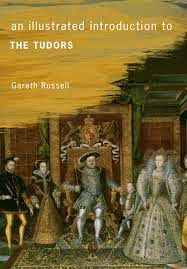
Good afternoon! I am delighted to announce that I have a new book out next week with Amberley. As part of their gorgeous "An Illustrated Introduction to..." series, a set of books giving an introduction for adults to a particular historical topic, they asked me to write the installment on the Tudors. (As readers of this blog will know, I've written about them a lot!) They've picked some absolutely beautiful illustrations for the book, including my favourite portrait of Elizabeth I, as she approached old age. It's so moving!

An Illustrated Introduction to the Tudors covers the private lives and political roles of all the Tudor monarchs, as well as providing snapshots into issues like - sex in Tudor England, burning at the stake, the myth of Anne Boleyn's six fingers and whether or not Henry VIII had syphilis.

It's available through Amberley and online book stores, like Amazon and the Book Depository.

Friday, 1 August 2014

Review: "George Boleyn: Tudor Poet, Courtier and Diplomat"


Diana Mitford once reflected that when reviewing a friend's book, the reviewer is inevitably predisposed towards a favourable conclusion and that only the disingenuous would pretend otherwise. In a similar spirit, I should begin this article by pointing out that I am a friend and, via my novels Popular and The Immaculate Deception, a colleague of one of the authors of George Boleyn: Tudor Poet, Courtier and Diplomat - Claire Ridgway. Both our books are published by the same press and I helped lead two of her beautiful Tudor tours in 2012. So I approached this, the first full-length modern biography of the third Boleyn sibling, with a sympathetic eye and hopefulness that it would prove an enlightening read. 

Passion and scholarly probing saturate this book; the authors' excitement and fascination with their subject is underpinned by years of research into the compelling story of his life and the awful trajectory of his demise. Having made a career by inviting people to experience her ongoing research and education into the Tudor court with her, Claire Ridgway uses the same tactic in this book. There's a touch of Antal Szerb here, the great Hungarian-Jewish historian, who began his 1942 study on the court of Marie-Antoinette by informing the reader that "if he absolutely insists that a writer should address him in the scholarly manner, from on high, in ex cathedra tones, then he should simply toss this book on the floor. My way is to speak as one human being to another, looking to fine kindred spirits and good company." Ridgway and Cherry adopt this tactic in George Boleyn and it's very successful. If a reader finds a conversational tone grating or jarring, then this book mightn't be for them, but for many it's likely to prove, as the English say, a tonic - a refreshing and enjoyable change.

The lack of any surviving portraits of Boleyn or much in the way of letters and, crucially given the book's subtitle, his poetry, makes it difficult to flesh him out in too much detail, but both writers work with what has remained to paint a relatively convincing portrait of a headstrong but pious courtier with a passion for living and a solid mind. If George doesn't quite pop out as being as much fun as some might imagine him, it's a relief to see why he was nothing like the horror imagined in later fictional adaptations like Bring Up the Bodies or The Other Boleyn Girl. By shifting through all the available information and crucially being able to admit where Boleyn was guilty of hard-heartedness and even outright cruelty, Clare Cherry and Claire Ridgway are able to present a biography that is sympathetic without being hagiographic. Rather like the latter's website which has, wholly unjustly and in a spirit of sweeping reduction, been described as a Boleyn "fan site." Empathy is not a whitewash and sympathy or identification is not always a bad thing - as shown by beautiful biographies like Antonia Fraser's on Marie-Antoinette, Lauren Mackey's on Eustace Chapuys, William Shawcross's on Elizabeth Bowes-Lyon or David Starkey's on Elizabeth I.

There are a few flies in the ointment - I would have liked to see a bit more of how George has been reimagined in culture after his death. We have seen a pious George, George the buffoon, gay George, bisexual George, kind George, saintly George, George the rapist and an incestuous George. His afterlife is fascinating and it would have been nice to see a little bit more of that, but that's a personal preference and in a biography that seeks to liberate George Boleyn from the shackles of cultural history, perhaps a facetious and contradictory one.

All things considered, George Boleyn: Tudor Poet, Courtier & Diplomat is a gem of a book. Thoughtful, erudite, charming, passionate and clever, it helps set George Boleyn centre-stage and to paint a fascinating portrait of an aristocratic career that ultimately sailed too close to the Sun and paid a tragically unfair price for it.

Tuesday, 29 July 2014

A lovely endorsement by Leanda de Lisle


I am so pleased that the wonderful Leanda de Lisle has provided a lovely quote for the front covers of The Emperors, which is due to be released on 28th August. Leanda described the book as, "A family story of the royal rivalries that tore Europe apart, full of fire and tragedy." Leanda is not just the author of one of my favourite historical biographies (The Sisters Who Would Be Queen), but she is also the god-daughter of Tsar Nicholas II's younger sister, the Grand Duchess Xenia Alexandrovna, who fled to Britain after the Revolution.

The book is available from Amazon UK, Amazon US, Amazon Deutschland and Amazon Canada.

Sunday, 8 June 2014

The death of George Boleyn: A guest post and blog tour


It's been quite the start to summer for fans of Tudor biographies, with studies on the lives of those usually defined by their relationship to the royal family's star players appearing to flesh out our knowledge of Henry VIII's dazzling but terrifying court. First, Lauren Mackey's biography of Eustace Chapuys, the prolific diplomat whose correspondence all historians owe a debt to, and secondly Clare Cherry and Claire Ridgway's biography George Boleyn: Tudor Poet, Courtier and Diplomat, which seeks to give a fairer understanding of Anne Boleyn's notorious brother, who perished in May 1536 on a fabricated charge of commiting incest with his sister the queen. Described by David Starkey as having all of Anne's confidence but only half her talents, George has recently been resurrected in popular culture in many different guises, featuring the novels, plays, television dramas and movies about the Henrician court.

With so much fascination and even more speculation about George Boleyn, Clare Cherry and Claire Ridgway (above) have teamed up to produce a biography of him, which I'm reading at the moment and which I can certainly recommend. To win your own signed copy of the book, read on to the end of this extract from George Boleyn, an account of his execution and interest in the Reformation. Thank you to the two Cla(i)res for this excerpt; it's a pleasure to host them as part of their blog tour to promote their new book.

***

George Boleyn was executed on Tower Hill on 17th May 1536. He had gone from palace to prison to execution within 15 days, and it is a testament to his courage and strength of character that he was able to defend himself so well at his trial and give such an impassioned speech on the scaffold, when lesser men would still have been in shock. He made a long penitent speech, which found admiration with the vast crowd gathered to witness the executions. There are a number of different versions of George’s speech, but they all agree on the basic content. Only Chapuys has George confessing that he deserved death for “having so contaminated and so contaminating others with the new sects”, and praying everyone to abandon such heresies. That is clearly not what he said, and is more a matter of wishful thinking by Chapuys.

The site of George Boleyn's execution
 After stepping on to the scaffold, George addressed the crowd:

“I was born under the law, and I die under the law, for as much as it is the law which has condemned me.”

According to two eyewitnesses, he said this three times, almost as if he were collecting his thoughts before continuing. But there was another reason. To say he died “under the law”, rather than admitting his guilt, was the closest he dared go to declaring his innocence. Therefore, he ensured the point was reiterated to the vast crowd of spectators, many of whom knew him personally. He went on to say that he was not there to preach a sermon but to die. He told the vast crowd that he deserved death because he was a wretched sinner who had grievously and often offended. He did not relate his sins, telling the crowd that they would derive no pleasure from hearing them, and that he would derive no pleasure from stating them. He merely said that God knew them all. He warned everyone present to use him as an example, especially his fellow courtiers. He warned them “not to trust in the vanity of the world, and especially in the flatterings of the Court, and the favour and treacheries of Fortune”, which he said raised men up only to “dash them again upon the ground”. He blamed fortune for his current pitiful condition - or rather, he blamed himself, saying he had leaned too heavily on fortune, “who hath proved herself fickle and false unto me”. He said he prayed for the mercy of God, and that he forgave all men. He begged forgiveness of God and of anyone he might have offended. He begged those present to ask anyone not there to forgive him if he had offended them, and he told them that “having lived the life of a sinner, I would fain die a Christian man.”

There has been much speculation in the latter part of the twentieth and the early years of the twenty-first century about what it was to which George Boleyn was referring to when he said he was a wretched sinner who deserved death, but refused to name his sins. The condemned had their families to protect, and no protestations of innocence would have been acceptable to the Crown. Besides, it was the honourable thing to accept that death was deserved. The Christian doctrine was that we are all sinners deserving of death because of original sin. The shame and dishonour George says he dies for is clearly the incest conviction (“with worse shame and dishonour than hath ever been heard of before”), but at no point in the speech does he make an admission of the offence of which he had been found guilty.

Though one of the sins he refers to, but does not mention, is suggested to be sodomy, there is no evidence for this. George Cavendish suggests that George was referring to promiscuity. This may have been partly true, but the behaviour for which he apologises could refer to an amalgamation of supposed sins. Although George did not ask for the King’s forgiveness, he did ask forgiveness of anyone whom he might have offended. Indeed, he went further than this and virtually begged for forgiveness. As a Christian man about to face death, he would have been acutely aware of his flaws and faults. He was proud, and totally lacked humility. He was typically ruthless and self-seeking for a man of the age. He sat at the trial of Thomas More and was present at the appalling executions of the Carthusian monks, despite his protestations of being a “Christian man”. He showed no sympathy or compassion towards Catherine of Aragon or her daughter Mary. We do not know how he treated his wife, but his reputation as a high-living womaniser would support the notion that he was not ideal husband material. He had even turned his back on his sister Mary in her hour of need. When facing death, George Boleyn, a highly intelligent and religious man, would have been painfully aware of these failings. Hence his speech went above and beyond that which was expected of him.

He admitted he had relied too heavily on fortune and trusted too much in the vanity of the world and the flattery of the court. His positions of favour and power had resulted in sycophantic flattery by friends and enemies alike, and he had swallowed it whole. He had waltzed around the court with an air of arrogance in the certainty of his position, and because of his confidence in himself and the respect in which he was held. Yet those same people who had fawned over him were here now, watching him die. It was all false, and only at the very end did he realise this.

In his speech he went on to highlight his religious convictions, as previously quoted in the chapter on religion, before finishing by praying “God save the King”. Knowing the sort of irreverence to which George Boleyn was prone, this last sentence could be read with a great deal of irony; but whatever was happening to him, his upbringing would never have allowed him to think ill of the King. As far as George was concerned, this was his own fault.

Following his speech, he calmly and courageously knelt down, placed his head on the block, and submitted his neck to the axe. His head was removed with a single stroke, and his severed head was held up to the crowd as the executioner intoned the words, “So ends the lives of all the King’s enemies.” George Boleyn had many faults, but treason had never been one of them, and Henry must have known that. None of the men’s heads were put on display on spikes, as was usual with convicted traitors; this would surely have been the case if Henry seriously thought they were guilty, just as Thomas Culpeper’s would be five years later. It was the only small consideration that Henry showed his innocent friends. George’s body and head were taken to the Chapel of St Peter ad Vincula within the Tower, where his sister would join him two days later. The other men were buried in two graves, two men in each, in the chapel graveyard.

It is unlikely, as Chapuys alleges, that Anne was forced to watch the executions of her brother and friends, but she may have seen the men congregated together before they were marched out of the Tower - perhaps allowing her one last look at her beloved brother. One man who did witness the executions was Thomas Wyatt, who was imprisoned in the Tower still and who wrote about them in verse, illustrating the danger of being too close to the throne:

“These bloody days have broken my heart.
My lust, my youth did them depart,
And blind desire of estate.
Who hastes to climb seeks to revert.
Of truth, circa Regna tonat.

The Bell Tower showed me such a sight
That in my head sticks day and night.
There did I learn out of a grate,
For all favour, glory, or might,
That yet, circa Regna tonat.”

In a way this verse reiterates the words of George Boleyn on the scaffold, when he warned his listeners not to trust the vanities of the world and the flattery of the court. His “blind desire of estate” and his “haste to climb” had led him to this end. This was certainly the passage of his speech that was specifically remembered by most of those present, particularly courtiers. On 18 September 1536, John Husee had cause to write to Lady Lisle, “but now I remember my Lord of Rochford’s words, who exhorted every man to beware of the flattering of the court.” There was many a young courtier who heard those words with trepidation.

George’s body and head were taken to the Chapel of St Peter ad Vincula within the Tower, where his sister would join him two days later.


Notes and Sources

* Bentley, Samuel, ed. Excerpta Historica Or, Illustrations of English History. London, 1831, pp. 261–5.
LP x. 908
* Constantine, George. Archaeologia, Or, Miscellaneous Tracts Relating to Antiquity. Vol. 23. ed. T Amyot, The Society, 1831, pp. 64-6.
Gruffudd, Elis. “Gruffudd’s Chronicle”. The National Library of Wales.
St Clare Byrne, Muriel, ed. The Lisle Letters. Vol. 3. University of Chicago Press, 1981, p491.
* The Chronicle of Calais In the Reigns of Henry VII and Henry VIII to the Year 1540 (ed. Gough Nichols, John).
* Thomas, William, The Pilgrim, London, 1861, pp.116-17
* Wriothesley, Charles. A Chronicle of England During the Reigns of the Tudors, from A.D. 1485 to 1559. ed. Camden Society 1875., pp. 39-40.

COMPETITION

Win a signed copy of George Boleyn: Tudor Poet, Courtier and Diplomat by Clare Cherry and Claire Ridgway by answering this question. Please submit your answers like a comment, complete with your e-mail address; neither will be published. But when we use a generator to randomly select a winner from the entrants, it'll be helpful to have your e-mail address for me to let you know you've won! The e-mail addresses, perhaps needless to say, will not be passed on to any third parties. (Also please leave comments about the article, with any of your own thoughts or queries about George Boleyn, Lord Rochford. It's always a pleasure for authors to hear from people interested in their work!)
QUESTION: George Boleyn's sister Anne was played by English actress Natalie Dormer in the Showtime series "The Tudors". What is the name of the queen she is currently playing in HBO's medieval fantasy "Game of Thrones"? 

The competition closes on Thursday 12th June 2014. Thank you.

Related Posts with Thumbnails