Showing posts with label Ancien Régime. Show all posts

Sunday, 15 November 2015

Dominic Pearce on the Civil War Queen


I am delighted and excited that Dominic Pearce's biography of Henrietta Maria of France, wife of King Charles I, is available now from Amberley. Henrietta Maria's marriage coincided with the clash between parliamentarianism and absolutism in Britain, with the Queen's extravagance, Catholic faith and French upbringing cited by her husband's opponents as some of the causes for the civil war that cost thousands of lives and eventually toppled the monarchy in 1649. 

Dominic has kindly shared what attracted him to the story of the charismatic and controversial Bourbon princess, who was the younger sister of King Louis XIII of France, Queen Elisabeth of Spain and the mother of kings Charles II and James II.

By Dominic Pearce

When I started to research Henrietta Maria’s life I knew the story would be good. The queen was the muse of Anthony van Dyck, she survived two civil wars (the second one in France), outlived her husband and five of her children, and gave five monarchs to England – two children and three grand-children. To my delight I found an exceptional story that went a good deal further even than this. First there is the French background. Henrietta Maria was born in 1609. Her father was King Henri IV, a French national hero who saved his country from destruction at the end of the sixteenth century. Her mother was his second wife Marie de Médicis - famous as the builder of the Palais de Luxembourg, and for the cycle of paintings about her life by Rubens.

Henrietta Maria lived in France not only as a child but also from 1644 to 1660, and she died in France. The French history alone is mesmeric. It gives new insights into the queen’s life and the choices she made. It shines a new light on the English history of the period, so often viewed in isolation.

Second the queen’s character. Many of her letters survive. They are eloquent. She was strong, straightforward, intelligent, and filled with energy. She had a highly developed sense of fun. She was devoted to Charles I, utterly loyal. She was immensely courageous. I cannot say she was always the easiest person, but she is impressive, and she certainly had, when she chose, an irresistible charm.

Henrietta Maria with her husband, Charles I, departing for the hunt
Third the English Civil War. I discovered that, without Henrietta Maria, the conflict would not have started in the way it did. There was a real political problem in England (and Scotland) regardless of the queen. However she was at the heart of what happened – and not just as a victim. This is not the place to explain what she did during the war, but I can say she was nearly killed three times. There is more - her cultural patronage, the ups and downs of her marriage and family life, her sheer professionalism as a queen consort.

We can be close to Henrietta Maria. I have already said we have her letters. In the French court memoirs of the period we know how she appeared to her highly sophisticated compatriots. She is described in English letters, and appears in the diaries of Pepys and Evelyn. We have an eye witness account of her reaction, when she heard of the death of Charles I. We know what the furniture and ornaments were in the Château de Colombes, when she died (they were quite something). I was very lucky to have the opportunity to research this extraordinary woman who lived in such a period of history. She really is worth knowing more about.

Saturday, 14 November 2015

Marianne Bereft: A Reflection on the early public reaction to the Paris terrorist attacks


A historian is always caught somewhere between pedantry and pragmatism. In reaction to last night's massacres in Paris, thousands of people have taken advantage of a Facebook app that allows them to alter their profile picture to be superimposed by the colours of the French flag. The gesture, which allows users to show their solidarity with victims of terrorism, utilises the tricolore, a flag that was first adopted two hundred years ago by a government that launched a policy of deliberate and sustained Terror against its own people. The French Revolution's Committee of Public Safety made the Spanish Inquisition look the habeas corpus fan club, massacres and choreographed executions were celebrated as part of the theatre of civic duty, opponents were drowned or butchered en masse, population cleansing was inflicted on sections of the west of France and the new republic, along with having a view of women that would make John Knox look like Gloria Steinem, presided over the annihilation of French religious freedom.

We don't like to talk about the French Revolution's horrors today, because the event has entered into the core mythology of the West. It was, so we are told, one of the birthplaces of Western liberal democracy, an interpretation that might have raised more than a guffaw from its participants. For all of its glib catchphrases, and very tangible and important successes (particularly outside France), the French Revolution was also a violent, cruel and often repulsive entity that was driven forward by rampantly intolerant political extremism. But it is seldom described as such.

Something of that collective will to ignore or deny was evident in the initial online reaction to the unspeakable jihadist horrors that took place this weekend. I have so far counted about a dozen #prayforParis on the statuses of Facebook acquaintances I know to be atheists or committed agnostics. I've seen people who quite seriously compared the democratically-elected Margaret Thatcher to a Nazi dictator wax lyrical about the inviolable sanctity of Western freedom. And the apotheosis of stupidity seems to me to be the #TerrorismhasnoReligion. Yes, it does. In this case, radical Islam. With the Ku Klux Klan, it is an extreme interpretation of Protestantism. You may not like how these people have chosen to interpret either the Qu'ran or the Bible, but to suggest that "real" religion is antithetical to violence is to fall into the trap of believing the West's tendency to view religion as the great cosmic hug, a theological mood bracelet, that exists solely to validate the believers and to make them behave like nice people. There are hundreds of examples in many religious texts which advocate pain, self-denial, violence or acts of punishing emotional repression. Last night's terror did have a religion. Faith was its driving motivation; it was not a fig leaf to cover some other goal. To insist that the jihadists are guilty of a horrible misunderstanding of their holy texts is to miss both the point and the opportunity to engage with the issue. Their interpretation is unquestionably horrible, and as far as one can be on what is essentially a matter of opinion it is almost certainly wrong, but to focus on that as our first port of call means that we run the risk of underestimating how deeply their perverse take on their religion matters to the killers. A thousand errors are being made through well-intentioned solipsism. Just as we have decided that "Liberty, Equality, Fraternity" are concepts too pure and too good for them to ever intentionally or inevitably produce negative side effects, we have exonerated certain strands of religious thought.

At this point, it might be fashionable to push the contrarian argument even further by citing the many examples we see online, every day, that prove we are living in an age of hysterical, mawkish voyeurism. This year, for God alone knows what reason, it suddenly became the fashion for people to post selfies online with a Poppy over their mouths to symbolise the annual minutes' silence held throughout Britain and the Commonwealth to commemorate the war dead. Apparently, quietly excusing oneself had gone out the window in exchange for yet another "look at me, behold and applaud my virtue" snapshot. One could use the reaction of one half of the Internet to despair at the bigoted fear-mongers of the world, who fall back on sweeping generalisations by implying that the majority of the world's second-largest faith are jihad-supporting terrorists. Equally, you could point at the proliferation of half-baked hyper-liberal keyboard warriors, thundering over the newsfeed barricades with their certain-to-be-well-received platitudes about pluralism, diversity and the heartwarming loveliness of the human race. Many in the latter camp will run further with the baton of daring intellectualism by suggesting the West is to blame for the butchering. A cascade of caveats will arrive alongside the sting of self-accusation.

But I've always wondered at the tendency of those who praise vox populi in principle only to dismiss it in practice. It doesn't particularly matter that the French national flag began its life in less than delightful circumstances. That flag has been around for so long and weathered so many other events, including heroic opposition to Nazi invasion, that it has rightly come to symbolise something else entirely. Through its proliferation on Facebook, even from those who are doing it with half an eye to how many likes they will receive, the tricolore has come to represent this week's empathy and resilience. Historians, and certainly anthropologists, will look back on our reaction to this tragedy with fascination. In their conclusions, they will have the great advantage of knowing how the story ends. For the moment, all we can do is try to react as honestly as we can. Since History often reads as a catalogue of man's failures, it would be very easy for us to focus solely on the maudlin, the crass, the flawed or the illogical. Instead, it might be more worthwhile to appreciate the caring, the eloquent, heartfelt empathy of those who felt sufficiently moved by this tragedy to display their feelings of outrage and support. 

There is a threat that needs to be understood. It is the author of horror, misery and pain. It has butchered thousands of Muslims and Christians in the Middle East. It has been responsible for ethnic purges, gang rape and cultural destruction. Now, it is spreading outwards to strike at the great cities of foreign nations, where it will not hesitate to kill people of all religions and none. It is an ideology that writes in blood and claims, with total sincerity, to have a Divine mandate. It uses acts of war and moral squalor as its first course of action, not its last. Just over two hundred years ago, as they watched the tricolore being hoisted for the first time on the horizon, the denizens of old regime Versailles posed the question, "Who can say where this audacity of ideas will end?" As Paris gives the world yet another display of stoic courage and dignity, that question must be resurrected. Something must be done. I don't know what it is. But there is something heartening in most of the reactions to this weekend's brutality and they potentially provide a glimmer of hope on the very difficult road ahead.

Wednesday, 5 August 2015

Tudor coronations


The August edition of Tudor Life, a members e-magazine which I have the privilege to edit, is now available via the Tudor Society. 22nd August is the Feast of the Coronation of the Virgin in the Church calendar, which gave me the idea for an issue themed around coronations - along with articles from our regular contributors, including an analysis of Elizabeth I's iconic coronation portrait by Melanie Taylor, we also have some fantastic guest pieces from eminent historians.

Leanda de Lisle, best-selling author of After Elizabeth, The Sisters Who Would Be Queen and Tudor: The Family Story, writes about the coronation of Henry VII, the first Tudor king. Dominic Pierce took time off from his forthcoming biography of Queen Henrietta-Maria to reflect on the coronation of her mother as queen of France amid political chaos in 1610. Toni Mount, author of Everyday Life in Medieval London, Dragon's Blood and Willow Bark: The mysteries of medieval medicine and The Medieval Housewife, takes a look at the crowds watching the coronations and how they interpreted omens from what took place. Derek Wilson, author of some hugely successful and wonderful books on the Tudors, including A Brief History of Henry VIII: Reformer and Tyrant, In the Lion's Court and The Uncrowned Kings of England: The Black Legend of the Dudleys discusses the powerful women of the Protestant Reformation.


The Tudor Society, which publishes Tudor Life, is increasing its membership and drive. Along with the magazine, membership also brings access to video talks by historians and experts once a month, who then follow that up by conducting a live web chat with members. 

Next month's edition of the magazine will look at the Tudors in movies, music and the arts, for which I'll have contributed an article on Elizabeth Taylor and the casting of the Oscar-winning Anne of the Thousand Days.

You can find out more information about the magazine and the Society, here - www.tudorsociety.com.

Monday, 29 December 2014

My Top 10 Books of 2014


Good evening!

This was a great year for books, I think. The year started of well for fans of the sixteenth century with Lauren Mackay's fantastic biography of the diplomat Eustace Chapuys, which I reviewed and loved. If you're interested in the Tudor court or in the world of diplomacy, do pick up a copy. Since then, I've brought these books to New Haven, Oxford, London, Portballintrae and Gloucestershire with me and they have been great company. I'm currently working my way through two books that I hoped to finish before the end of the year - The Six Wives and Many Mistresses of Henry VIII by Amy Licence and The Medieval Housewife and other women of the Middle Ages by Toni Mount, both of which I'll post more about in the new year. From Inside the Tudor Court on, here are my ten favourite reads of 2014, in order of publication.

1. Finding Camlann by Sean Pidgeon (novel) (published by W. W. Norton & Company)  This novel reads as a love letter to Oxford no less effusive than Brideshead Revisited, but in this case the story of an archaeologist on the quest for the historical origins of the legend of King Arthur allows the story to lovingly evoke the one side of Oxford life that Brideshead tried to avoid at all costs - actual academics. Long and haunting descriptions of the British countryside and a crackling dynamic between the archaeologist and an employee at the Oxford English Dictionary make this a short but cerebral novel that I absolutely loved. It had me hooked, I stayed up to finish it and I hope we'll see more from Sean Pidgeon in 2015. (Full review to follow)

2. Four Sisters: The Lost Lives of the Romanov Grand Duchesses by Helen Rappaport (non-fiction) (published by Macmillan) I thought Helen Rappaport's Ekaterinburg, about the weeks preceding the murder of the Romanov family in 1918, was a triumph of a book and while the decision to write the first full-length biography of Nicholas II's daughters meant that Four Sisters lacked the dramatic intensity of her earlier work, Rappaport managed to produce a deeply moving and painstakingly researched account of the Grand Duchesses Olga, Tatiana, Maria and Anastasia. Their childish quarrels, the friends they made when they volunteered as nurses during the Great War, the Grand Duchess Olga's deep love for a wounded soldier and the twilight of Imperial Russia intersect to produce an intimate account of four too-short lives.

3. George Boleyn: Tudor Poet, Courtier and Diplomat by Clare Cherry and Claire Ridgway (non-fiction) (published by Made Global) One of three of Henry VIII's brothers-in-law to end his life beneath the headsman's axe, George Boleyn was no saint and no prude, either. But he emerges from the pages of Clare Cherry and Claire Ridgway's biography as a committed and talented young man with a sincere passion for the Protestant faith. Cherry and Ridgway know their subject and his world, and they use that knowledge to lift him from the shadow thrown by his famous sister, rehabilitating him while never failing to remind us of the grizzly world in which he lived and died. 

4. How to Ruin a Queen: Marie Antoinette, the Stolen Diamonds and the Scandal that Shook the French Throne by Jonathan Beckman (non-fiction) (published by John Murray) I don't know what it is about the Affair of the Necklace, but it seems to produce more than its fair share of historical works that could also be praised for their literary merits. In 1942, the Hungarian-Jewish writer Antal Szerb produced a book called The Queen's Necklace which, if you can find it, cannot come any more highly recommended. It is utterly beautiful. Likewise, Jonathan Beckman's account of one of the greatest jewellery heists in history is written in such a delicious style that, if edible, it would produce moomoo-necessitating levels of obesity. It was a joy to read this book and Beckman works through the initiators, and victims, of the Affair with consummate skill. Like Szerb's book, and Antonia Fraser's biography, it left me feeling even more sorry for poor Marie-Antoinette, but it also managed to delve deeper than before into the murky personality of the Comtesse de la Motte and it's the inescapable whiff of that dreadful woman that lingered long after I finished reading. 

5. The Creeper by Emerald Fennell (novel) (published by Bloomsbury) I bought this sequel to Shiverton Hall because the author is a good friend of mine and because I thoroughly enjoyed the first book in the series. On a side note, I have such a low threshold for any kind of horror that if Emerald does ever turn her hand to writing that genre for adults, you will find me manfully dousing myself in water from Lourdes and using rosaries like lassos. But I digress. This creepy and intrigue-laden ghost story at a ghoulish English boarding school is perfect for children or for those of us who have never been able to see the clock turn to 3 a.m. again without silent tears courtesy of The Exorcism of Emily Rose. 

6. Empress Dowager Cixi: The Concubine Who Launched Modern China by Jung Chang (non-fiction) (published by Vintage) Chairman Mao's biographer returns with this compelling and page-turning life of the notorious "Dragon Empress" who presided over the waning years of the Chinese monarchy. Cixi's insatiable ambition, murderous self-promotion and pathological meddling usually cause bile to mix with ink in the historian's pen, but Chang offers up enough of the Empress's virtues, namely her hard-headed pragmatism, her charisma and her impressive list of political victories to balance the scales. 

7. The Paradise Tree by Elena Maria Vidal (novel) (published by CreateSpace) Like Finding Camlann, this is a cerebral book with a love of nature underpinning its dialogue. Here, it's a defence of Catholicism and the experience of Irish immigrants as they set out for a new life in Canada and the United States during the reign of Queen Victoria. The grasp of Irish colloquialisms  is impressive, as is the way Irish words peppered conversation even before the Gaelic Revival at the end of the century led, irony of ironies, by the privileged offspring of the Protestant Ascendancy. A love of domesticity, quotes from the Bible and Irish folk songs to start each chapter, and a pretty heartbreaking subplot about how far one character will go to prosper in their new homeland made The Paradise Tree a thought-provoking read. (Full review to follow)

8. Eleanor of Castile: The Shadow Queen by Sara Cockerill (non-fiction) (published by Amberley) Proof that biographies of medieval personalities don't have to succumb to flights of fantasy, The Shadow Queen was a wonderful read about a supreme multi-tasker. Businesswoman, landlady, princess, politician, adviser, wife, mother and patron of the arts, Eleanor of Castile also managed to keep the royalist home fires burning during the Second Barons' War. Like the indomitable Hapsburg Empress Maria Teresa five centuries later, Eleanor didn't seem to find being nearly-constantly pregnant a deterrent. The invasion of Wales and the Diaspora are also dealt with. I would say that The Shadow Queen deserves to be considered the definitive biography of its subject.

9. Edward II: The Unconventional King by Kathryn Warner (non-fiction) (published by Amberley) Sympathetic without being sentimental, The Unconventional King is as much a warning against trusting in the power of repetition as it is a biography of a monarch whose disastrous reign ended in his deposition and mysterious disappearance. Warner uses every contemporary source available to her to prove that nearly every popular image of King Edward II is totally unfounded - the effeminate appearance, the domestic cruelty, the cowardice, the alleged illegitimacy of his eldest child and the grotesque cameo of a red hot poker in his final moments. They're all bunkum. She's also refreshingly frank about what his bisexuality, to use a word familiar to us but alien to him, and lays out the evidence to support her view that his relationship with Piers Gaveston, Earl of Cornwall was probably a romantic one. Gutsy, outgoing, strong, handsome and with a flair for bonhomie, Edward II has clearly caught Kathryn Warner's interest and she's repaid him with a stellar and brutally honest account of his life. 

10. Midnight at the Pera Palace: The Birth of Modern Istanbul by Charles King (non-fiction) (published by W. W. Norton & Company) It is hard to put into words how much I enjoyed Midnight at the Pera Palace. A social history of the city of Istanbul from the end of the First World War to the aftermath of the Second, the narrative is framed around a hotel that was built to attract a European clientele. Fantastically written, perfectly structured and with a cast of hundreds of men and women who visited the hotel from the fall of the Ottoman sultanate through the tortured birth of the Turkish republic, Midnight at the Pera Palace is a grand story of humanity. It is modern history at its finest. I could not put it down and I plan to visit the city next year. 

Friday, 5 December 2014

The ghosts of Versailles

Stephanie Dale as Marie-Antoinette (seating) with Rebecca Lenaghan as Gabrielle de Polignac

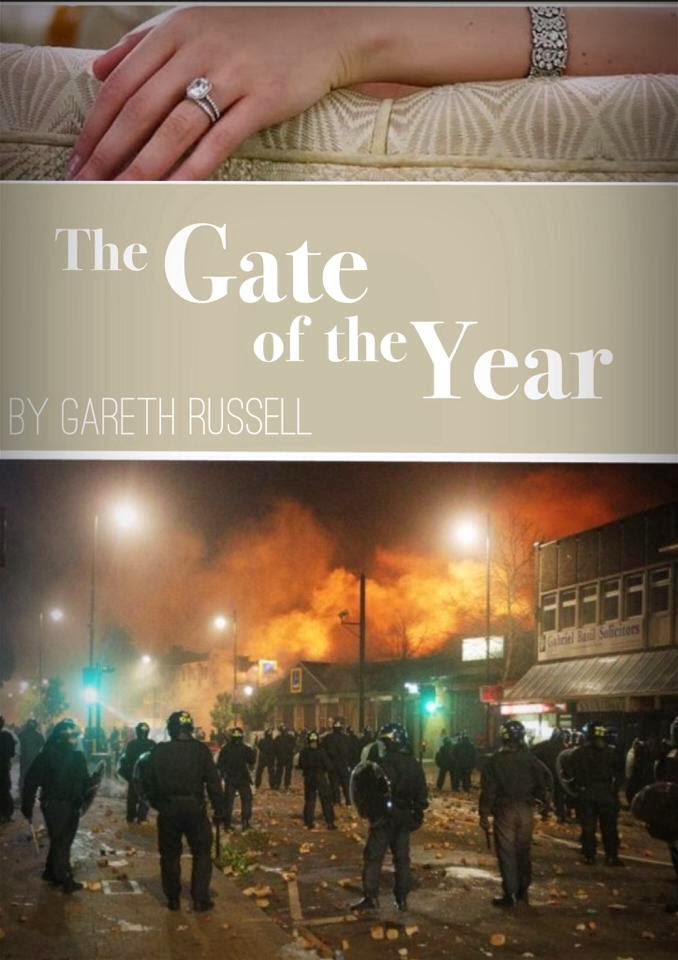
This December, I have been working on a revival of my play The Gate of the Year, the storyline of which is based on the outbreak of the French Revolution. Beginning with the final Christmas at Versailles in 1788 and moving on to three weeks after the fall of the Bastille in 1789, the play updates to the story to a modern setting - although, with its preoccupation with gender, status and etiquette, it's not quite modern in the way we would identify it. Cailum Carragher, who plays the Minister of Police, describes it as adrift "in time and place" - a far more lovely way to put it, I suppose.

Lifting characters who lived and died in the fading decades of the eighteenth century to set them adrift in the choppy currents of an imagined twentieth was not, strange to say, a particularly difficult process, but it was fascinating. I think I shall leave them, temporarily, with great reluctance. They have a way of settling under your skin, by leaping out to you across the centuries - they are so vivid, so relatable, I think, even in their oddity. There is something tangible about them; it's hard not to feel drawn toward them. Stephanie Dale, who plays Marie-Antoinette, and who has recently finished filming for the BBC series The Sparticle Mystery, reflects, "I am sympathetic towards her because of what she has had to endure emotionally. Growing up, her life was supposed to have been perfect and she had a terrible time with the press. One of my favourite lines is 'it was not a complete pleasure to live out the greatest fairy tale of the century.' Marie Antoinette has been hurt by publicity and she knew what people expected of her and her marriage, but she is also extremely strong for having the ability to endure it. The amount she takes on emotionally and physically in the course of this play is quite extensive and for this reason I admire her." As Marie-Antoinette hurtles towards a fate she would never have chosen for herself there is, to me anyway, something magnificent about the way she decides "not to go quietly into the night." In Stephanie's words, "She has chosen her destiny and chosen to take action which is an extremely admirable part of her personality."

Mercedes Sharma, who plays another female icon of the revolutionary era, liberal republicanism's "angel of assassination" Charlotte Corday, is another actress playing someone who goes down the rabbit hole as the Revolution engulfs them all. Throughout the rehearsal process, Mercedes has always maintained that her character is one of the most identifiable for modern audiences. "Having gotten to know the characters I still think they are the most relatable," she says. "I believe that convincing yourself that things happen for the greater good (something that Marat does throughout) is part of human nature. Charlotte is like all young people with a passion for something, her passion and dreams just happen to turn into her own personal living hell."

Daniel Kelly as Jean-Paul Marat and Mercedes Sharma as Charlotte Corday
In this re-imagined world of The Gate of the Year, Corday actually knows her victim, Jean-Paul Marat, in a friendship where her idealism contrasts with his hard-nosed, brutal pragmatism. However, Mercedes is more ambivalent about Charlotte Corday than the real Corday's nineteenth century admirers were. She's not so sure that anyone emerges from the revolutionary period completely untainted: "At the start of the play I think Charlotte's willingness to throw herself into the revolutionary world, whether she truly understands what she is getting into or not, almost inspires Marat to become the monster we know him to be by the end. Both need each others' approval but in all honesty I don't think either of them realise that until it tears them apart."

Grappling with personal and moral ambiguities is what makes this story so appealing to me as a writer and Tom Flight, who returns to the role of France's doomed King Louis XVI articulates this well when reflecting on his character's dire reputation as a failed monarch who helped grease the slippery slope to chaos. "I think the reason why he is often thought of as weak and pathetic is because Louis suffered from incredible self-doubt in his ability to rule which lead to uncertainty in decision making. This makes Louis easy to mock as it goes against the traditional ideas of a strong monarch. But in The Gate of the Year, you see the complexity of the decisions that Louis faced and how he was caught between the deep-seated traditions of the Aristocracy and the blazing rage of the revolutionaries. One of my favourite lines in the play is when Marie-Antoinette says of Louis “He chose being kind over being good.” Louis tried until the end to do the right thing, but the consequences of his decisions were horrific. I actually believe Louis was a better King than most. But," he concedes, "he was perhaps the wrong monarch at the wrong time."

Both Stephanie and Tom interpreted the marriage of Louis XVI and Marie-Antoinette much more favourably than most portrayals of them. Marie-Antoinette has been played on screen by actresses like Norma Shearer (who was nominated for an Oscar for the role in 1938), Jane Seymour, Joely Richardson, Kirsten Dunst and Diane Kruger, but in many, particularly in the 1938 role, Louis is played as a kind-hearted dunce, almost a caricature. Stephanie sees Marie-Antoinette as "unquestionably faithful" to her husband (rumours dogged the Queen, then and later, that she had an affair with the handsome Swedish soldier, Count Axel von Fersen, but I agree with writers like Jonathan Beckman and Elena Maria Vidal that there is no evidence to support that she was ever unfaithful to her husband). Of their marriage, Tom, who read the historian Vincent Cronin's account of the royal marriage, reflects, "I believe they loved each other unquestionably. Through being forced into a politically motivated arranged marriage a unique bond between them was formed. Louis also never had mistresses (unlike many of his predecessors) and his faithfulness shows a commitment and devotion to the marriage that was rare in Versailles. I believe their marriage was a happy and loving one, and Stephanie Dale’s wonderful performance as Marie-Antoinette sublimely captures the shock and torment as the fairy-tale turns into a nightmare."

Robert Morley and an Oscar-nominated Norma Shearer as Louis and his wife in 1938's Marie Antoinette
The story of the fall of the French monarchy is a grand political drama and a complex series of personal tragedies and triumphs. Tom Flight's favourite moment in the play takes place as the monarchy enters its endgame. "My favourite moment to perform is Act II, Scene VIII (photo below) between Louis and [his younger brother] Charles, performed by the outstanding David Paulin," he told me. "An empire has fallen, but in this scene the emotions of the situation are played out in a sibling squabble. I believe Louis always felt in the shadow of his younger brother, even that he was perhaps more suited to being King, and it is quite heart-breaking the way he admits his failure to his brother. Charles also has bitter regret he couldn’t do more for his country which, in part, was due to Louis’s decisions, and he can’t help but kick Louis while he’s at his lowest. But the scene remains a moment between two brothers. Despite the violent anger and high emotion neither can get away from the indelible nature of family and brotherhood."


Shimmering just beyond our reach, the "crucible of our modernity", the ghosts of Versailles, those who lived in it and those who destroyed it, present an eerily modern set of possibilities to depict, not so much a world in its twilight, as a timeless tale of human greatness, weakness, cruelty, wisdom, folly and hope.
 
Photographs by Ella McMaster.

Thursday, 20 March 2014

"The man who could have saved the French monarchy"?: Amos McCormack gives an interview about playing a modernised version of Monsieur Necker


With his name Anglicised to Jack Necker and his vocation modernised into one of television interviews and mass party rallies, The Gate of the Year's interpretation of Louis XVI's penultimate prime minister before the storming of the Bastille is certainly very different to the original. Born in Switzerland in 1732, Jacques Necker emerged as the shining light of French finance in the early part of Louis XVI's reign before public acclaim spurred his appointment as first minister. The move split the Court, with the ultra-royalists horrified that even the Queen, Marie-Antoinette, had supported the promotion of Necker, who was a foreigner, a Protestant and a liberal. If one believed his critics in the palace, he went even further than that and was secretly hoping to turn France into a republic, like his homeland. Actor Amos McCormack played Necker in The Gate of the Year and he's kindly shared his thoughts about the man presented by some as an egotistical opportunist and by others as the pre-revolutionary monarchy's great missed chance; a "what if" that might have prevented the revolution entirely.


Amos, tell us a little bit about your character in The Gate of the Year?

Jack Necker is a smart, wealthy businessman who comes to France from Switzerland. He had a very successful banking career before immersing himself in French politics. Known internationally as an economic genius, Louis XVI had initially hired him as Finance Minister to help curb France’s debt and fund their involvement in the American Revolution; however he became somewhat unpopular with the those he was working for when he made their spending public in his Report to the King, angering a lot of the public; it is sometimes believed to be one of the events that triggered the French Revolution. He was eventually brought back as Prime Minister to once again help lift the county from the uncomfortable situation it had found itself in, in the lead up to the Revolution.

The original frontispiece of Jacques Necker's extraordinarily controversial Report to the King, which royalists claimed was nothing more than a tissue of self-serving lies. 

Necker becomes very angry in Act I, scene vii when he remembers the level of religious discrimination that existed under ancien régime. How much of his personality do you think is defined by a sense of being an outsider?

This aspect was very important to me while playing him. All of the characters I interacted with in the play come from this completely different world, that of the monarchy, which in his eyes had only served to oppress his Protestantism and create a difficult life for those who shared his faith. He steps into the role of Prime Minister knowing full well that he is not welcome and not considered one of them. In all my scenes, this was always in the back of my mind, because I believed it to be extremely important to Necker’s intentions: to make the monarchy aware of how their current system was seen by many groups as a harsh, dominating regime. In this scene where I lose my temper my inner thoughts are made clear; I lay out clearly before all to see the rage that their discrimination creates. In this moment Necker not only becomes the spokesman for all the dissatisfied Protestants under the monarchy, but also the mad crowds of people who will soon attack the ruling monarchy and storm the Bastille.


What parts of Necker's personality did you warm to?

I admire his ambition and determination to succeed, which shines brightly despite the unwelcome environment he finds himself in. He has a strong sense of self-confidence, arguing for his beliefs and what he knows is right, even though he is often standing alone in his opinions. He has straightforwardness about him, firmly speaking out when he wishes to be heard, arriving immediately at the point of what he’s trying to say and not succumbing to ‘beating around the bush’ as it were. Ultimately, I warmed to his strong desire to step in and aid France in its time of need and his attempt to create a system that would be compatible for all.

Duplessis's portrait of the original Jacques Necker
Jacques Necker has been called "the man who could have saved the French monarchy", do you think he believed that?
Yes. It shows in his self-assuredness, his arrogance and in his words. Something which is mentioned in the play but not dwelt upon as much was the fact that this wasn’t the first time Necker had been called to provide service for France in desperate situations. He had been fired and re-hired numerous times and I hold no doubt that this encouraged a self-belief that he was the saviour of France. He was popular with the people and had a plan that showed positive signs of being successful. He had a strong conviction that the absolute monarchy had run its course, and a change would be strongly welcomed.

Amos with Rebecca Lenaghan in rehearsals in Belfast, practicing a scene between Necker and Madame de Polignac
Throughout the play, Necker bears a special animus towards Gabrielle de Polignac (played by Rebecca Lenaghan). What is it about her that you think made him feel that way?
One of the things that I’ve taken from this play is how easy it is for figures in history to become demonised; to be continually portrayed as lacking in compassion or having no respect for human life whatsoever. The members of the French monarchy are often seen in this light: uncaring; aloof; worried only about their wealth and position. For Necker, his dislike of this class of people is embodied in Gabrielle. He sees only the beautiful dresses, the palaces, the luxurious lifestyle. He can’t see past the firm monarchist beliefs or the Catholic faith. Perhaps he knows of her animosity towards him and his policies and sees an enemy in her. Most likely it is also her cleverness in the political field, and the influence she has which irks him as well. I found it unfortunate while playing this character, that there was a certain stubbornness to him; an inability to fully appreciate and recognise the goodness that was inherent in all those whom he met in Versailles, including Gabrielle.

Sunday, 16 March 2014

"His God and his country": David Paulin's interview on playing the prince who inspired the ultra-Right

David Paulin as the prince who became Charles X in The Gate of the Year

In the glittering world of high society before the revolution, few stars burned brighter than Louis XVI's youngest brother, Charles. Tall, handsome, athletic, boundlessly exuberant, he was known for his impeccable dress sense, his numerous affairs and constant parties. Gambling, horse racing, the opera, the theatre, balls and banquets were his milieu. He was constantly seen in the company of his charismatic sister-in-law, Marie-Antoinette of Austria, and together they were the poster children for the half a decade after Louis XVI succeeded to the throne in which, in the words of the historian Antal Szerb, they symbolised "the financial self-confidence of an entire generation, or indeed the whole country." But a decade later, the party was over and as the recession birthed a new era of political extremes, Charles (the Comte d'Artois in the original biography, but updated to the Duke of Artois in The Gate of the Year) allied himself firmly with the Right. Detested by the revolutionaries, who prohibited the colour green from appearing in the new French flag because it was the colour of Charles's livery, he quickly emerged as one of the most divisive figures of the early revolution.

Belfast actor David Paulin, who played Cameron Matthews in The Immaculate Deception and the title role in the festival-nominated political satire Clarence, played Charles in The Gate of the Year, the story of the early French Revolution updated to the modern day. Here, he has taken the time to answer questions about the man who was called by one historian "someone who helped destroy the French monarchy, twice" and by another as "a butterfly, broken by reality".

David, what attracted you to the role of Charles in The Gate of the Year?
Charles is an extremely “grey” character in the play. He is neither good nor bad, and he constantly edges the line between heroic acts and villainy. I always find that the audience reaction to a character like that is very interesting and mostly split; it’s that very real and human characteristic of people not being able to make their mind up about a person, and that is very exciting to portray onstage.

What research did you undertake during the rehearsal process?
I read a history of the French Revolution from a Roman Catholic perspective, because I felt that Charles’s faith was so important and I wanted to get that slant on the events. I was lucky enough to be able to meet with David Anderson MBE MVO and he spoke to us about etiquette, which was invaluable. To supplement this, I also read extracts from etiquette books that were extremely interesting. Throughout the rehearsal process, Gareth also would speak to us about various events surrounding the revolution and also in depth about what the characters lives would have been like, which I found incredibly useful in developing the character.
Charles has almost a universally dire reputation amongst historians, even today. What about him surprised you the most?
When I first read the character of Charles I was astounded by his belief in his god and his country. I think it would be easy to mistake this as self-belief but I found that beneath all of the bravado and grandeur Charles was actually an extremely self-doubting and insecure man. I think it is a feeling of uselessness that now plagues Charles in his thirties, once he has grown out of the playboy prince persona he had crafted in his twenties, and I believe that it's this worry of living without purpose which drives most of Charles’s actions in the play. It was when that clicked with me that I found certain elements of his relationships with other characters onstage much easier to portray, especially his relationship with Gabrielle [de Polignac] which was played with perfection by Rebecca Lenaghan (below).

Tell us a little about your favourite scene to play.
I had several scenes that I loved in the play but if I had to choose a favourite it would probably be in the middle of act two - Charles has an incredibly painful and intense scene with his brother Louis. (From the performance, below) It's just an incredible outpouring of emotion about a very complicated relationship and the audience almost sees them for a minute as two little boys fighting over a toy. Even though it's staged against the flames of revolution in Paris, all that falls away and leaves a stripped back and extremely visceral, human scene.

"Because I despise you..."
Which character did you ultimately find the most sympathetic?
I felt a wealth of sympathy for King Louis, who was played excellently by comedian Tom Flight. I think it was something in his very believable performance that transformed Louis from a character who, on the page, I felt an immense amount of frustration towards, into a more sad, sympathetic and human character caught up in a terrible time in French history. I think the added layer of mental illness brought to the character in the way of his clinical depression that is referenced in the play makes him even more sympathetic, because we see him suffer from such a debilitating and misunderstood illness that is barely understood today, let alone years ago.

If you were to return to the role and could add in any scene unseen in The Gate of the Year, what would it be and why?
I think I would want the audience to see Charles after he received the news of the King and Queen’s execution. Although not in the play’s timeline of events, I think it would show a very raw emotion from Charles and reveal the depths of his empathy and compassion for others.

Friday, 14 March 2014

Emma Taylor talks about Marie-Antoinette and "The Gate of the Year"

"I would rather die bravely than live without honour": Emma Taylor as Marie-Antoinette in Act II of The Gate of the Year

After playing Imogen Dawson, the flamboyant party girl in Popular and The Immaculate Deception, Emma Taylor played France's doomed and iconic queen, Marie-Antoinette, in my new play The Gate of the Year, the story of the events of 1789 updated to the modern day. In the second of the cast's interviews about their characters and the show, Emma talks about her role and why it meant so much to her.

Emma, tell us a bit about the Marie-Antoinette we encounter in “The Gate of the Year”?
The Marie-Antoinette we encounter in The Gate of the Year is a very different person to the image most people have, of the frivolous young queen lying around in her jewels, drinking and gambling her nights away. She is a mother, a wife, and a very dedicated Queen. She is just beginning to develop into the strong, decisive woman we see by the end of the Revolution, and she's incredibly observant, charming and accommodating. Marie-Antoinette is such a well-known character in history, and yet I feel as if so much of her true personality has been completely passed over in so many aspects – but I think The Gate of the Year really gives her back that respect, presenting her not as a villain and or the triumphing heroine, but as an extraordinary woman who lived, breathed and loved the same as any other.

Wednesday, 12 March 2014

Rebecca Lenaghan talks playing Madame de Polignac


Revered as one of the most iconic beauties of the eighteenth century and reviled as a symbol of pre-revolutionary society's elitism, Gabrielle de Polignac, a duchess who befriended Marie-Antoinette, has had a chequered history. In The Gate of the Year, the story of Gabrielle and the revolution was updated to the modern day and the Northern Irish actress who played her, Rebecca Lenaghan (above, right), is the first among the cast to answer a few questions about the show.

1. Rebecca, on-stage the character of Jack Necker describes Gabrielle de Polignac as a “self-absorbed socialite”. That seems to be a pervasive view of her. Do you think it’s fair?

Jack Necker’s comment is a superficial, heated jibe at Gabrielle and it is most unfair to the complexities of her character. Necker provides the phrase in an attempt to guide an equally juvenile response; however, the Duchess’s composed reaction is indicative of her sure knowledge (as well as my own) that the remark is ridiculous. She does not need to respond because she knows, like Necker, that his words are neither fair nor true. The play is littered with examples of Gabrielle’s genuine affection for the people who matter most, both her friends and her family, despite the somewhat aloof exterior she presents to characters like the Prime Minister.

Rose Byrne (left) as Gabrielle in the 2006 movie Marie Antoinette, opposite Kirsten Dunst

2. She’s played by on-screen by actresses like Rose Byrne and Virginie Ledoyen, how did you approach playing her yourself and making your own?


Both actresses played their characters differently in Marie Antoinette and Farewell, My Queen and I wanted to change her again. My main focus in making my Gabrielle different from theirs was to approach her from a more sympathetic angle, especially knowing the audience might be sceptical of high aristocratic society. I wanted the audience to understand the human horror faced by the residents of Versailles and to do this, I tried to make her enjoyable; someone who members of the audience would want to befriend. Through trying to make her likeable and passionate, I wanted the audience to feel the poignancy in the play’s concluding scenes, that a character they had so thoroughly enjoyed watching could face such a harrowing end.


3. Are there any similarities between you and Gabrielle?

At the beginning of the rehearsal process, I didn’t think so but as I got to know her more, various similarities appeared. We are certainly both prepared to fight for what we want, regardless of the thoughts of others as well as the importance of family and friends in our lives. I would like to think I could relate to her self-determination and inability to lie to herself. Gabrielle’s strength and surety of her character encourages my own and I hope this continues. And, of course, we both love Marie-Antoinette.


Rebecca on-stage in The Gate of the Year with David Paulin as Charles

4. Many of your scenes on-stage take place with David Paulin, who plays the King’s younger brother, Charles. Did you enjoy creating their relationship?

Unexpectedly, I really did enjoy developing this relationship. I had thought that Gabrielle’s rapport with the Queen would be my favourite but, in the end, I think her friendship with Charles won. Our first rehearsal of a Charles and Gabrielle scene definitely helped in shaping their relationship throughout the play. We did some very enjoyable improvisations, with the addition of Gabrielle’s brother Oscar, which created a bit of background to their friendship and meant that we could share more understanding on-stage with each other than we could with other characters.


5. You spoke in rehearsal of how much you had enjoyed playing her: was there any moment that always stood out as a personal favourite?

I loved playing Gabrielle. I think my favourite moment in the play was her line to Necker “most people who didn’t go to boarding school pronounce it that way” in response to his pronunciation of “oxymoron”. It captures her wicked humour, her astute intelligence in social situations and her ability to flawlessly deliver such an acerbic line with a sumptuous smile.
In rehearsal with Amos McCormack as Jack Necker

6. Would you ever want to play her again?

If I got the opportunity, I would love nothing more than to play her again. Even though the play has ended; she still very much seems to be a part of me and I’m not sure I’m quite ready to let her go yet.

Saturday, 8 March 2014

"The Gate of the Year" review

David Paulin (left) as Charles of Artois and Jordan Dunbar as the Count d'Adhemar de Montfalcon in The Gate of the Year, the story of the French Revolution updated to the modern day.

Ireland's wonderful Eile magazine very kindly called my new play The Gate of the Year " one of the most insightful, powerful and thought-provoking pieces of drama to come out of Northern Ireland for quite some time". You can read the full very kind review, here

"The story of this play is quite loyal to real historical events – France is on the brink of revolution and of ending its age as an absolute monarchy – yet the modern adaptation makes for an interesting analysis on today’s society. The Catholic royal family and their friends are somewhat bemused by the new Protestant Prime Minister of France, Jacques Necker, who is by all standards a commoner in the eyes of the Aristocracy. Necker represents a class of people that most of the Catholic elite avoid, yet his role in connecting with the people of France is crucial, as riots by left-wing republicans are becoming a nuisance in Paris. The riots are only set to get worse, and as Necker advises the conscientious King Louis XVI to make France a constitutional monarchy, chaos is about to take its toll on everyone, not just the commoners."

Sunday, 2 March 2014

"The Gate of the Year"


This week, my newest play The Gate of the Year is premiering in the Belvoir Players' Studio in south Belfast. The Gate of the Year imagines the events of the French Revolution from a few months before the famous attack on the Bastille fortress until a few days before the fall of the palace in October, as if they had taken place in the modern-day. It focuses on the high court nobility, led by the King's youngest brother the Duke of Artois (played by Belfast actor David Paulin) and his friend, the elegant but manipulative Duchesse de Polignac (played by Rebecca Lenaghan), as they struggle against the growing forces of the revolution. It also contains the storyline of the notorious journalist Jean-Paul Marat (Conor Doran) and the young idealistic republican Charlotte Corday (Nuala Davies).

One of the joys of writing The Gate of the Year after writing the story of the actual events of the French Revolution, The Audacity of Ideas, a few years ago, is to re-imagine the events and personalities to fit with a more modern setting. Marie-Antoinette, played here by the wonderful Emma Taylor who played Imogen in both stage versions of Popular, was seen by many as the inventor of what later came to be called haute couture, by public fascination with her soon turned ugly and in this alternate reality, she becomes the victim of invasive and crushing media attention. Trying to keep the ghosts of Grace Kelly and Princess Diana at bay was tricky, but luckily Marie-Antoinette's own involvement, last-minute, in the politics of the French monarchy meant her story took on a very different hue regardless of her modern-day similarities.

History, I think, has eternal themes and balancing those with the characters of those who lived and died in the 1790s has been a hugely rewarding experience and one of the highlights of any challenge I have faced as a writer thus far. In this world, The Marriage of Figaro controversy becomes about the same-sex marriage debate and Marie-Antoinette complains of the paparazzi, but words like "recession" and "hunger strikers", words that have such an immediate emotional impact on people today, particularly in Northern Ireland, slotted right into the story with surprising ease. 

From left-to-right. In rehearsal for The Gate of the Year, Emma Taylor as Queen Marie-Antoinette, David Paulin as the Duke of Artois and Tom Flight as Louis XVI. 
The French Revolution casts a long shadow over the two centuries that came after it and perhaps the most surprising thing is not how much needed to be changed but how much could remain the same. The events of The Gate of the Year are very different to the chronology of what happened in 1789 - with modern technology, it was impossible to have Louis XVI (Tom Flight) and Marie-Antoinette's eldest son die of tuberculosis as he did in 1789, here, they are the parents of four surviving children - but at the end of it all, I can't help but think that the feeling of what that euphoric and horrific summer must have been like for the people living through it has remained the same.

The Gate of the Year is open to the public at the Belvoir Players' Studio Theatre in Belfast on Friday 7th March at 8 p.m. and Saturday 8th March at 8 p.m. An industry performance is taking place on Thursday 6th. For more information, you can visit the theatre's booking page here. 
Related Posts with Thumbnails