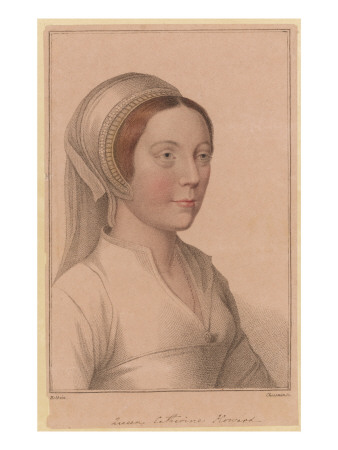
Showing posts with label Catherine Howard. Show all posts

Friday, 21 April 2017

My new book: a biography of Queen Catherine Howard


As readers of this blog will know, for the last few years I have been working on a biography of Henry VIII's fifth wife, Queen Catherine Howard. I am so very happy that 2017 is the year of its publication, with Simon & Schuster publishing Young and Damned and Fair in its US and Canadian edition, and HarperCollins publishing it for the UK and most of the Commonwealth. Young and Damned and Fair is also available in audio book, narrated by the wonderful Jenny Funnell.

I would like to take this opportunity to thank any readers of Confessions of a Ci-Devant who took the time to encourage me to write a full-length biography of a Tudor queen. It was a thrillingly exhausting process and I left Catherine's company with reluctance, after so long spent studying the story of her life.

More information is below, with links to the different editions.

***
Young and Damned and Fair by Gareth Russell

About the book
Written with an exciting combination of narrative flair and historical authority, this interpretation of the tragic life of Catherine Howard, fifth wife of Henry VIII, breaks new ground in our understanding of the very young woman who became queen at a time of unprecedented social and political tension and whose terrible errors in judgment quickly led her to the executioner’s block. 
Including a forgotten text of Catherine’s confession in her own words, color illustrations, family tree, map, and extensive notes, Young and Damned and Fair changes our understanding of one of history’s most famous women while telling the compelling and very human story of complex individuals attempting to survive in a dangerous age.


Praise for Young and Damned and Fair


“If you’re going to take these sorts of risks, you need some serious historical heft. This Russell has, and in abundance. To the vivid phrasing of a novelist, he adds a forensic eye for fact and an encyclopaedic knowledge of the personalities of the late Henrician court … Russell is a formidable new talent from whom big things can be expected”. – Sarah Gristwood, author of Game of Queens: The Women who Made Sixteenth-Century Europe, in BBC HISTORY MAGAZINE

“Scholarly yet highly readable...fresh and compelling...a stunning achievement...Catherine is given a makeover so complete that she is virtually unrecognizeable from the hopelessly naive girl of traditional history books.” – Tracy Borman, author of Thomas Cromwell: The untold story of Henry VIII's most faithful servant, in THE SUNDAY TIMES

“Bold...assured...A novelist turned historian, he veers with laudable theatricality between the claustrophobic and the panoramic, from intimate, febrile exchanges in noble and royal households to the public spectacle of courtly high diplomacy...Let us hope he fixes his sharp eye on the further, more opaque past--here is a historian unafraid of the dark, whether of depravity or documentation.” – Minoo Dinshaw, author of Outlandish Knight: The Byzantine Life of Steven Runciman, in THE DAILY TELEGRAPH

“Russell expertly tells a tale of jewels and dancing and thrilling trysts that sees Catherine move dizzily towards the block.” – Jessie Childs, author of Henry VIII's Last Victim: The Life and Times of Henry Howard, Earl of Surrey, in LITERARY REVIEW 

“Russell's is an excellent account, putting the oft-ignored Catherine in her proper historical context....he is a scrupulous historian.” – THE DAILY MAIL

“Russell's portrait effectively underscores the machinations of this volatile court, the treachery of sycophants, and the importance of the all-seeing servants. Dense with material and flavor of the epoch.” – KIRKUS REVIEWS

“The tragic story of Henry VIII’s fifth queen has been covered before but never quite like this. Young and Damned and Fair digs deep into dark and twisted underworld of Tudor nobility” - HISTORY OF ROYALS magazine

“Highly readable and peppered with engrossing stories, this book is also fascinating for its details about what was considered sexually moral in 16-century England. Biography lovers and those intrigued by the lives of the royals will welcome this tragic story of Henry VIII’s fifth wife.” – LIBRARY JOURNAL

"Best Historical Biography Ever ... 
I can't recall loving a non-fictional book so much. The attention to detail, combined with Gareth Russell's exquisite writing, make this biography the dream for history buffs, and an excellent start for people who don't usually give a chance to this genre. Absolutely loved it!" - Waterstones Bookseller Review

"This fascinating and ultimately heartbreaking account of Henry VIII's doomed fifth wife brings to life the cruel, gossip-fueled, backstabbing world of the court in which Catherine Howard rose and fell. The uncommonly talented Gareth Russell has produced a masterly work of Tudor history that is engrossing, sympathetic, suspenseful, and illuminating." - Charlotte Gordon, author of Romantic Outlaws: The Extraordinary Lives of Mary Wollstonecraft and Mary Shelley, winner of the National Book Critics Circle Award for Biography

“Young and Damned and Fair is a gripping account of a young woman’s future destroyed by forces beyond her control. Gareth Russell moves effortlessly between Catherine Howard's private, inner world and the public life of the Henrician court, providing an unparalleled view into this tragic chapter of Tudor history. This is an important and timely book.” - Amanda Foreman, author of Georgiana, Duchess of Devonshire and A World on Fire: An Epic History of Two Nations Divided
 
“Securely rooted in the sources and mercifully devoid of sentiment, this is the most fully rounded, best written biography of Catherine Howard we have so far.” – Julia Fox, author of Jane Boleyn: The True Story of the Infamous Lady Rochford

“In Young and Damned and Fair Gareth Russell marries slick storytelling with a great wealth of learning about sixteenth-century personalities and politics. The result is a book that leads us deep into the nightmarish final years of Henry VIII’s reign, wrenching open the intrigues of a poisonous court in a realm seething with discontent. At the heart of it all is the fragile, tragic figure of Catherine Howard, whose awful fate is almost unbearable to watch as it unfolds. This is authoritative Tudor history written with a novelist’s lightness of touch. A terrific achievement.” – Dan Jones, author of The Plantagenets and The Hollow Crown: The Wars of the Roses and the Rise of the Tudors

“This is a timely and powerful re-examination of Henry's fifth queen … The author has done some beautiful new research to indicate that Catherine was not as foolish as some historians have suggested, and that her death was managed and manipulated by her offended husband, purely for his own revenge. It's particularly strong on the detail of Catherine’s short reign and the reaction of those who tried to defend her. I love it when historians take the women who have been neglected by history seriously and study their lives rather than accepting stereotypes.” – Philippa Gregory, #1 New York Times bestselling author

“A magnificent account of the rise and fall of Henry VIII's tragic fifth queen - compelling, thought-provoking and above all real. In Russell’s meticulously researched narrative Catherine Howard and her household are brought to life as never before.” – Adrian Tinniswood, author of The Long Weekend: Life in the English Country House Between the Wars

“This is now my go-to book on Catherine Howard.” – Claire Ridgway, author of The Fall of Anne Boleyn

“Russell breathes new life into the Tudor world as we know it and I found myself eagerly devouring every delectable morsel, only becoming aware at the end of the page that I had just learned at least five new things without even realizing it. Russell's take on Henry VIII's fifth queen is nothing short of brilliant.” – Adrienne Dillard, author of The Raven’s Widow: A Novel of Jane Boleyn

“Like Eric Ives with Anne Boleyn, Anne Somerset with Elizabeth I and Antonia Fraser on Marie Antoinette, Gareth Russell has written the definitive book on Catherine Howard and deserves to be seen as the authority on this subject.” – James Peacock, President of The Anne Boleyn Society

“A tremendous read … This book is also about human judgement, about fecklessness, about cruelty, about luck, and about a destructive love affair. Gareth Russell's elegant prose has an effortless touch.” - Dominic Pearce, author of Henrietta Maria

"This book deserves to be seen as the bible on Catherine Howard and her life. It is superbly well researched and excellently written." - Samantha Morris, author of Cesare Borgia

Young and Damned and Fair is everything a historical biography should be. Highly recommended.” – Kathryn Warner, author of Edward II: The Unconventional King


***

Young and Damned and Fair is available through most independent bookstores. It is also stocked in the US by Barnes & Noble and Amazon. And in the UK, by chain bookstores, like Waterstones, and online, by Amazon UK.

You can also find the audio book version here (for UK listeners) and here (for US).

Sunday, 14 June 2015

Edits, writing, research and trips

Beautiful Portballintrae on the Northern Irish coast, where I've been doing a lot of my writing

I have just returned from a flying three-day visit to London to carry out research for my next book, Young and Damned and Fair, a biography of Queen Catherine Howard. It was a macabre but fascinating trip, which gave me the opportunity to look at some of the original documents concerning Catherine and her tragic fate. 

I wanted to apologise for posting so infrequently over the last few months; they have been manic. My play, The Gate of the Year, a modernised imagining of the French Revolution, was revived in Belfast in December, and since then, my schedule has been consumed. I adore being busy, so I'm enjoying myself. I've also released my book with Made Global, A History of the English Monarchy from Boadicea to Elizabeth I, which is available now, and we're currently organising a blog tour for it. I've been giving talks in London and Belfast - one about The Gate of the Year and the interactions between history and fiction, and another about the Harden-Eulenburg Affair and the crisis of personal monarchy in Wilhelm II's Germany. I'm also thrilled and delighted to say that my first novel Popular is being adapted for a 10-part radio series in Northern Ireland, and there is some very, very exciting further news in the pipeline about another potential theatre tour - and a documentary about the novels! Which I'll be able to give more details about, very soon.

From this summer, I've also taken over as editor of the e-magazine Tudor Life, which is a subscription magazine featuring articles from experts, enthusiasts, art critics and reviewers, all of whom are writing about the Tudor, early modern and medieval world. I've been writing a column for the magazine since its first edition and it is so exciting to be involved in this next stage!

Over the next few months, our issues' themes will include vulnerability in Tudor Britain - for which I've contributed an article entitled "The Love That Dare not speak its name?: Homosexuality and moral complexity in Tudor England". (There's a short extract at the end of this post!) As well as issues on coronations, the Tudors in movies and fiction, attitudes to death and the afterlife, and the impact of the Protestant Reformation. Along with the magazine's wonderful regular contributors, we'll be hosting articles from people like Leanda de Lisle, Amy Licence, Toni Mount, Dominic Pearce, Conor Byrne, and Kathryn Warner.

At the end of the month, I'll be undertaking another research trip in England, so I've decided that I'll post a few videos and short articles to this blog while I'm there. My next few proper-length articles for this blog will be a few pieces I have musing on the nature of being British in the 21st century and answering the questions of if the national identity is in crisis and, if so, why.

I also have an Instagram and Facebook page, which I post on regularly. It has been such a pain not being able to post as often as I used to on this blog, although it's certainly for the best reasons. I don't want to post anything too distracting or half-hearted, so thank you for bearing with me and for all your encouragement with pursuing this biography. I hope it lives up to your faith in it, and your wonderful wishes!

Gareth 

***

An excerpt from The Love that Dare not speak its name?: Homosexuality and moral complexity in Tudor England by Gareth Russell - published in the July 2015 edition of Tudor Life magazine

Within the aristocracy, attitudes were also much more heterogeneous than we might suppose. In the early 1600s, the Countess of Suffolk could discuss the King’s affair with the Duke of Buckingham with discretion and minimal embarrassment. A typical Renaissance education was heavy on the study of the Classics. This meant that young royals and nobles grew up being familiar with a few Classical myths that dealt with same-sex relationships, like the story of Jupiter and Ganymede, or Achilles and Patroclus in the Trojan saga – or even unambiguously homosexual historical figures, like the Roman Emperor Hadrian. Traditional moralists in Italy and France certainly blamed over-exposure to pagan histories in the classroom and universities for the alleged rise in ‘sodomy’ among young upper-class men in the late 1400s and early 1500s.

Saturday, 31 January 2015

A few days in Oxford


Good morning! This was my view as I emerged from work yesterday afternoon. I am back in Oxford, carrying out some research for my biography of Catherine Howard, Young and Damned and Fair, which will be out next year. I'm so happy to be back here, working in the Bodleian again. When I was an undergrad here, I had my own preferred place to work, and the habit has stuck. My current nook of choice is in the Bod's Upper Reading Room, down by the windows that overlook the Bridge of Sighs, behind me, and the entrance to Holywell Street and what was once the History Faculty Library. Now, all the History books for the faculty are kept in the Gladstone Link, an underground facility with a tunnel that runs beneath the cobblestones. It's a bunker of books.

I got in yesterday morning and stayed at the Randolph Hotel again. I am a sucker for a good poached egg, and along with not being able to carry any kind of musical note in song, not being able to execute the perfect one myself is a huge regret. (Resolution for 2015?) The poachies this morning were fantastic - so I have no excuse after a good breakfast not to be as productive as possible for the rest of the day. The library closes a little early at the weekends, so this evening I'm having dinner with one of my favourite people in the world, a dear friend who I first met in these cobbled streets. I'm telling myself that these evening plans are a good incentive to plough through some very questionable handwriting, even by sixteenth-century standards. I'll think of it as earning rewards, and whatnot.

I am going to keep you all posted about how the research is going over the next few months, and where I'm off to. In the meantime, I'm off to some sixteenth-century wills. Have a wonderful day. 

Monday, 3 November 2014

My new book and a year of life with Catherine Howard


I am absolutely delighted to be say that my biography of Catherine Howard, Young and Damned and Fair: The Life and Tragedy of Catherine Howard at the court of King Henry VIII, will be published in the US and Canada by Simon & Schuster and by HarperCollins in the UK and rest of the Commonwealth.

I first wrote about Catherine's household as part of my postgraduate research at Queen's University, Belfast, in 2011 and it has been wonderful to return to her.

Over the next year, as I work on the manuscript, I'd like to share some of that experience with you by posting a few photographs of the places I'm travelling to and the research I'm carrying out! In the meantime, you can visit my Facebook page or follow me on Instagram and Twitter. Next week, I'll be in Oxford in the warmth of its wonderful archives and libraries that I am elated to return to. 

I'm very excited for this project.

Gareth

Thursday, 26 May 2011

Cameo Consorts


After yesterday's post on Britain's longest-serving royal consorts, it seemed only fair to include the top ten shortest serving. Unsurprisingly, five of Henry VIII's six unlucky wives made the list.

1. Lord Guildford Dudley (13 days) The controversial husband of Jane Grey, Dudley was married off to her as a teenager as part of his father's attempts to retain power if the young King Edward VI died without heirs. The Dudley family's attempt to preserve the Protestant monarchy by placing their teenage daughter-in-law on the throne ended in abysmal failure when Mary Tudor seized the throne with popular support. Jane and Guildford were both executed a year later, both still teenagers. Traditionally Guildford has been presented as a weak and self-indulged character, with a teenage fondness for wine and women. An account of his execution was posted on this blog in February.

Wednesday, 27 April 2011

The Sixth Catherine


On Friday, Catherine Middleton will be marrying into the British Royal Family and one day, God willing, becoming our country's queen consort and the sixth to be called Catherine. I have already blogged a little about this on my Popular blog, but I thought I would post some information here on the five other Queen Catherines in British history. And to wish everyone a great royal wedding day!


Catherine de Valois (1401 - 1437)
Queen of England 1420 - 1422

Wife of King Henry V and mother of King Henry VI

Married into the English Royal Family at the Cathedral of Saint Peter and Saint Paul in Troyes, France on June 3rd 1420


Parents: Charles VI, King of France and his queen, Isabeau of Bavaria-Ingolstadt

Born: HĂ´tel Saint-Pol, Paris, October 27th 1401

Died: In childbirth at Saint Saviour Abbey, London on January 3rd 1437

Buried: Westminster Abbey, London

Immortalised in Shakespeare's play Henry V, Catherine de Valois was a picture perfect medieval princess, with ivory white skin, long golden hair and delicate, beautiful features. Her marriage to King Henry V in 1420 symbolised the English military triumph over France, although it survived only marginally longer than Catherine's own marriage. She was left a widow at the age of twenty-one following her husband's death on military campaign and she was sidelined from affairs of state by the regency council set up to rule in the name of her infant son, Henry VI. Bored and lonely, the Queen Mother later eloped with a Welsh chamberlain, Owen Tudor, and by him had three more sons and became the grandmother of the first Tudor king, Henry VII. Tragically, the so-called "bride of peace" died at the age of thirty-six and, as the king's mother, she was buried in Westminster Abbey. In a macabre twist, her body was exhumed during the reign of King Charles II and found to be perfectly preserved, whereupon the famed diarist, Samuel Pepys, stole a kiss from the dead queen's lips.


Katherine of Aragon (1485 - 1536)

Queen of England 1509 - 1533

First wife of King Henry VIII and mother of Queen Mary I

Married into the English Royal Family twice. Her first husband was Arthur, Prince of Wales, who she married at Saint Paul's Cathedral, London, on November 14th, 1501.  She later married King Henry VIII at the Church of the Observant Franciscans in Greenwich on June 11th, 1509.

Parents: Ferdinand V, King of Aragon and his wife Isabella I, Queen of Castile

Born: The Episcopal Palace at Alcala de Henares, Spain, on December 16th, 1485.

Died: Kimbolton Castle on January 7th 1536 of cancer

Buried: Saint Peter's Cathedral in Peterborough, England.

Katherine of Aragon was a Spanish princess who won her subsequent fame for being the first of Henry VIII's six wives and for her heroic stance against his divorce of her in the 1530s. Originally married to his brother, who died during an outbreak of the plague in 1502, Katherine's marriage to Henry was initially opposed on these grounds by various conservative clergymen, despite the Vatican's dispensation of Old Testament Law. The marriage of Henry VIII and Katherine of Aragon was conventionally satisfactory by contemporary royal standards, with Katherine being well-equipped by both upbringing and personality to carry out the duties of a queen with dignity and confidence. A string of pregnancies ruined her figure and she was deeply humiliated when the King elevated his bastard son to the title of duke, which Katherine took as an insult to both her and her daughter, Princess Mary. She resisted Henry's attempts to divorce her in favour of Anne Boleyn - a stance which won her praise and condemnation in equal measure. She was praised for her tenacity and courage, but also later blamed for having allowed her attachment to her royal status blind her to the wider implications of her stance for the Catholic faith in England. A devout Roman Catholic, Katherine was horrified by her husband's break with Rome and the establishment of the independent Church of England. She was banished from court in 1531, stripped of her title in 1533 and she died with great dignity after an agonising battle with cancer in 1536.

For the death of Katherine's first husband, click HERE.
For Katherine's portrayal in movies and television, click HERE.
For an account of Katherine's own death in 1536, click HERE.


Catherine Howard (?1523 - 1542)
Queen of England 1540 - 1542

Fifth wife of King Henry VIII

Married into the English Royal Family at Oatlands Palace in Surrey on July 28th, 1540.


Parents: Lord Edmund Howard and his first wife, Lady Jocasta Howard (nĂ©e Culpepper.)

Born: Sometime between 1522 and 1525 in southern England

Died: Executed in the Tower of London on February 13th, 1542

Buried: The Tower's chapel of Saint Peter-ad-Vincula

The eldest daughter of an impoverished aristocrat, Catherine was brought to court as a lady-in-waiting in 1539 through the patronage of her uncle, the Duke of Norfolk. Petite and flirtatious, she caught the attention of the middle-aged monarch almost immediately and he began making serious advances to her in the Easter of 1540. As soon as his divorce from his fourth queen was finalised that summer, he married Catherine in a private ceremony and immediately showered the young woman with gifts. Fun-loving and extravagant, Queen Catherine had no interest in politics, but her family had many enemies and when allegations concerning her private life surfaced in the autumn of 1541, those enemies capitalised on the scandal shamelessly. Allegations that Catherine had not been a virgin at the time of her marriage led to wider investigations and a letter discovered in the bedroom of the noted womaniser, Sir Thomas Culpepper, suggested that she had been unfaithful after the marriage too. Abandoned by friends and family, the poor girl was executed on a cold morning in February 1542.

For an account of Catherine's lavish fashion tastes, click HERE.
For the on screen portrayals of Catherine Howard, click HERE.
For an account of Catherine's execution in 1542, click HERE.


Katherine Parr (1512 - 1548)
Queen of England and Ireland 1543 - 1547

Sixth wife of King Henry VIII

Married into the English Royal Family at Hampton Court Palace on July 12th, 1543.

Parents: Sir Thomas Parr and his wife, Lady Maud Parr (nĂ©e Green.)

Born: In 1512, probably in the south of England

Died: As a result of post-natal complications at Sudeley Castle on September 5th, 1548

Buried: Sudeley Castle Chapel

The daughter of two courtiers, Katherine was married twice before coming to court herself in 1543. Both marriages ended in widowhood but the Dowager Lady Latimer, as she was when Henry VIII began courting her, had a reputation for elegance, charm, intelligence and diplomacy. Despite this, her marriage to the King brought her many enemies, who despised her devotion to the Protestant faith. Her zeal in promoting evangelical theology almost lost her the King's favour and it was only by supplicating herself entirely to his will that she was able to survive the crisis. After Henry's death, she married again to the ambitious and seductive Lord High Admiral, Thomas Seymour, who broke her heart when he attempted to seduce (and possibly molest) her teenage stepdaughter, the future Queen Elizabeth. Pregnant with Seymour's child, Katherine died in childbirth at the age of thirty-six.

For Katherine's position as Queen of Ireland, click HERE.
For movie and television versions of Katherine, click HERE.
For an account of Katherine's death, click HERE.


Catherine of Braganza (1638 - 1705)
Queen of England, Scotland and Ireland 1662 - 1685

Wife of King Charles II

Married into the British Royal Family at the Church of Saint Thomas Becket in Portsmouth on May 22nd, 1662

Parents: JoĂŁo IV, King of Portugal and his queen, Maria-Luisa of Medina-Sidonia

BornVila Viçosa in Portugal on November 25th, 1638

DiedBelém Palace, Portugal on December 1st, 1705

BuriedThe Hieronymites Monastery, BelĂ©m, Portugal

Described by her mother-in-law, Queen Henrietta-Maria, as "a saint," Catherine was demure, gentle and devoutly Catholic. Her enormous dowry helped bolster the British Empire's expansion in India and she is credited with popularising the habit of drinking tea in England. However, her failure to produce a living child after four miscarriages led to calls from many courtiers and politicians for her to be set aside. This was something the King refused to do, despite his numerous public adulteries, which Catherine endured with great dignity. Despite her childlessness and his unfaithfulness, King Charles and Queen Catherine were relatively happy together and cared for one another deeply. She was faithful to him whilst he lived and to his memory after he died. Her quiet devotion to her Catholic faith led to her being targeted during the outburst of hysterical sectarianism known as the "Popish Plot," but as with the divorce crisis earlier in the reign, she weathered the drama gracefully. She may very well have been instrumental in helping with her husband's alleged deathbed conversion to Catholicism in 1685. The widowed Catherine returned to Portugal in 1692, after her religion again earned her public disapproval from the Protestant regime of William III and her niece, Mary II. Faced with the nervous breakdowns of her brother, King Pedro II, in 1701 and 1704, Catherine assumed the regency and lead the Portuguese government with great skill, despite having no formal political training. She was widely mourned when she died in 1705.

For an account of her husband's womanising, click HERE.

Monday, 28 February 2011

Defending Catherine Howard


Above: British actress Tamzin Merchant as Catherine Howard in Series 4 of The Tudors.

It has been some time since I posted here, because I was visiting friends in New Haven, CT, and thanks to them all for such a wonderful, fun visit! 

Claire Ridgway has continued her excellent series on reflecting on the popular stereotypes of Henry VIII's wives, reaching number five, his teenage queen, Catherine Howard, who was executed for adultery in 1542. Claire writes: -
"The Catherine Howard I believe in was not a nymphomaniac, she was simply a young and passionate woman who fell head over heels in love with the wrong man at the wrong time. It is clear from the letter that was found in Culpeper’s belongings that she was completely besotted with Culpeper and Antonia Fraser describes her as “the sort of girl who lost her head easily over a man, a girl who agreed generally with what men suggested.” How ironic that she really did lose her head over Culpeper! We have all known women who have fallen hopelessly in love with the wrong man, with a bad boy, and who have lived to regret it, poor Catherine was not so lucky."

For Claire's full re-assessment of Catherine Howard, click here.

Friday, 11 February 2011

February 10th, 1542: Catherine Howard goes to the Tower


It had been two months to the day since her two lovers had been publicly executed for their intimacy with her - one before her marriage, one allegedly after it. It had been three days since she and one of her ladies-in-waiting had been condemned to death without trial or possibility of reprieve by Bills of Attainder passed in Parliament. And it had been just over three months since guards had burst into her luxurious apartments in Hampton Court Palace informing her that she was to be detained under suspicion of what was later deemed "lewd and naughty behaviour."

In those months, Catherine Howard, teenage Queen of England and Lady of Ireland, had been widely traduced in public for her "vicious and abominable" deeds in cuckolding her husband, King Henry VIII. Mercifully, Catherine had been isolated from most of this smear campaign, since she had been moved to the convent at Syon within days of the scandal breaking in London. Syon convent had once been the centre of a thriving community of Bridgettine nuns, whose way of life had fallen victim to Henry VIII's Reformation and state-sanctioned the Dissolution of the Monasteries. The nunnery itself had been founded one hundred and forty years earlier and it had been built to celebrate the piety of King Henry IV, who ruled from 1399 to 1413. Henry had become king by deposing and murdering his cousin, Richard II, but his actions had been lauded rather than condemned by the Church, who Henry IV had shamelessly courted in his bid to hold on to his illegally-seized power. The crowning moment of this rather unpalatable demonstration of "throne and altar" politics had been achieved in 1401 when Henry IV gave the then Archbishop of Canterbury, Thomas Arundel, something he had long hungered after - for the very first time in English history, the new king had made heresy punishable with death by burning. Syon had been built to celebrate this move. Now, over a century later, it was being used again by another king who had forged an unholy alliance with religion and who also thought nothing to applying flames to his subjects' flesh. Only now, of course, he was being condemned by the Roman Catholic Church for doing so, not applauded.

Catherine Howard had been a resident at Syon throughout the winter, passing Advent and Christmas there, in marked difference to the merriment and splendour she had enjoyed the year before. For company, the disgraced queen had only eight servants - her chamberlain, four ladies-in-waiting, two chambermaids and a confessor. She had instantly disliked her new home, particularly the mouldering tapestries on the wall and she did not like the fact that she now only had three rooms to live in and six dresses. Much to her distress, her magnificent and beloved collection of jewels was taken from her and inventoried by the king's former brother-in-law, Sir Thomas Seymour. Nine days after her arriving, the Privy Council had issued a proclamation stripping Catherine of her royal title. Since she had never been formally crowned and only held her title by virtue of her marriage to the king, this was easy enough for them to do. Legally, she was now referred to simply as "the Lady Catherine Howard," although considering her father had only been a lord and not an earl, a marquess or a duke, she was not technically entitled to that, either. Prior to her marriage, she had been "Mistress Catherine Howard," but the dismantling of a queen's position was still a confusing business - despite how much practice the English government had had in the matter over the past few years. 

Young Catherine, who was probably not much more than eighteen or nineteen at the time of her ruin, had taken the news that Parliament had condemned her to death remarkably well. Or, at least, calmly. It's my hunch that maybe even at this late stage, Catherine hoped that by co-operating fully, she might be allowed to live. This calm and this delusion, however, vanished entirely when the Lords of the Privy Council arrived at Syon to escort her to the Tower of London on the afternoon of Friday February 10th. The moment they entered her audience chamber, the poor girl became instantly hysterical and burst into tears. The men begged her to be calm and come quietly, but Catherine would not move. Eventually, they lost patience with her; two of the lords dragged her up and manhandled her out of the frost-covered convent, out into the frigid afternoon air and into the waiting barge. She screamed and wept the whole time.

As the barge reached London, sailing down the Thames towards the grim fortress where Catherine's predecessor and cousin had lost her life six years earlier, Catherine Howard cut a tragic and pathetic figure. She wore a dress of plain black velvet and she wept intermittently throughout the journey. When the barge sailed under Tower Bridge, it would have passed the rotting heads of Thomas Culpepper and Francis Dereham, which were still being displayed there. By that point in the day, however, the light was fading and so it's just about possible that this horrific sight, at least, was spared her.

Friday, 10 December 2010

December 10th, 1541: The Execution of the Queen's lovers

Above: Torrance Coombs and Tamazin Merchant as the doomed lovers, Sir Thomas Culpepper and Queen Catherine Howard in Season 4 of the Showtime series The Tudors (2010.)

It had only been five weeks since the 50 year-old King of England, Henry VIII, had been informed at the All Souls' Mass that his teenage queen, Catherine Howard, had been accused of pre-marital promiscuity by a former servant of her aristocratic grandmother, in whose care Catherine had spent most of her childhood. The young queen had been detained in her apartments whilst Thomas Cranmer, the Archbishop of Canterbury, headed an investigation into the serving maid's accusations. That Catherine had not been a virgin at the time Henry had married her was a serious problem, one likely to bring shame upon the monarchy and result in the annulment of the royal marriage. The maid in question had confided in her brother, a Protestant fundamentalist called John Lascelles, that Catherine had enjoyed a fling with her music teacher, Henry Mannox, and after they had fallen out when he began boasting of their sexual encounters, she had moved onto her grandmother's secretary, the overbearing but dashing Francis Dereham, whom she had slept with for the best part of a year and even (allegedly) promised to marry. Catherine and Francis's engagement had been broken-off when Catherine was summoned to Court to act as a lady-in-waiting to the new queen, Anne of Cleves, in the winter of 1539, but within six months Catherine had, of course, attracted the attention of the ailing monarch and become his fifth wife. 

All of this was potentially deeply humiliating for the Royal Family, but it became ten times more serious when it turned out that Queen Catherine's dealings with these two men had not simply been confined to her youthful folly. Henry Mannox now served on her household staff as a musician, a relatively minor post to be sure, but Dereham, her one-time fiancĂ© had been given the premier and intimate position of being the Queen's private secretary, one which meant he came into contact with Catherine on a daily basis. When the archbishop discovered this, he went straight to the King to say that given her past liaisons with both men, Catherine's appointments of them to her household staff at the very least suggested emotional infidelity to her husband and at worse that she was planning to resume sexual relations with them. If she hadn't done already, that is. "She has betrayed you in thought," he told the King, "and if she had an opportunity would have betrayed you in deed." Henry, for the first time in his life the victim of adultery rather than the perpetrator, burst into floods of tears in front of the eyes of his embarrassed councillors, who had absolutely no idea what they were supposed to say or do in such a situation. Archbishop Cranmer was ordered to extend his investigation into every detail of the Queen's private life in the sixteen months that she had been married to the King and to discover if she had indeed gone to bed with Mannox or, more probably, with Dereham, at any point since July of 1540.

Related Posts with Thumbnails