Showing posts with label News. Show all posts

Friday, 21 April 2017

My new book: a biography of Queen Catherine Howard


As readers of this blog will know, for the last few years I have been working on a biography of Henry VIII's fifth wife, Queen Catherine Howard. I am so very happy that 2017 is the year of its publication, with Simon & Schuster publishing Young and Damned and Fair in its US and Canadian edition, and HarperCollins publishing it for the UK and most of the Commonwealth. Young and Damned and Fair is also available in audio book, narrated by the wonderful Jenny Funnell.

I would like to take this opportunity to thank any readers of Confessions of a Ci-Devant who took the time to encourage me to write a full-length biography of a Tudor queen. It was a thrillingly exhausting process and I left Catherine's company with reluctance, after so long spent studying the story of her life.

More information is below, with links to the different editions.

***
Young and Damned and Fair by Gareth Russell

About the book
Written with an exciting combination of narrative flair and historical authority, this interpretation of the tragic life of Catherine Howard, fifth wife of Henry VIII, breaks new ground in our understanding of the very young woman who became queen at a time of unprecedented social and political tension and whose terrible errors in judgment quickly led her to the executioner’s block. 
Including a forgotten text of Catherine’s confession in her own words, color illustrations, family tree, map, and extensive notes, Young and Damned and Fair changes our understanding of one of history’s most famous women while telling the compelling and very human story of complex individuals attempting to survive in a dangerous age.


Praise for Young and Damned and Fair


“If you’re going to take these sorts of risks, you need some serious historical heft. This Russell has, and in abundance. To the vivid phrasing of a novelist, he adds a forensic eye for fact and an encyclopaedic knowledge of the personalities of the late Henrician court … Russell is a formidable new talent from whom big things can be expected”. – Sarah Gristwood, author of Game of Queens: The Women who Made Sixteenth-Century Europe, in BBC HISTORY MAGAZINE

“Scholarly yet highly readable...fresh and compelling...a stunning achievement...Catherine is given a makeover so complete that she is virtually unrecognizeable from the hopelessly naive girl of traditional history books.” – Tracy Borman, author of Thomas Cromwell: The untold story of Henry VIII's most faithful servant, in THE SUNDAY TIMES

“Bold...assured...A novelist turned historian, he veers with laudable theatricality between the claustrophobic and the panoramic, from intimate, febrile exchanges in noble and royal households to the public spectacle of courtly high diplomacy...Let us hope he fixes his sharp eye on the further, more opaque past--here is a historian unafraid of the dark, whether of depravity or documentation.” – Minoo Dinshaw, author of Outlandish Knight: The Byzantine Life of Steven Runciman, in THE DAILY TELEGRAPH

“Russell expertly tells a tale of jewels and dancing and thrilling trysts that sees Catherine move dizzily towards the block.” – Jessie Childs, author of Henry VIII's Last Victim: The Life and Times of Henry Howard, Earl of Surrey, in LITERARY REVIEW 

“Russell's is an excellent account, putting the oft-ignored Catherine in her proper historical context....he is a scrupulous historian.” – THE DAILY MAIL

“Russell's portrait effectively underscores the machinations of this volatile court, the treachery of sycophants, and the importance of the all-seeing servants. Dense with material and flavor of the epoch.” – KIRKUS REVIEWS

“The tragic story of Henry VIII’s fifth queen has been covered before but never quite like this. Young and Damned and Fair digs deep into dark and twisted underworld of Tudor nobility” - HISTORY OF ROYALS magazine

“Highly readable and peppered with engrossing stories, this book is also fascinating for its details about what was considered sexually moral in 16-century England. Biography lovers and those intrigued by the lives of the royals will welcome this tragic story of Henry VIII’s fifth wife.” – LIBRARY JOURNAL

"Best Historical Biography Ever ... 
I can't recall loving a non-fictional book so much. The attention to detail, combined with Gareth Russell's exquisite writing, make this biography the dream for history buffs, and an excellent start for people who don't usually give a chance to this genre. Absolutely loved it!" - Waterstones Bookseller Review

"This fascinating and ultimately heartbreaking account of Henry VIII's doomed fifth wife brings to life the cruel, gossip-fueled, backstabbing world of the court in which Catherine Howard rose and fell. The uncommonly talented Gareth Russell has produced a masterly work of Tudor history that is engrossing, sympathetic, suspenseful, and illuminating." - Charlotte Gordon, author of Romantic Outlaws: The Extraordinary Lives of Mary Wollstonecraft and Mary Shelley, winner of the National Book Critics Circle Award for Biography

“Young and Damned and Fair is a gripping account of a young woman’s future destroyed by forces beyond her control. Gareth Russell moves effortlessly between Catherine Howard's private, inner world and the public life of the Henrician court, providing an unparalleled view into this tragic chapter of Tudor history. This is an important and timely book.” - Amanda Foreman, author of Georgiana, Duchess of Devonshire and A World on Fire: An Epic History of Two Nations Divided
 
“Securely rooted in the sources and mercifully devoid of sentiment, this is the most fully rounded, best written biography of Catherine Howard we have so far.” – Julia Fox, author of Jane Boleyn: The True Story of the Infamous Lady Rochford

“In Young and Damned and Fair Gareth Russell marries slick storytelling with a great wealth of learning about sixteenth-century personalities and politics. The result is a book that leads us deep into the nightmarish final years of Henry VIII’s reign, wrenching open the intrigues of a poisonous court in a realm seething with discontent. At the heart of it all is the fragile, tragic figure of Catherine Howard, whose awful fate is almost unbearable to watch as it unfolds. This is authoritative Tudor history written with a novelist’s lightness of touch. A terrific achievement.” – Dan Jones, author of The Plantagenets and The Hollow Crown: The Wars of the Roses and the Rise of the Tudors

“This is a timely and powerful re-examination of Henry's fifth queen … The author has done some beautiful new research to indicate that Catherine was not as foolish as some historians have suggested, and that her death was managed and manipulated by her offended husband, purely for his own revenge. It's particularly strong on the detail of Catherine’s short reign and the reaction of those who tried to defend her. I love it when historians take the women who have been neglected by history seriously and study their lives rather than accepting stereotypes.” – Philippa Gregory, #1 New York Times bestselling author

“A magnificent account of the rise and fall of Henry VIII's tragic fifth queen - compelling, thought-provoking and above all real. In Russell’s meticulously researched narrative Catherine Howard and her household are brought to life as never before.” – Adrian Tinniswood, author of The Long Weekend: Life in the English Country House Between the Wars

“This is now my go-to book on Catherine Howard.” – Claire Ridgway, author of The Fall of Anne Boleyn

“Russell breathes new life into the Tudor world as we know it and I found myself eagerly devouring every delectable morsel, only becoming aware at the end of the page that I had just learned at least five new things without even realizing it. Russell's take on Henry VIII's fifth queen is nothing short of brilliant.” – Adrienne Dillard, author of The Raven’s Widow: A Novel of Jane Boleyn

“Like Eric Ives with Anne Boleyn, Anne Somerset with Elizabeth I and Antonia Fraser on Marie Antoinette, Gareth Russell has written the definitive book on Catherine Howard and deserves to be seen as the authority on this subject.” – James Peacock, President of The Anne Boleyn Society

“A tremendous read … This book is also about human judgement, about fecklessness, about cruelty, about luck, and about a destructive love affair. Gareth Russell's elegant prose has an effortless touch.” - Dominic Pearce, author of Henrietta Maria

"This book deserves to be seen as the bible on Catherine Howard and her life. It is superbly well researched and excellently written." - Samantha Morris, author of Cesare Borgia

Young and Damned and Fair is everything a historical biography should be. Highly recommended.” – Kathryn Warner, author of Edward II: The Unconventional King


***

Young and Damned and Fair is available through most independent bookstores. It is also stocked in the US by Barnes & Noble and Amazon. And in the UK, by chain bookstores, like Waterstones, and online, by Amazon UK.

You can also find the audio book version here (for UK listeners) and here (for US).

Saturday, 14 November 2015

Marianne Bereft: A Reflection on the early public reaction to the Paris terrorist attacks


A historian is always caught somewhere between pedantry and pragmatism. In reaction to last night's massacres in Paris, thousands of people have taken advantage of a Facebook app that allows them to alter their profile picture to be superimposed by the colours of the French flag. The gesture, which allows users to show their solidarity with victims of terrorism, utilises the tricolore, a flag that was first adopted two hundred years ago by a government that launched a policy of deliberate and sustained Terror against its own people. The French Revolution's Committee of Public Safety made the Spanish Inquisition look the habeas corpus fan club, massacres and choreographed executions were celebrated as part of the theatre of civic duty, opponents were drowned or butchered en masse, population cleansing was inflicted on sections of the west of France and the new republic, along with having a view of women that would make John Knox look like Gloria Steinem, presided over the annihilation of French religious freedom.

We don't like to talk about the French Revolution's horrors today, because the event has entered into the core mythology of the West. It was, so we are told, one of the birthplaces of Western liberal democracy, an interpretation that might have raised more than a guffaw from its participants. For all of its glib catchphrases, and very tangible and important successes (particularly outside France), the French Revolution was also a violent, cruel and often repulsive entity that was driven forward by rampantly intolerant political extremism. But it is seldom described as such.

Something of that collective will to ignore or deny was evident in the initial online reaction to the unspeakable jihadist horrors that took place this weekend. I have so far counted about a dozen #prayforParis on the statuses of Facebook acquaintances I know to be atheists or committed agnostics. I've seen people who quite seriously compared the democratically-elected Margaret Thatcher to a Nazi dictator wax lyrical about the inviolable sanctity of Western freedom. And the apotheosis of stupidity seems to me to be the #TerrorismhasnoReligion. Yes, it does. In this case, radical Islam. With the Ku Klux Klan, it is an extreme interpretation of Protestantism. You may not like how these people have chosen to interpret either the Qu'ran or the Bible, but to suggest that "real" religion is antithetical to violence is to fall into the trap of believing the West's tendency to view religion as the great cosmic hug, a theological mood bracelet, that exists solely to validate the believers and to make them behave like nice people. There are hundreds of examples in many religious texts which advocate pain, self-denial, violence or acts of punishing emotional repression. Last night's terror did have a religion. Faith was its driving motivation; it was not a fig leaf to cover some other goal. To insist that the jihadists are guilty of a horrible misunderstanding of their holy texts is to miss both the point and the opportunity to engage with the issue. Their interpretation is unquestionably horrible, and as far as one can be on what is essentially a matter of opinion it is almost certainly wrong, but to focus on that as our first port of call means that we run the risk of underestimating how deeply their perverse take on their religion matters to the killers. A thousand errors are being made through well-intentioned solipsism. Just as we have decided that "Liberty, Equality, Fraternity" are concepts too pure and too good for them to ever intentionally or inevitably produce negative side effects, we have exonerated certain strands of religious thought.

At this point, it might be fashionable to push the contrarian argument even further by citing the many examples we see online, every day, that prove we are living in an age of hysterical, mawkish voyeurism. This year, for God alone knows what reason, it suddenly became the fashion for people to post selfies online with a Poppy over their mouths to symbolise the annual minutes' silence held throughout Britain and the Commonwealth to commemorate the war dead. Apparently, quietly excusing oneself had gone out the window in exchange for yet another "look at me, behold and applaud my virtue" snapshot. One could use the reaction of one half of the Internet to despair at the bigoted fear-mongers of the world, who fall back on sweeping generalisations by implying that the majority of the world's second-largest faith are jihad-supporting terrorists. Equally, you could point at the proliferation of half-baked hyper-liberal keyboard warriors, thundering over the newsfeed barricades with their certain-to-be-well-received platitudes about pluralism, diversity and the heartwarming loveliness of the human race. Many in the latter camp will run further with the baton of daring intellectualism by suggesting the West is to blame for the butchering. A cascade of caveats will arrive alongside the sting of self-accusation.

But I've always wondered at the tendency of those who praise vox populi in principle only to dismiss it in practice. It doesn't particularly matter that the French national flag began its life in less than delightful circumstances. That flag has been around for so long and weathered so many other events, including heroic opposition to Nazi invasion, that it has rightly come to symbolise something else entirely. Through its proliferation on Facebook, even from those who are doing it with half an eye to how many likes they will receive, the tricolore has come to represent this week's empathy and resilience. Historians, and certainly anthropologists, will look back on our reaction to this tragedy with fascination. In their conclusions, they will have the great advantage of knowing how the story ends. For the moment, all we can do is try to react as honestly as we can. Since History often reads as a catalogue of man's failures, it would be very easy for us to focus solely on the maudlin, the crass, the flawed or the illogical. Instead, it might be more worthwhile to appreciate the caring, the eloquent, heartfelt empathy of those who felt sufficiently moved by this tragedy to display their feelings of outrage and support. 

There is a threat that needs to be understood. It is the author of horror, misery and pain. It has butchered thousands of Muslims and Christians in the Middle East. It has been responsible for ethnic purges, gang rape and cultural destruction. Now, it is spreading outwards to strike at the great cities of foreign nations, where it will not hesitate to kill people of all religions and none. It is an ideology that writes in blood and claims, with total sincerity, to have a Divine mandate. It uses acts of war and moral squalor as its first course of action, not its last. Just over two hundred years ago, as they watched the tricolore being hoisted for the first time on the horizon, the denizens of old regime Versailles posed the question, "Who can say where this audacity of ideas will end?" As Paris gives the world yet another display of stoic courage and dignity, that question must be resurrected. Something must be done. I don't know what it is. But there is something heartening in most of the reactions to this weekend's brutality and they potentially provide a glimmer of hope on the very difficult road ahead.

Tuesday, 21 October 2014

My new book is out next week!


Good afternoon! I am delighted to announce that I have a new book out next week with Amberley. As part of their gorgeous "An Illustrated Introduction to..." series, a set of books giving an introduction for adults to a particular historical topic, they asked me to write the installment on the Tudors. (As readers of this blog will know, I've written about them a lot!) They've picked some absolutely beautiful illustrations for the book, including my favourite portrait of Elizabeth I, as she approached old age. It's so moving!

An Illustrated Introduction to the Tudors covers the private lives and political roles of all the Tudor monarchs, as well as providing snapshots into issues like - sex in Tudor England, burning at the stake, the myth of Anne Boleyn's six fingers and whether or not Henry VIII had syphilis.

It's available through Amberley and online book stores, like Amazon and the Book Depository.

Sunday, 14 July 2013

How will the Royal birth be announced?

 
An interesting article from Yahoo that neatly summarises the mix of modernity and tradition that we can expect when the Court formally announces the, God-willing, safe delivery of the royal child expected to be born to their Royal Highnesses The Duke and Duchess of Cambridge later this week.
 
This blog will also be running a series on the event - including traditions of royal birth, the baby's name and the Duchess's role in the monarchy.

Thursday, 18 April 2013

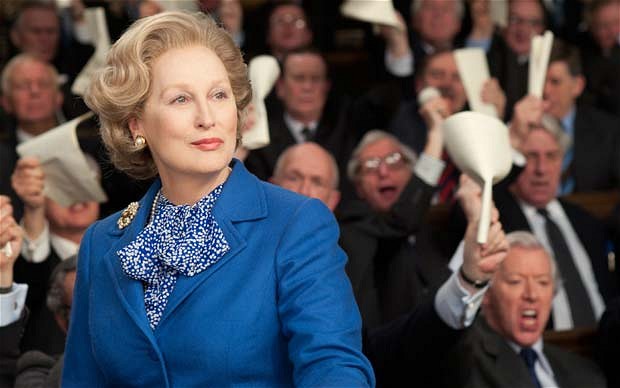
Meryl Streep's statement on the death of Lady Thatcher


Actress Meryl Streep, who won the Academy Award for her performance as Margaret Thatcher in the motion picture The Iron Lady (above), has issued a very moving and fair statement on the death of the former Prime Minister.

Margaret Thatcher was a pioneer, willingly or unwillingly, for the role of women in politics. 
 
It is hard to imagine a part of our current history that has not been affected by measures she put forward in the UK at the end of the 20th century. Her hard-nosed fiscal measures took a toll on the poor, and her hands-off approach to financial regulation led to great wealth for others.  
There is an argument that her steadfast, almost emotional loyalty to the pound sterling has helped the UK weather the storms of European monetary uncertainty. 
But to me she was a figure of awe for her personal strength and grit. To have come up, legitimately, through the ranks of the British political system, class-bound and gender-phobic as it was, in the time that she did and the way that she did, was a formidable achievement. To have won it, not because she inherited position as the daughter of a great man, or the widow of an important man, but by dint of her own striving. To have withstood the special hatred and ridicule, unprecedented in my opinion, levelled in our time at a public figure who was not a mass murderer; and to have managed to keep her convictions attached to fervent ideals and ideas – wrongheaded or misguided as we might see them now – without corruption – I see that as evidence of some kind of greatness, worthy for the argument of history to settle. To have given women and girls around the world reason to supplant fantasies of being princesses with a different dream: the real-life option of leading their nation; this was groundbreaking and admirable. 
I was honoured to try to imagine her late life journey, after power; but I have only a glancing understanding of what her many struggles were, and how she managed to sail through to the other side. I wish to convey my respectful condolences to her family and many friends.

Saturday, 23 March 2013

The death of Steven Simpson

There is a scene in Victor Hugo’s “The Hunchback of Notre Dame,” when the great cathedral’s bell-ringer is ritually humiliated by the citizens of Paris. The tolling of the bells has long since rendered Quasimodo deaf and on top of that, he is both mentally and physically handicapped. To the neoplatonic Middle Ages this did not make him more sympathetic, but rather an easy target to provide them with some passing amusement. Beneath the looming towers of Notre Dame and the carved eyes of a hundred saints and martyrs, the flesh and blood people of Hugo’s novel strip, beat and torture the innocent and uncomprehending bell-ringer, who does not know, and could not even understand, why they are doing this to him. All he can feel is pain, confusion and fear. He has been conditioned, all his life, to believe that he is less.


This week a 20-year-old British man called Jordan Sheard (above) received a jail sentence of three years and six months. Steven Simpson (below) was celebrating his eighteenth birthday when Jordan Sheard killed him. He was gay, he had Asperger’s Syndrome, he had epilepsy and he had a speech impediment. Before Jordan Sheard killed him, he persuaded the easily-intimidated Simpson to remove his top, after which he scrawled homophobic obscenities across his torso, smudged lipstick across his face and wrote the words “GAY BOY” on Steven’s head in black ink. Then, he started spraying him with tanning lotions and body oils, before flicking a lighter at him. As Steven went up in flames, Jordan Sheard ran away and later told everyone that Steven had started the fire himself. A few days later, the fire (which had been started on Steven’s groin) took his life; he died in great agony as a result of 60% burns. Faced with the evidence provided by numerous eyewitnesses, Jordan Sheard eventually admitted that he, not Steven, had set fire to the birthday boy’s crotch and then left others to try to save him. The presiding judge, Roger Keen QC, described the events that had taken Steven Simpson’s life as “good-natured horseplay” that tragically went wrong. For the humiliation, bullying, torturing and death of this young man, Jordan Sheard received three years and six months. 


Steven Simpson’s death is both a lesson and a tragedy. The human rights campaigner, Peter Tatchell, is absolutely right in calling the sentence “outrageously lenient.” Ben Summerskill OBE, speaking on behalf of the gay rights’ pressure group Stonewall, remarked that “the leniency with which the killer has been treated is disturbing.” Carol Povey, director for the Centre for Autism, added, “It is vital [that] disability hate crimes are punished with the same severity as other hate crimes.” The Crown Prosecution Services had wanted to try the case as a hate crime, but the judge would not allow it. After all, manipulating a vulnerable youth to perform like a circus freak for your amusement before you set him on fire is just “good-natured horseplay.”

But perhaps the best assessment of the chain of events that led to Steven Simpson’s death came from Tom Warburton, the prosecuting lawyer: “This was a cruel case of bullying based on Steven’s sexuality and disability. Steven had significant learning difficulties but was getting on well, and had recently started college where he was studying life skills. On his course he made some new friends and decided to have a few of them over to his house to celebrate his 18th birthday. The focus of the party quickly turned to Steven and his sexuality. He was encouraged to take off his shirt and dance around, he had obscene pictures and writing scrawled on his body, and he was sprayed with suntan oil. Had the horseplay ended there we may have had a different story to tell today. Sadly it didn’t. While we accept Jordan did not intend to kill Steven, his actions did lead to his death. His disability and sexuality were used as weapons against him, with the group of friends taking advantage of his naivety.”

Steven Simpson had little experience of socializing during his teenage years, because of his Asperger’s, his epilepsy and his learning difficulties. By all accounts, he was too trusting, too inexperienced and too naive to fully appreciate that he ought to have said ‘no’ to what he was being asked to do by his guests. But he had finally started to make friends at college and the relief that brought him can be imagined; buoyed along by the experience, he had decided to throw himself a birthday party, a brave move that backfired spectacularly. There are many reasons for explaining why Steven Simpson found himself in the position he did. It would be possible to “spin” this story as a tale of terrible bad luck, which seems to be the interpretation of the presiding judge. It would be equally possible to focus solely on the actions of Jordan Sheard who, having set fire to someone, ran away rather than try to help him and then tried to save his own hide by trying to foist all the blame for the fire onto the dying Steven. But focusing only on victim and perpetrator is a view that leaves out the audience.

During the course of the trial, one of the most disturbing details to emerge was that Sheard had been “egged on” by other guests there. (Guests who had, by most accounts, turned up because there was a party, not because they knew or liked Steven.) Having discovered the truth about his sexuality and his disability, they proceeded to bully Steven remorselessly – all under the camouflage of it being “banter,” no doubt. Or “good-natured horseplay.” Steven Simpson was not just the victim of a moment of madness that came out of nowhere; he was humiliated, bated and abused in the hour preceding his death. It was, in a very real way, pre-meditated. He was taunted and mocked and forced to perform like a Victorian circus freak. That he was bright, well-mannered, good-hearted and kind was obviously of absolutely no relevance to the cretins who surrounded him, stripped him, coated his body in degrading slogans and symbols and then deliberately placed a flame at his lotion-coated groin. Jordan Sheard may not have intended to kill Steven Simpson, but he certainly had no qualms about psychologically and physically abusing him. And, as he did so, his work was aided by a dozen helping hands, a dozen chanting voices, a dozen hyena laughs, loud, forced, competitive; others at the party did not step in until it was far, far too late. They are not guilty of a legal crime, but they are complicit in a moral one. They stood by; they let it happen. The old (and possibly apocryphal) statement attributed to Edmund Burke when he heard of the execution of Marie-Antoinette, that for evil to flourish it is necessary only for good men to do nothing, is true of all events, great and small, in history. If we do nothing to stop an injustice, we are complicit in it. If we allow injustices like Steven Simpson’s, we are not so very far removed from the chanting crowds of Victor Hugo’s novels. Or the Baroness Orczy’s, who described jeering crowds as ‘human, only in name.’

Jordan Sheard deserved much, much longer than forty months in jail. He killed that boy and he certainly intended to harm him. To suggest that this was all horseplay that had gone wrong is tantamount to saying that attacks on the vulnerable, for whatever reason, are excusable under certain circumstances.

Steven Simpson was vulnerable, but he was not less. He had his whole life ahead of him and he had worked hard to overcome the difficulties given to him by nature. He could not interact with people in the same way the majority of the population can and he could not fully understand the nuances of what was happening around him on the night he died. In that sense, he was an innocent and that detail gives his death an extra poignancy. But if our only reaction to Steven Simpson’s death is sorrow, then we are missing the point. There is much to be very, very angry about. In 2013, it is astonishing that this kind of behaviour should result in under four years in prison. It is jaw-dropping that a judge could refer to something like this as “good-natured horseplay.” It is both grievous and enraging that Steven Simpson’s parents have to live the rest of their lives knowing that the child they had loved, nurtured and worried over, spent the last hour of his life as a butt for the sadistic jokes of a bunch of braying morons who only stopped laughing at him when it was time to run away as he burned to death. Most of all, we should be furious and worried that not enough is being done to stop this; the verdict this week in Sheffield failed to send a clear message that behaviour like Jordan Sheard’s cannot and must not be tolerated in this country. Crimes like this must carry a penalty so harsh and unambiguous that it will discourage the trolls of our society from behaving like this again. Harsher punishments, at least, might protect more people like Steven Simpson. As Jordan Sheard showed us when he ran away, they certainly care about their own safety and wellbeing, at least.

Jordan Sheard and his cohorts asked the British justice system to say that they did not kill Steven Simpson – that what happened had been the result of a chain reaction of unlucky happenstance. By handing down a sentence as lenient as forty months, Judge Roger Keen agreed with them. He is saying that what happened to Steven Simpson was an accident that resulted in a needless death, not a process of deliberate cruelty – the kind that always carries with it the risks of a terrible outcome. This sentence says that the parading of Steven Simpson as a freak in the hour before his death, either because of his sexuality or his disability, was nothing more than good-natured horseplay that resulted in something unforeseeable. Judge Roger Keen implicitly sent a message that the law will not do enough to protect the vulnerable. There is a great quote from Shakespeare’s “King Richard the Third,” in which Richard stands and asks to be excused of the deaths he has caused: -

RICHARD
Say I slew them not.

LADY ANNE
Then say they were not slain.
But dead they are...

Steven Simpson died horribly, but the people in charge of avenging that are acting as if it was all just a game gone wrong.

Wednesday, 20 February 2013

The Taoiseach's apologises to the survivors of the Magdalene Laundries


The publication of a report into the appalling conditions in the religiously-run Magdalene Laundries for "fallen" women in 20th century Ireland and the extent to which the Irish State funded, aided and supported those institutions has led to a public, and very moving, apology from Ireland's Taoiseach (prime minister), Enda Kelly, in which he excoriated the rose-tinted view of Ireland's past as a place of proper values and said that the Magdalene Laundries stand as a grim testament to the difference between being prim and being good. Many of the women incarcerated in the Magdalene laundries, where they were forced to work without wages in cavernous fee-charging laundries for weeks, months or years, were children, victims of rape, unwanted daughters and the mentally handicapped. They were abominable institutions, but when the 2002 movie The Magdalene Sisters (trailer above) first came out a decade ago, it was decried by some of the institutional Church's most zealous defenders as nothing more than secuarlist propaganda. As the McAleese report makes clear, in fact the fictionalized account of the Magdalene sisters, which was part of the first wave of Ireland beginning to look at the less-attractive side of the laundries, barely scratched the surface. The Taoiseach's apology and statement is moving, intelligent, carefully-worded and it avoids, I think, inflammatory rhetoric. It places the blame as much on social attitudes as the Church hierarchy and does not seek to foist the blame onto any one institution. His full and frank apology for the government's role in sustaining the laundries has long been campaigned for by the survivors of the Magdalene system.

The Taoiseach's full speech can be watched below. I realize now everyone may share my opinion of it, but I think it was long overdue and a tribute to Ireland - most especially the women it was speaking of.


Tuesday, 5 February 2013

The face of King Richard III


A fascinating moment in historical discovery has taken place this week. Sadly, it has taken place amid a tidal wave of sugary nonsense - the vast majority of which seems to be tumbling forth from the mouth of members of the Richard III Society, a society which, under normal circumstances, should be the recipients of nothing but praise this week for helping to fund and oversee such a momentous scientific achievement.

The bones found beneath a car park in Leicester have been positively identified by the University of Leicester as being the remains of King Richard III, the last of the three Yorkist kings of England. Richard ruled from 1483, when he seized the throne from his nephew Edward V, until his own death at the Battle of Bosworth in August 1485, where he fought with great and noted bravery. His wife and only legitimate son predeceased him and he was replaced on the throne by his enemy in battle, Henry VII.

In the Tudor era, Richard III was roundly attacked for allegedly murdering both his nephews and of plotting, back-stabbing and cheating his way onto the throne. It is not true, as some of Richard's hardier enthusiasts have claimed, that this was a deliberately propagated campaign of defamation from the throne itself, but rather something that seems to have grown from the works of men like Thomas More and William Shakespeare. The Tudors themselves spoke very little about Richard III (since they were no doubt keen to avoid reminding everyone that, like him, they too had seized the throne from a lawfully-enthroned monarch). However, even if the Tudors weren't the ringmasters of the "we hate Richard" club of the 1500s, they undoubtedly would have been more inclined to look favourably on Thomas More's portrait of Richard than any attempt to exculpate their one-time foe.

Richard's body was buried hurriedly in Leicester after the battle, but the church he was buried in was subsequently destroyed during the iconoclasm of the Protestant Reformation. Since then, it has been lost and there were even stories that the Tudors had ordered his bones to be vindictively hurled into the river. That, too, is untrue and this week's results have confirmed that the body discovered in September 2012 was that of England's "last medieval" monarch. The bones will be re-interred in Leicester Cathedral, near where they originally rested. That is Church of England protocol and any suggestion of a state funeral or re-internment in Westminster Abbey has been nipped in the bud by Her Majesty The Queen, who has apparently discreetly made it clear that she doesn't want Richard buried there. A move supported or at the very least understood by Phil Stone, the Chairman of the Richard III Society.)

Since the seventeenth century, Richard has found himself the subject of a sustained campaign to rehabilitate him and a slightly less vociferous counter-campaign to have him remembered as a repulsive villain. The pro-rehabilitation "Ricardian" movement has produced many fine pieces of research that have greatly increased our understanding of the late medieval monarchy, although none of them have ever managed to definitively prove that he was not complicit in the disappearance of his nephews, despite valiant efforts. However, as this week has shown, the "Ricardian" movement has also been capable of producing over-zealous "fans". The sight of one person involved in the dig breathlessly proclaiming that the facial reconstruction of Richard III showed "just a hint of a smile, which is just lovely... he had a great sense of humour" forced me to wonder if she realised that the smile had been added in by an artist - since the real Richard died with ten wounds to the back of the skull and was therefore presumably not in much of a mood to crack a grin at the time. Documentaries like Channel 4's "The King in the Car park" only added to the frustration, with layer upon layer of saccharin, almost fan-girl-like, excitement glossing over the still-unanswered mysteries in Richard III's story in a relentless torrent of sentimental rubbish. Proclamations like "This will change everything we know about Richard III," raised an eyebrow. How? Is there a note about Edward V buried with him, clearing everything up? I doubt that. All these bones do are give us details on how he died (gruesomely) and what he looked like (genuinely fascinating.)

I was interview by BBC Radio Wales earlier this week, in which I suggested that, like most late medieval monarchs, Richard was driven by paranoia and ruthlessness. Given the time he grew up in, that seems a likely conclusion and it's an assessment that could be applied to most of his contemporaries. Richard's story is a fascinating one, but the study of it is occasionally being stifled by those who see themselves as Richard's champions. History is rarely comprised of heroes and villains and reducing Richard III and Henry VII to one or the other is frankly nothing short of silly. One member of the Richard III Society (a friend, actually) once pointed out to me, "We're not the Richard III Adoration Society, you know." 

"Well, stop acting like it then," I snapped. (I shouldn't have snapped.) "No-one wants to write anything critical of Richard in case they get hit by a torrent of hate mail from angry Ricardians." 

"I know," he (graciously) admitted. "There are whack-jobs in every movement, though."

We then debated whether "movement" was an appropriate term. In any case, the point is that historical debate is a good thing and can go on between friends, but when events like this week's moderate criticism gets swept to one side. A text from the same friend last night during the broadcast of "The King in the Car park," read, "Jesus. If she keeps going on like this, they'll be trying to turn his story into the next Disney movie." I laughed. Maybe even Richard, with that enigmatic waxwork smile of his, would have grinned, too.

I love history and I can therefore only be excited by the tremendous work done in Leicester and the reconstruction of this monarch's face. My congratulations to those involved.

Sinned against or sinning? Like most of his generation, I'd have to say: both. Either way, this long-dead king merited a slightly more measured and less breathlessly-excited defence this week. There are plenty of gifted academics who could, and should, have been interviewed to showcase a more serious, and more convincing, defence of Richard III.

My interview with Jason Mohammad at BBC Radio Wales can be listened to here, by going to 1h:22. 

Saturday, 2 February 2013

A new portrait of Katherine of Aragon


Novelist and writer, Elena Maria Vidal, links to a very interesting new development in the art history world. Lambeth Palace, the official residence of His Grace the Archbishop of Canterbury, has just confirmed the re-identification of the portrait shown above.

The portrait, of a richly dressed woman wearing cloth-of-gold sleeves and a gable hood, was identified in the nineteenth century as being a portrait of Henry VIII's sixth and final wife, Queen Katherine Parr. Katherine, who was the first woman to be officially styled as the Queen of Ireland as well as the Queen of England, married the King in July 1543 and remained his wife until his own death in 1547. A devout evangelical, who wrote two works of Protestant theology, Katherine was thirty-one at the time of her marriage and she had already been married twice before. Now it seems as if the portrait is not Katherine Parr, at all, but rather a portrait of Henry VIII's first wife, Katherine of Aragon, whom he married within weeks of coming to the throne in 1509. The pair remained married until the King's attempts to divorce her in the late 1520s set in motion the early English Reformation and the country's break with European Catholicism. 

Tudor portraiture is often a case of musical chairs, with portraits once thought to be Lady Jane Grey now being reidentified as Katherine Parr, one miniature being identified as Mary Boleyn, Jane Seymour, Anne Boleyn or Katherine of Aragon, an almost-certainly incorrect portrait of "Catherine Howard" that refuses to go away and portraits of multiple minor courtiers and princesses popping up all the time. Dating of the frame and analysis of the lady's costume, however, has allowed this identification to be one of the most scientific and it now seems quite clear that it shows the first Katherine, not the last.


Friday, 1 February 2013

My new book


Quite a few readers of this blog have asked about my first non-fiction book and I'm very excited to be able to say that it will be out this spring! I have written a book called A Thing More Glorious: A History of the British Monarchy, which is being published by the amazing team at MadeGlobal and which has been an incredible experience to write and research. Beginning with the coming of the Romans and ending with the Diamond Jubilee of 2012, A Thing More Glorious is supposed to be a thorough but intimate history of the British Crown, how it's developed, why it still matters and why it remains one of history's greatest stories. I hope I've done it justice and I'm looking forward so much to being able to share it with everyone here. I'll keep the blog updated with posts about how A Thing More Glorious is going and when it will be available to order!

Thursday, 10 January 2013

The Protestants of Ireland know nothing of their history and this is the price we pay


Part of the reason why I'm still a unionist is because I'm convinced it must be right in some way, because how else could it have survived for so long given its leaders? It has been Irish unionism's fate to be led, and controlled, by a combination of people who are either unpleasant, incompetent or both. No other political creed in history has enjoyed such longevity, whilst also being led by such a gallery of grotesques. Its survival is also all the more remarkable when one considers that, unlike Irish nationalism, Irish unionism has no real links to its past; only vague, and often confusing, messages, almost all of which resort to defining itself in opposition to nationalism. In a nutshell, what nationalism is, unionism is not. It has, moreover, no real heroes - again, unlike nationalism, most unionists know next-to-nothing about the great "heroes" of the unionist past. While figures like William III and Sir Edward Carson may gaze out haughtily from the banners of the Orange Orders or from six-foot-tall murals, the details of these men's biographies are practically unknown. Devoid of political folklore, unionism therefore resorts to putting much of its cultural identity into symbols, rather than people - the monarchy, the army, the RUC, the Poppy, the parades and, above all else, so it would seem, the flag. Once you understand that, you begin to understand why they're so protective of things that seem trivial to outsiders.

On 3rd December 2012, Belfast City Council voted to remove the British flag from flying above City Hall. A majority of councillors wanted it to remain, but a republican-backed initiative to have it taken down forced a split in the unionist vote and the resulting decision was that it should fly only on designated days, like state holidays or royal birthdays. The corresponding explosion of sentiment across Northern Ireland took everyone by surprise. But it shouldn't have. This has been coming, in one way or the other, for years. Like a penny machine in an old arcade, there was always going to be something that pushed everything right over the edge. And on 3rd December, we found out what that was.

Riots swept the city, particularly in the working-class and Protestant-dominated east. The estimated cost, so far, to local businesses is somewhere in the region of £15 million in losses. And while life ticked along as normal in the city's wealthier quadrants, like Malone, Stranmillis or Ballyhackamore, and the vicious drip-drip-drip of unionism's thinly-suppressed snobbery (even for its own compatriots) led everyone there to dismiss the riots as the actions of ill-educated, jobless and tracksuit-wearing scum, to anyone who knows (or cares) about unionism and loyalism's increasingly-unstable sense of identity, these riots were not only a long-time coming but a warning. A warning that everyone is doing their level best to ignore. 

When the Good Friday Agreement of 1998 brought the Troubles to an end, the onus was very much on the Protestants of Northern Ireland to make the concessions. For years, they had been (and still were) the majority; it had been in deference to their wishes and the aftermath of the First World War that Northern Ireland had been created in the first place back in 1921. They had squandered much of this honour by creating a state apparatus that served their own interests first and the Catholic minority's second. That is reductive and it is not the entire truth, but there is much truth in it. Many of the symbols of old Northern Ireland were, fairly or unfairly, loathed or mistrusted by Ulster's nationalist population. Attempts were made to reform this in the 1960s, but the Troubles took over. By 1998, in order to create a functioning pluralist democracy, some of the symbols of "old" or "unionist" Northern Ireland were quite simply going to have to go. The bitterest pill to swallow for many unionists was the dismantling of the police force, the Royal Ulster Constabulary, and its replacement with the less-unionist-sounding Police Service of Northern Ireland. As far as unionism had a folklore, the RUC was woven into it. Stories of bombs under cars, young constables ambushed by IRA men hiding in bushes after answering false burglary calls and maimed veterans walking in the Remembrance Day service, had all elevated the RUC to the status of the de facto heroes of Northern Irish Protestantism - particularly to the upper and middle-classes. When it went, as everyone knew it must go to gain nationalist support for the peace process, Unionists regarded it as the ultimate sacrifice - the ultimate pledge of good faith, if you like, in the shared future. History would teach us that all these things - a new police force, a power-sharing executive, amnesty for ex-terrorists (oh, how that one stuck in the throat for thousands and not just unionists) - were part of a process of compromise. Peace was the prize; compromise was the price. Unionists may have muttered, bitterly in some quarters, but they ultimately accepted that it had to happen if they wanted their children to grow-up in a world where army road blocks were not a feature of everyday life. Why then, after accepting all that with only a few murmurings, did the working-class sections of Irish loyalism explode into petrol-bomb-throwing wrath over the issue of a single flag over one building in the city centre which can still fly on certain designated days? They hadn't been anywhere close to this angry when an ex-IRA commander was appointed Minister of Education back in 1999. What was it about the flag, years after the peace agreement, that made them so angry? 

Well, part of it is that the flag issue seems like a deliberate slap in the face from Sinn Fein, the major party of Irish republicanism. Why, unionists ask, when the flag had been there for years did they try to take it down now? Why, when so much has been given up already and at a time when thousands of young Northern Irish men and women are abroad serving to defend that flag in Afghanistan and Iraq, did the nationalist parties decide to pick a fight over the city hall standard? Why did the liberal Alliance Party "help" them? And why, oh why, did the unionist leadership not do more to stop it? These are all valid questions and, for what it's worth, I think far less of Sinn Fein for kicking the hornet's nest. (I think far less of the DUP for not trying to calm the hornet's nest, but then I have no faith, really, in any of our political parties anymore.) Anyway, while we can maybe reach an understanding of why the vote happened in the way it did, no-one seems to be asking why so many working-class Protestants have been so terrifyingly angry about this one flag?

Part of it is, undoubtedly, that most of the rioters come from disadvantaged backgrounds, in which they cannot find work, have little education, few opportunities and an inveterate distrust not just of authority, but also of the hated outsiders. In their case, heartbreaking to say, outsiders equate with Catholics. Equally, the unionist leadership has never been able to control the working-class segment of its electorate. Anyone with a good knowledge of Irish history would recall how Southern unionism had struggled to rein in the dragon of the Orange Order at the end of the nineteenth century, only to lose spectacularly. The unionist leadership's deafening silence about these riots is a tribute not just to their cowardice, but also to their uselessness. They fear that they will not be listened to. So rather than take the risk, they do nothing and hope the problem will eventually go away. But there is a bigger issue here and it speaks right to the heart of both the tragedy and the folly of Irish unionism. Where nationalism is built far, far too much on its own concept of its history, unionism does not teach its history, does not know it and definitely does not understand it. 

Many Catholic schools in Northern Ireland should be wrapped harshly over the knuckles for the frankly shocking way in which some teach Irish history. In many schools, but by no means all, it can often amount to little more than a party election broadcast for the ghosts of Michael Collins, Eamon de Valera or Cathal Brugha. Equally, many state schools should be wrapped even more harshly for the fact that they don't teach it, at all. When they do teach twentieth century Irish history, they generally teach the nationalist movement, but they teach it in a curiously passionless way. Unionism, if it's mentioned at all, is the sideshow. A policy which I'm sure has a lot of students gaping in confusion when 1921 rolls around and 1/3 of Ireland was preparing to burn itself to the ground rather than be separated from Britain. The upshot of this dereliction of duty by  our country's educationalists is that Irish nationalism still has a cultural tendency to not consider unionists to be "real" Irishmen and women, it makes next-to-no effort to understand any of Irish Protestantism's attachment to the military or the monarchy, and it has completely written unionism out of the grand narrative of Irish history - which always seems to start with the words "800 years ago," and then a never-ending list of the wrongs done on Hibernia from Henry II to Cromwell to Thatcher, all of them, apparently, sprung from the same heartless vortex of Hell as Judas and Nero. 

But if nationalism knows too much of its own history, then loyalism does not know enough and because of this it is allowed to trundle on like some sluggish dinosaur, carrying all of its old bigotries and prejudice because it's never been properly educated about what really happened in this island's past. There is much to be proud of or, at the very least, interested in. The achievements of the Ascendancy in the eighteenth century are nothing to be sniffed at; neither is the industrial miracle of Ulster and Belfast in the nineteenth and twentieth centuries or the heroism of the Irish battalions in the great wars. There were also brave and noble men from Ireland who believed deeply and truly in the unionist message - that unity within the British Isles could bring more benefits than separation. Men and women who believed that it was possible to maintain an Irish identity, whilst also keeping British loyalties. A firmer knowledge of their past - and pride in its better moments - would give all unionists, whether rioters or not, something to focus on and an appreciation of Ireland's complex history. As it is, most unionists operate under the festering fear that once a united Ireland happens, they'll have to flee for their lives and every bit of their culture will be swept away in a relentless torrent of nationalist triumphalism. That may be a paranoiac fear, but things like the flag vote fan it; they speak right to the deepest of unionism's fears. A fear which, I think, has kept its pulse beating for years. 

A knowledge of Ireland's Protestant history, however, could also teach and warn, as much as it could inspire. After all, isn't that the point of history? Just as nationalism must eventually confront the darker side of its history, unionism could learn much from looking back at its less savoury moments. The Protestant Ascendancy's role in kick-starting the Gaelic Revival might allow Ulster Protestants to stop reacting with such revulsion and anger to things like the Irish language or arts; a knowledge of Edward Carson's plea that the new Northern Ireland should not become a sectarian state could show them that unionism was once-upon-a-time supposed to be a creed for all religions, not just one; Lord Craigavon's repulsive proclamation that he had fashioned a Protestant country for a Protestant people could finally allow Protestants to understand that mistakes had been made and that the bitterness of sectarianism can only poison for generations; Lord Brookborough's petty and vindictive sectarian legislation; Protestant nationalists; Catholic unionists; agnostics (here's looking at you, King Billy, and that handsome young chap you liked to go everywhere with. Don't tell the DUP, though...); the nobility and purpose of many nationalist politicians and figures; moments of compromise between both sides; the forgotten legacy of southern unionism. All of this could let loyalists see that this is not a "them and us" situation, it's not a simple situation and that parts of unionism once tried to overcome the bigotry of many of its followers. So far, only the Alliance Party has made any real and concerted effort to put that principle into practice. 

There is much, in any community's history, to be proud of and to be ashamed of. There is much simply to be interested in. These riots spring from a community that does not know enough about its own past but fears that one day, when the last British flag is taken down in this part of Ireland, that they and everything they know will vanish. Although they do not know it, they are carrying with them the greatest of Irish Protestant fears - the fear that sprang from the massacres of 1641. But they don't know that date, or what it means, even though it's shaped every moment of their political lives and every major piece of Unionist action for the last four hundred years. They don't know anything about themselves, not really, or the people they're allegedly fighting against. It's ignorance and fear - blind and stupid, vicious and lethal - that has prompted this community to take to the streets in a repulsive display of lawlessness and cruelty. They're clinging desperately to that flag because they don't think they have anything else left. 

Irish unionism's history is one of great achievements and repellent prejudice. But then, so is Irish nationalism's. And it's only once you understand that that you can begin to understand that all these big questions - British crown or Irish republic - have to be decided on the basis of today and tomorrow, not yesterday. It's only once you understand history that you can let it go. But because we don't understand it and because we've reduced it to a myth, oft-repeated but seldom-understood, we can't let it go. This strange, bastard, butchered version of history is all that most of us have in Ireland. So we cling to it. We cling to things like the flag, because it's where we came from. And because many of us still think that one day, somehow, one side in Northern Ireland has to "win". But we're not going to win if we keep trying to score one-up on each other. There haven't been any winners in Irish history, not really - not for the last century or so, if not longer. Next time you look into the masked face of a boy barely more than a child as he hurls bricks at a police officer's head, remember that. We are all paying a heavy price for our ignorance, but they're paying the highest. For them, this folly is all they have. 


Related Posts with Thumbnails