Showing posts with label Courage. Show all posts

Wednesday, 1 November 2017

Adrienne Dillard reviews a new biography of Charles I

Leanda de Lisle's first book, After Elizabeth, was a fascinating account of the dying days of the Tudor dynasty and the subsequent transfer of power to the Scottish ruling house. Now, after best-selling accounts of the Grey and Tudor families, de Lisle has returned to the Stuarts, with a biography of King Charles I, the autocratic monarch whose reign ended in civil war, his execution, and the temporary abolition of the British monarchy. With new research from previously unused private documents and a focus on Charles's marriage to the unpopular French princess, Henrietta Maria, this biography is already garnering interest and applause amongst fans of royal and political biographies. 

The White King is released today in the United States and it is available through Amazon and Barnes & Noble. Its British release date is on 11th January. I am delighted to host this review of The White King by American novelist Adrienne Dillard, who is the author of two novels set at the Tudor court - Cor Rotto, inspired by the life of Elizabeth I's cousin, Katherine Carey, and The Raven's Widow, based on the life of Catherine Howard's confidante Jane, Lady Rochford. 

The Martyr King: Adrienne Dillard's review of Leanda de Lisle's "The White King"

As a Tudor historian, it is nearly impossible to review works set during the time period without seeing the content through the jaundiced lens of your own biases.  More often than not, there is room for multiple interpretations of the documented evidence, but it can be hard to overcome the instinctual gut-reaction humans experience when faced with an opinion that differs from one they wholeheartedly embrace about historical figures they have come to cherish.  That uncomfortableness is invaluable when we seek academic growth, but it makes reading for pleasure a challenge.  Thankfully, I had few preconceived notions about England’s first Caroline king, and when I was offered the opportunity to review the latest take on his life, I leapt at the chance.  Few things can compare to the joy I feel when introduced to a new historical subject and this beautifully crafted biography did not disappoint.

The subtitle of Leanda De Lisle’s The White King calls the monarch a traitor, murderer, and martyr, but upon completion of the book, I have come away with the impression that the only fitting descriptor used is martyr.  The other titles seem far too subjective for this oft-misunderstood king.

Though Charles’ reign came many years after the death of the ginger-haired tyrant at the head of the Tudor court, the spectre of Henry VIII looms large throughout this biography.  His reign and personality are held against those of Charles I to show how vastly different they were and just how much the world had changed in the intervening years.  The charges of tyranny lodged against the latter monarch pale in comparison to the actual tyranny perpetrated by Henry VIII and his children, yet none of their reigns ended with the humiliation of the scaffold, as Charles’ did.  Even more striking are the parallels De Lisle makes with our current political climate – where “populism meets religious justifications for violence” and “the rise of demagogues, who whip up mobs by feeding off ethnic and religious hatreds.”


De Lisle brings the figures surrounding Charles I to life with the strident confidence that accompanies the historian who fully understand their subject.  All of their graces and foibles are fully explored; their ever-changing allegiances reported without a hint of sentimentality.  If their motivations are not revealed in the primary sources, they are left unexplained here, preserving the jarring atmosphere Charles must have felt during his reign.  Even the most historically savvy reader is never quite certain where loyalties lie or how often the tides will turn.  In the hands of a less experienced historian these twists would be rendered into a confusing mess, but De Lisle deftly navigates the murky waters with expert precision.

My favorite part of The White King was the focus on Robert and Henry Rich and their cousin, Lady Lucy Carlisle. Having spent the better part of the last decade researching Catherine Carey, Lady Knollys, it was refreshing to see the role her descendants played during this tumultuous time in English history. The fealty they showed their monarch was far from the devotional loyalty Lady Knollys was known for in her lifetime, but the Puritan proclivities of their great-grandfather, Francis, remained un-diluted. I often found myself wondering what their grandmother, Lettice, would have thought of their intrigues. Lady Carlisle appears the most like her ancestor. Like Lettice, she even bore an uncanny resemblance to the queen she served.

I thoroughly enjoyed De Lisle’s inclusion of the correspondence between the king and his wife, Henrietta Maria, recently unearthed from the Belvoir archives.  Through their words, the unjust depictions of the queen fall apart at the seams, and Henrietta Maria is finally given the recognition she deserves.  The emphasis on Charles family life is most touching here.  The love and devotion they showed to him speaks volumes about his character.

A well-written and impeccably researched biography, The White King seeks not to revise the history of England’s Civil Wars, but uncover the truth hidden beneath the grime of centuries of propaganda and myth.

Saturday, 14 November 2015

Marianne Bereft: A Reflection on the early public reaction to the Paris terrorist attacks


A historian is always caught somewhere between pedantry and pragmatism. In reaction to last night's massacres in Paris, thousands of people have taken advantage of a Facebook app that allows them to alter their profile picture to be superimposed by the colours of the French flag. The gesture, which allows users to show their solidarity with victims of terrorism, utilises the tricolore, a flag that was first adopted two hundred years ago by a government that launched a policy of deliberate and sustained Terror against its own people. The French Revolution's Committee of Public Safety made the Spanish Inquisition look the habeas corpus fan club, massacres and choreographed executions were celebrated as part of the theatre of civic duty, opponents were drowned or butchered en masse, population cleansing was inflicted on sections of the west of France and the new republic, along with having a view of women that would make John Knox look like Gloria Steinem, presided over the annihilation of French religious freedom.

We don't like to talk about the French Revolution's horrors today, because the event has entered into the core mythology of the West. It was, so we are told, one of the birthplaces of Western liberal democracy, an interpretation that might have raised more than a guffaw from its participants. For all of its glib catchphrases, and very tangible and important successes (particularly outside France), the French Revolution was also a violent, cruel and often repulsive entity that was driven forward by rampantly intolerant political extremism. But it is seldom described as such.

Something of that collective will to ignore or deny was evident in the initial online reaction to the unspeakable jihadist horrors that took place this weekend. I have so far counted about a dozen #prayforParis on the statuses of Facebook acquaintances I know to be atheists or committed agnostics. I've seen people who quite seriously compared the democratically-elected Margaret Thatcher to a Nazi dictator wax lyrical about the inviolable sanctity of Western freedom. And the apotheosis of stupidity seems to me to be the #TerrorismhasnoReligion. Yes, it does. In this case, radical Islam. With the Ku Klux Klan, it is an extreme interpretation of Protestantism. You may not like how these people have chosen to interpret either the Qu'ran or the Bible, but to suggest that "real" religion is antithetical to violence is to fall into the trap of believing the West's tendency to view religion as the great cosmic hug, a theological mood bracelet, that exists solely to validate the believers and to make them behave like nice people. There are hundreds of examples in many religious texts which advocate pain, self-denial, violence or acts of punishing emotional repression. Last night's terror did have a religion. Faith was its driving motivation; it was not a fig leaf to cover some other goal. To insist that the jihadists are guilty of a horrible misunderstanding of their holy texts is to miss both the point and the opportunity to engage with the issue. Their interpretation is unquestionably horrible, and as far as one can be on what is essentially a matter of opinion it is almost certainly wrong, but to focus on that as our first port of call means that we run the risk of underestimating how deeply their perverse take on their religion matters to the killers. A thousand errors are being made through well-intentioned solipsism. Just as we have decided that "Liberty, Equality, Fraternity" are concepts too pure and too good for them to ever intentionally or inevitably produce negative side effects, we have exonerated certain strands of religious thought.

At this point, it might be fashionable to push the contrarian argument even further by citing the many examples we see online, every day, that prove we are living in an age of hysterical, mawkish voyeurism. This year, for God alone knows what reason, it suddenly became the fashion for people to post selfies online with a Poppy over their mouths to symbolise the annual minutes' silence held throughout Britain and the Commonwealth to commemorate the war dead. Apparently, quietly excusing oneself had gone out the window in exchange for yet another "look at me, behold and applaud my virtue" snapshot. One could use the reaction of one half of the Internet to despair at the bigoted fear-mongers of the world, who fall back on sweeping generalisations by implying that the majority of the world's second-largest faith are jihad-supporting terrorists. Equally, you could point at the proliferation of half-baked hyper-liberal keyboard warriors, thundering over the newsfeed barricades with their certain-to-be-well-received platitudes about pluralism, diversity and the heartwarming loveliness of the human race. Many in the latter camp will run further with the baton of daring intellectualism by suggesting the West is to blame for the butchering. A cascade of caveats will arrive alongside the sting of self-accusation.

But I've always wondered at the tendency of those who praise vox populi in principle only to dismiss it in practice. It doesn't particularly matter that the French national flag began its life in less than delightful circumstances. That flag has been around for so long and weathered so many other events, including heroic opposition to Nazi invasion, that it has rightly come to symbolise something else entirely. Through its proliferation on Facebook, even from those who are doing it with half an eye to how many likes they will receive, the tricolore has come to represent this week's empathy and resilience. Historians, and certainly anthropologists, will look back on our reaction to this tragedy with fascination. In their conclusions, they will have the great advantage of knowing how the story ends. For the moment, all we can do is try to react as honestly as we can. Since History often reads as a catalogue of man's failures, it would be very easy for us to focus solely on the maudlin, the crass, the flawed or the illogical. Instead, it might be more worthwhile to appreciate the caring, the eloquent, heartfelt empathy of those who felt sufficiently moved by this tragedy to display their feelings of outrage and support. 

There is a threat that needs to be understood. It is the author of horror, misery and pain. It has butchered thousands of Muslims and Christians in the Middle East. It has been responsible for ethnic purges, gang rape and cultural destruction. Now, it is spreading outwards to strike at the great cities of foreign nations, where it will not hesitate to kill people of all religions and none. It is an ideology that writes in blood and claims, with total sincerity, to have a Divine mandate. It uses acts of war and moral squalor as its first course of action, not its last. Just over two hundred years ago, as they watched the tricolore being hoisted for the first time on the horizon, the denizens of old regime Versailles posed the question, "Who can say where this audacity of ideas will end?" As Paris gives the world yet another display of stoic courage and dignity, that question must be resurrected. Something must be done. I don't know what it is. But there is something heartening in most of the reactions to this weekend's brutality and they potentially provide a glimmer of hope on the very difficult road ahead.

Monday, 15 June 2015

Lady Cecily Stonor of Stonor Park

The Church of Saint Mary the Virgin in Oxford, where the distribution of Catholic literature helped expose Lady Cecily's devotion to her faith

A few months ago, I fell into a conversation about heroism and whether it still serves a purpose. In his biography of Anne Boleyn, published in 2010, Professor George Bernard dismissed the idea, quoting the Communist playwright Bertolt Brecht's response to "Unhappy the land that has no heroes" - "Unhappy the land that needs heroes". Bernard, paralleling the old idea of heroism with the contemporary fascination with celebrity, continued, "Models are not necessary ... Men and women should not need to study the life of Anne Boleyn, or modern 'celebrities', to learn that if you do not like your lot in life, you should do what you can to improve it."

This certainly raises a valid point about projecting our own needs and neuroses onto the men and women of the past and, in doing so, misrepresenting them. However, I also think that people can be heroic and inspirational without being whitewashed. Theology teaches us that even the holiest saints had their flaws. To be inspired does not necessarily equate with creeping on metaphorically knee to the shrine of the revered. In this vein, I am delighted to share an article by American author Stephanie A. Mann, author of Supremacy and Survival: How Catholics endured the English Reformation, who has written a reflection on Lady Cecily Stonor, a English Catholic who defended her faith in the time of Queen Elizabeth I. 

*
Lady Cecily Stonor of Stonor Park by Stephanie A. Mann

Although I write often about the Catholic martyrs of the English Reformation era and certainly highlighted them in my book about the English Reformation—and there are three women honored by the Catholic Church among the canonized and beatified martyrs of that era, I have not chosen a martyr as my heroine.

The heroine I’ve chosen does have much in common with those three martyred Catholic women (St. Margaret Clitherow, St. Margaret Ward, and St. Anne Line). She could have suffered the same punishment they did: she was a recusant Catholic and she protected Catholic priests in her home. Because she came to trial in 1581 before it was a felony for hiding Catholic priests, she avoided execution. But she suffered much because she remained true to her Catholic faith and her conscience.

Lady Cecily Stonor (nee Chamberlain) and her late husband Sir Francis Stonor (+1564) had two sons, Francis and John, and three daughters. They were recusants and because they would not attend Sunday services in the Church of England, they had to pay huge fines, selling land and estates as necessary. In 1577, according to the Stonor Park website, the family paid the modern equivalent of £50,000 in fines.

Cecily Stonor was elderly when she was brought to trial in Oxford for her recusancy. Her home, Stonor Park, Henley-on-Thames, Oxfordshire was a refuge for Catholic priests. The Jesuit Edmund Campion stayed at Stonor and his “Decem Rationes” was printed there and then boldly distributed in the Church of St. Mary the Virgin in Oxford, copies laid out carefully on the benches for Commencement on 27 June 1581. The authorities hunted Campion down on his way to Norfolk and captured him at Lyford Grange in Berkshire on 15 July. Then authorities came to Stonor Park on 4 August, finding the press, another Jesuit priest, William Hartley, and the printer—they also arrested Cecily, her son John, and four servants.

Questioned about her recusancy, Lady Stonor proclaimed that she had remained true to her Catholic faith even though the monarchs and government of England had changed religious policy several times. She referred particularly to her devotion to the Catholic Mass in her statement:

I was born in such a time when holy mass was in great reverence, and brought up in the same faith. In King Edward’s time this reverence was neglected and reproved by such as governed. In Queen Mary’s time, it was restored with much applause; and now in this time it pleaseth the state to question them, as now they do me, who continue in this Catholic profession. The state would have these several changes, which I have seen with mine eyes, good and laudable. Whether it can be so, I refer to your Lordships’ consideration. I hold me still to that wherein I was born and bred; and so by the grace of God I will live and die in it.

Cecily Stonor had experienced the Tudor dynasty, seeing the religious changes made once Henry VIII had proclaimed himself Supreme Head and Government of the Ecclesiae Anglicanae, while she had remained unchanged in her profession of religion.

Although her son John bore the weight of the blame for the priests and the printing press, going into exile after breaking his parole and not conforming to the Church of England, Cecily and her daughters were placed under the authority of her elder son Francis Stonor, Jr. She was held in house arrest for the rest of her life—and the family remained resolutely Catholic.

Cecily Stonor is my English heroine because she remained true to what she believed and she bore the consequences. She represents many Catholics during the long recusant era in England who faced great fines, suspicion, arrest, harassment, and even exile or execution because of their loyalty to their faith. Lady Stonor resisted the tide of conformity to the state’s demands; all she wanted was to attend Mass and practice her Catholic faith.

Lady Stonor even has a royal parallel: the Old Pretender, whom his supporters called James III and VIII. Son of James II and Mary Beatrice of Modena, his birth precipitated the Glorious Revolution in 1688. He had the opportunity regain his father’s throne in 1714, if he had just renounced his Catholicism and embraced Anglicanism. Like Cecily Stonor more than 125 years before him however, he held “still to that wherein [he] was born and bred”. Unlike Henri IV of France who accepted the Mass to gain the crown, the Old Pretender kept the Mass and lost the crown to “continue in this Catholic profession.”

Stephanie A. Mann is the author of Supremacy and Survival: How Catholics Endured the English Reformation, available from Scepter Publishers. She resides in Wichita, Kansas and blogs at www.supremacyandsurvival.blogspot.com.

Thursday, 2 August 2012

2nd August, 1589: The murder of a King


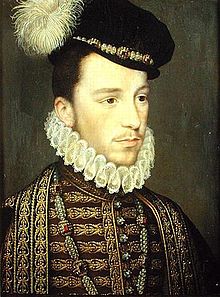
Henri III was thirty-seven years old on the day he was stabbed to death at the Palace of St.-Cloud. He had inherited the throne fifteen years earlier when his elder brother, Charles IX, died without children. Despite the fact that most historians seem to think of him as a mentally defective moron, the unhinged behaviour that Henri III is now so famous for was in fact only on show in the last few months of his life, when he was under near-unimaginable stress. In many ways, Henri III should actually have made an excellent king - he was elegant, charismatic, tall, dark, handsome, hard-working, clever, exceptionally religious and devoted to preserving the power and prestige of the monarchy in an age when it was under attack. He was also, unfortunately, gay (which made many people dislike him) and prone to bouts of hysterical unhappiness (which made him dislike them.)

The issue of Henri III's tortured sexuality is still something of a hot-topic in the historiography of Renaissance France. Historians seeking to "defend" Henri from the charge of homosexuality often point-out how much he enjoyed the company of beautiful women, but he never took a mistress from any of these bevy of beauties and he was never romantically linked with a woman. Even his choice of his wife, Louise, seemed curious. In contrast, Henri was quite clearly smitten (and at times obviously in love with) some of his handsome gentlemen-in-waiting. At the time, the King's sexuality was a gold mine to his enemies. They portrayed him as the very worst kind of homosexual stereotype and one which unfortunately endures to this day. For centuries, Henri has been presented as a cross-dressing, idiotic, promiscuous, unnatural, mincing, effeminate fop. However, those portrayals tell us far more about our attitude to stereotypes than they do about the real Henri III of France.

The fifteen years in which he had been God's anointed ruler over the French had not been happy ones for King Henri. He had inherited a truly horrific situation from his father and brothers. Protestantism had been on the rise in France for over a generation and it had been his father's policy to treat it harshly; ghettoising the emergent Protestant community and isolating them from full participation in the political life of the nation. Then, Henri II had been killed in a jousting accident, leaving the sectarian tensions to be handled by his sons and his widow, the brilliant but over-worked Catherine de Medici. No-one really knew what to do and any proposed solution seemed to offend one side, whilst simultaneously failing to satisfy the other. For over a decade, the monarchy's attitude towards the country's religious violence had been either well-meaning but incompetent, or idiotic and duplicitous. Much like the British government's future attitude to Ireland, conciliation was often followed by a crackdown which was, in turn, then followed by another round of conciliation. Sixteenth century French Protestants quite simply did not trust their monarchy and they would be satisfied with nothing less than full religious toleration and equal rights; meanwhile, many Catholics resented the monarchy for giving any concession to the Protestants. In Spain, Protestants were burnt; in France, they were tolerated. Both communities became more extreme and French Catholicism gave birth to the Holy League, a militant band of Catholic paramilitaries, led by the Duke of Guise - the mightiest aristocrat in France, who shamelessly used the prestige of the Holy League to suggest that it was his family who were the real leaders of Catholic France, rather than the ineffective royal family. In 1572, these sectarian tensions resulted in the infamous Saint Bartholomew's Day Massacre, when thousands of French Protestants were slaughtered by the Holy League and its supporters.

As a young prince, Henri had initially been captivated by the Holy League. Despite his fondness for fine clothes, jewels, parties, handsome men and wine, there was also a side of Henri's personality which was devoutly religious. He was also quite an effective soldier and swordsman, which meant that he could participate in the Holy League's fiery defence of Catholicism. However, after the massacre, Henri realised that the Holy League and its leader, the Duke of Guise, were deliberately exploiting the situation so that the power of the Guise family could rival that of the monarchy. Driven by his total belief that monarchy was ordained by God, Henri was prepared to resort to fair means and foul in order to crush the Guise threat and re-establish the supremacy of royal authority in France. For all his undoubted talents, however, he had not been successful. Nor had he been happy. 

The last few years of Henri III's reign had been miserable, exhausting and demoralising. His marriage to the pretty and devoted Queen Louise remained childless. The King became increasingly preoccupied with thoughts of his own sinfulness and had resorted to whipping himself, starving himself, humiliating himself and pushing himself to the brink of a breakdown through his increasingly-unhinged acts of religious mortification. His beloved mother and closest political adviser, Catherine, had died at the start of the year. She had died worrying about her son's sanity in the face of the odds now surrounding him. The Guise family had seized control of Paris, forcing the King and his court into humiliating exile in the countryside. The Protestants had rallied again behind the banner of Henri's brother-in-law, Henri de Navarre. The Holy League and the Guises had tarnished the King's name throughout France, portraying him as a Protestant-loving pervert. His relationship with his former brother-in-law, King Philip II of Spain, was tense because of Henri's (accurate) suspicion that Philip was secretly funding the Holy League. Relations with Queen Elizabeth I of England were also shaky, ever since she had been forced to execute Henri's former sister-in-law, Mary, Queen of Scots. (Henri had no time for Mary, but his refusal to declare war on England once she was beheaded was used by the Holy League as yet another example of his insufficient commitment to Catholicism.) One of his lovers, Philibert Le Vayer, had been found murdered in a narrow alleyway near the Louvre. His sister, Margot, once his favourite member of the family, seemed to have devoted herself to causing trouble for him wherever she went, with her string of lovers and reckless personal life. Crippled by internal fighting, France hadn't been able to defend herself when the Italian Duke of Savoy conquered the French territory of Saluzzo. Everywhere he looked, the power of the Holy League and the Guise family was growing. They were controlling his every action and thwarting his desires. They had even seized his late mother's favourite palace in Paris and given it to the duke's sister, the Duchesse de Montpensier.

During his mother's final few months alive, Henri III had dispatched a stream of angry letters to her, revealing his anguish at the situation he now found himself in. He complained that the Holy League was trying to "make my state semi-democratic," something which he, and his mother, found absolutely abhorrent. In another letter, he wrote, "I wish to be king and not a prisoner and a slave as I have been." He concluded by promising his mother, "I begin once more to be king and master." He did this by inviting the Duke of Guise to a dinner party in the palace and then having him stabbed to death. Apparently, as the duke who had once been called "the King of Paris" by his supporters lay bleeding to death, Henri III whispered, "There is only one king in France."

In killing the duke, Henri had hoped to divide the Holy League, so that the monarchy could re-assert itself. Instead, the mafia-style murder only spurred the Holy League on in its determination to destroy him. Only in time would the League begin to falter because of the duke's lack of leadership.

Ultimately though, it was not the Holy League which killed Henri III, but a delusional loner, disaffected with the world and convinced that he, and he alone, could really understand it. Jacques ClĂ©ment was a twenty-two year-old friar with the Dominicans, a religious order that cheerleaded the Inquisition. Spurred on by the propaganda of the Holy League and reports of the King's unorthodox private life, the monk made his way to the palace of St.-Cloud, where the King was currently in residence. First, he gained an audience with the attorney-general by telling him that he had urgent news concerning the rebellion in Paris. He was brought immediately to the King's apartments, where Henri was still wearing his dressing gown, as he was dressed for the morning by his servants. Good Catholic boy that he was, the King remained so innately respectful of the clergy that he allowed the monk to approach him and whisper in his ear. Brother Jacques pulled a dagger from his robes and stabbed the King in the lower abdomen, twisting the knife in on impact.

Showing some of the great physical strength which he had been known for as a young man, Henri pulled the dagger from his own body with a scream. The royal bodyguard stabbed the monk to death and tossed his body out the window. As his blood and guts spilled into his hands, Henri III showed that he was far from the mincing stereotype of popular legend. He steadied himself and spoke calmly. He summoned his surgeons and then submitted to their operation, without anaesthetic. His 16 year-old nephew, Charles, the bastard son of Henri's late brother, came to see him and burst into tears to see his uncle in such a state. Henri comforted him and then tried to sleep.

He awoke later that evening and decided to carry on with the business of government. He had a letter sent to his wife and then to the provincial governors. After that, Mass was celebrated in the King's apartments, but his nephew noticed that the King seemed cold and he dutifully rubbed his uncle's feet to try to keep him warm. By nightfall, the King was wracked by a fever, infection and excruciating physical pain. 

Brother Jacques had stabbed Henri III because he believed the voice of God had told him to do it, in order to save the Catholic religion in France. Ironically, as Henri III lay dying, he began making preparations to leave the throne to a Protestant. He had no children of his own and all his brothers were dead; the only logical candidate was his Protestant cousin and brother-in-law, Henri de Navarre, a 34 year-old womaniser with a keen political brain. Summoning Navarre to his bedside, Henri III begged him to embrace the Catholic religion; even if it was only for politics' sake. He also warned him of all the many dangers which could face a king of France. Navarre was greatly moved and couldn't speak as Henri forced all his courtiers to swear an oath of allegiance to their future king. Navarre, who was not by nature a demonstrative man, wept and knelt to receive the King's blessing. A few hours later, Henri III made his last confession and passed away at four o'clock in the morning on 2nd August 1589. With his death, the direct line of Valois kings, who had ruled France since 1328, came to an end with one of their most glamorous, but unlucky, rulers. His life had been sucked-up and destroyed by prejudice, both sexual and religious; his own mistakes had been numerous and often unforgivable, but it is hard to see how the story of Henri III could have had a happy ending, given the time and situation he was born into. 

As Henri IV was proclaimed the new king of France, the rule of the equally glamorous and equally unlucky Bourbon family had begun. 

Saturday, 21 April 2012

Saint Jude


Saint Jude the Apostle, identified with Thaddaeus the Apostle by some (but not all) historians of the Church, was one of the Twelve Apostles of Christ and a relative of Jesus and Mary. Both he and the traitor-apostle, Judas Iscariot, would have shared essentially the same name - a variant of the word "Judah". He was a relative, probably a cousin, of Saint James the Just, and ancient writers tell us that Jude preached the gospel in Judea, Samaria, Idumaea, Syria, Mesopotamia and Libya. According to the early Church chronicler, Eusebius of Caesarea, Saint Jude then returned to Jerusalem, where he assisted with the election of Saint Simeon as bishop of Jerusalem.

Saint Jude was martyred in about 65 A.D., along with another one of the Twelve Apostles, Saint Simon the Zealot. They were preaching either in Beirut or in modern-day Iran when they were beaten to death and then beheaded. Due to this, Saint Jude the Apostle and Martyr was venerated as a saint in Christianity long before the formal process of canonisation was ratified. This is known as a "pre-congregation saint."

Today, Saint Jude is venerated by the Roman Catholic, Anglican, Eastern Orthodox, Lutheran, Oriental Orthodox and Syriac Church of the East denominations of Christianity. His feast day in the Eastern communion is 19th June; in the West, it is 28th October. He is the patron saint of lost causes and cases most despaired of. He has a reputation for being one of the most faithful and beloved of Christianity's holy figures.

A beautiful prayer to Saint Jude, which I like very much, is: -

Oh Holy Saint Jude, Apostle and Martyr, great in virtue and rich in miracles, near kinsman of Jesus Christ, faithful intercessor of all who invoke your special help in time of need. 

To you I have recourse from the depths of my heart and humbly request assistance. Help me in my present and urgent petition.

In return, I promise to make your name known and cause you to be invoked.

Saint Jude, Apostle, martyr and relative of our Lord Jesus Christ, of Mary and Joseph, intercede for us.

I think it's lovely and I hope it helps someone! 

Friday, 9 March 2012

The plight of Christians in the Middle East


The Wall Street Journal is carrying a rather sobering opinion piece by Michael Osen, the State of Israel's ambassador to the United States, about the persecutions faced by Middle Eastern Christians.

"The church in Bethlehem had survived more than 1,000 years, through wars and conquests, but its future now seemed in jeopardy. Spray-painted all over its ancient stone walls were the Arabic letters for Hamas. The year was 1994 and the city was about to pass from Israeli to Palestinian control. I was meeting with the church's clergy as an Israeli government adviser on inter-religious affairs. They were despondent but too frightened to file a complaint. The same Hamas thugs who had desecrated their sanctuary were liable to take their lives.The trauma of those priests is now commonplace among Middle Eastern Christians. Their share of the region's population has plunged from 20% a century ago to less than 5% today and falling. In Egypt, 200,000 Coptic Christians fled their homes last year after beatings and massacres by Muslim extremist mobs. Since 2003, 70 Iraqi churches have been burned and nearly a thousand Christians killed in Baghdad alone, causing more than half of this million-member community to flee. Conversion to Christianity is a capital offense in Iran, where last month Pastor Yousef Nadarkhani was sentenced to death. Saudi Arabia outlaws private Christian prayer.... Since the Hamas takeover of Gaza in 2007, half the Christian community has fled. Christmas decorations and public displays of crucifixes are forbidden. In a December 2010 broadcast, Hamas officials exhorted Muslims to slaughter their Christian neighbors. Rami Ayad, owner of Gaza's only Christian bookstore, was murdered, his store reduced to ash. This is the same Hamas with which the Palestinian Authority of the West Bank recently signed a unity pact."

The full article can be read here.

Sunday, 16 October 2011

Remembering Marie-Antoinette


Today is the two hundredth and eighteenth anniversary of the terrible execution of Marie-Antoinette. The thirty-seven year-old Queen was beheaded by guillotine in what is now the Place de la Concorde just after noon on 16th October 1793. 

The Death: Here is my post on her execution from last year.

Marie-Antoinette the Christian: Professor de Oliveira defends Marie-Antoinette and discusses the strength of her Catholic faith (via Tea at Trianon)

Marie-Antoinette and fashion: my post on the young Marie-Antoinette's fashion tastes

Defending Marie-Antoinette: novelist Elena Maria Vidal discusses why she never said "Let them eat cake"

A one-man woman: Elena Maria Vidal gives an excellent discussion of the rumours regarding Marie-Antoinette and count von Fersen, as dramatised in the 2006 movie Marie Antoinette, starring Kirsten Dunst.

Birth: my post on Marie-Antoinette's birth in Vienna and her christening

Wednesday, 10 August 2011

August 10th, 1792: The siege of the Tuileries


On this day in history, the Tuileries Palace in the centre of Paris was laid siege to by a mob and in a horrifying display of public violence, centuries of monarchist rule in France were effectively overthrown. The royal family, who had been living under de facto house arrest at the Tuileries for nearly three years since the fall of Versailles, were forced to flee for their lives and many of those attempting to defend them were savagely murdered, chief amongst them being the loyal Swiss Guard. Novelist Elena Maria Vidal, author of two novels based on the royal family, has posted an excellent account of the fall of the monarchy, told from the point-of-view of the marquise de Tourzel, the impeccably Catholic governess to the royal children and a character who featured prominently in both of my own plays about Louis XVI and his family.

"Several faithful servants of the King, having found means to gain access to the Assembly, went to the King in the reporters' gallery, and gave his Majesty an account of what was going on at the Tuileries. They told us that the women had got away without any accident, and my son assured me that Pauline was in safety. This certainty and his presence were a great consolation to my heart, although it was still deeply grieved by the fate of the many brave fellows who were devoted to the King and the royal family. Mgr. the Dauphin was charming on this occasion on account of the sympathy with which he displayed his satisfaction at knowing that his dear Pauline was out of danger. These gentlemen told us that the Suisses had got the upper hand for a moment, but as they were unsupported, and the crowd increased every moment, they had been compelled to retire; that a great number of them were killed, and that the general fury had extended to the attendants of private individuals, of whom several, and especially mine, had perished; and that it was impossible to help feeling that there would be many more victims, so great was the rage which animated the mob, who were by this time masters of the Castle...."

Click HERE for the full article on Elena Maria's blog.

Friday, 29 July 2011

The Crown Princess's brother was a victim of the Norwegian massacre


Trond Berntsen, the stepbrother of Crown Princess Mette-Marit (above), the wife of Norway's heir to the throne, was one of those murdered by right-wing extremist, Anders Behring Breivik, in last week's terrible attack. I was linked to the story by the headline "Norway attack victim saved his own son before dying," before being surprised to read that the man in question was a relative of the Crown Princess. Mr. Berntsen sacrificed his own life to save his 10 year-old son from Breivik's attack and the Palace has issued a statement expressing the Crown Princess's personal grief and the sympathies she extends to this very brave man's surviving family members.

More news on Mr Berntsen's bravery and the grief being felt throughout Norway is here in an excellent article from The Guardian.


Thursday, 19 May 2011

The Fall of Anne Boleyn (Day 19): The Last Curtsey


Above: A later woodcut showing Anne Boleyn's execution in the French style. In the corner, the artist depicts the betrothal of Henry VIII to Jane Seymour within the next twenty-four hours.
"So here he was – the last man in her life. In her time, she had known men of great faith, men of towering intellect, of compassion, purpose, charm, chivalry and sangfroid; she had also known men of cruelty, of ego, ruthlessness, duplicity, hypocrisy and vice. There had been men who had loved her, men who had hated her, men who desired her, men who feared her and there had been men who had done all four. Now, at the very last, it was this complete stranger who was to participate in the final tragedy of Anne Boleyn and to give her a death that would buy for her an immortality that many other queens might envy. Looking at him, Anne saw a quiet, respectful angel of death, a man a million miles removed from the macabre, gothic fantasy of a leather-clad, mask wearing exterminator; he, for his part, saw a fragile and rather lovely young woman, who no more looked like the strumpet, the harpy or the harlot than his wife, his sister or his daughter."
For this blog's full account of Anne Boleyn's execution, click HERE.

Sunday, 15 May 2011

The Fall of Anne Boleyn (Day 15): The Queen's Trial


"On May 15th 1536, twenty-six peers of the realm congregated in the King’s Hall of the Tower of London to serve as judges in the trial of Anne Boleyn, Queen of England... In the centre of the Hall, a chair had been placed on a raised platform before a bar. Nearby, glistening in the light was the Queen’s crown – probably the one made of gold and decorated with sapphires, rubies and pearls with crosses and fleurs-de-lis around the rim, which the Queen had ordered for her coronation three years earlier. In the specially constructed stands placed all around the Hall, two thousand of the citizenry of London had gathered to watch. Their hubbub died away as the Crown’s commission was read aloud and the Duke of Norfolk announced,"Gentleman Gaoler of the Tower, bring in your prisoner." 
The Queen entered the room, accompanied by the Yeoman Gaoler of the Tower, carrying his axe, with its blade turned away from her face to signify that she had not yet been condemned. Dressed elegantly in a gown of black velvet with a crimson damask petticoat, and small cap with black and white feathers, the Queen bore all the hallmarks of her education as an honorary member of the French nobility – elegant, sophisticated, imperious and very grand. Behind her followed her remaining ladies-in-waiting, headed by the wife of the Constable of the Tower, Lady Kingston, and the Queen’s estranged aunt, Lady Boleyn, who led four young women of the Queen’s own disbanded Household who had, finally, been allowed to join her in captivity. Watching this procession, the French Bishop of Riez, ensconced in the viewing gallery above, was impressed by the Queen’s behaviour: "She walked forth in fearful beauty," he wrote later, "and seemed unmoved. She came not as one who had to defend her cause, but with the bearing of one coming to great honour.""

For an account of Anne Boleyn's dramatic trial, within the precepts of the Tower of London, click HERE.


Above: A seventeenth century miniature of Anne Boleyn painted by John Haskins, believed to have belonged to the royal collection of King Charles I (r. 1625 - 1649.)

Friday, 15 April 2011

April 15th, 1912: The Sinking of the RMS "Titanic"


Today marks the ninety-ninth anniversary of the sinking of arguably the most famous ship in history - a 46,000-ton British passenger liner, the Titanic. Built in Belfast by the city's famous Harland & Wolff shipyards, Titanic was the second in a trio of sister ships built for the White Star Line between 1911 and 1915. Her elder sister, the Olympic, had garnered most of the lion's share of press attention for her maiden voyage in May 1911, but there had still been significant enough media interest when the Titanic set sail from Southampton on April 10th 1912, when her high quota of wealthy passengers allegedly led her to being nicknamed "the Millionaires' Special." At the time, she was the largest moving object on earth, eclipsing her big sister by just over one thousand tons thanks to the partial enclosure of the promenade deck and the addition of an  Ă  la Carte restaurant and Parisian-style cafe for the first class passengers. 

Four days later, after stop-overs in Cherbourg, France, and Queenstown, Ireland, the Titanic had collided side-on with an iceberg, resulting in over 300ft of the 882ft-vessel being opened to the freezing Atlantic waters. In keeping with the Board of Trade regulations at the time, the Titanic had woefully few lifeboats for the number of people on-board and due to the initial slow-moving tilt in the sinking ship and the fact that many of the passengers and crew had slept right through the collision, which caused no more than a shudder in most parts of the liner, many of the lifeboats initially left less than half-full.

The collision had occurred at 11:40 p.m. on Sunday April 14th and, as it approached 2 a.m., it became more and more clear to those still trapped on-board that the ship was doomed. As she began to sink further and further beneath the eerily calm waters, bow first, people began to hurl themselves overboard or rush to the stern as it slowly lifted out the ocean. According to an old but, I think believable, legend, the ship's band played the hymn Nearer My God To Thee, as the largest and most luxurious liner in the world disappeared beneath the waves.

Over fifteen hundred people perished when the Titanic sank on her maiden voyage; the seven hundred survivors were picked up at dawn by the Cunard liner, Carpathia, en route for a Mediterranean cruise. My late great-grandfather, who worked as a 7 year-old boy in the shipyards, could remember walking out into the streets of east Belfast on the morning of April 16th 1912 to see his father and all the great, burly men of the yard he worked with, huddled outside the local Presbyterian church sobbing at the news the ship they had built from scratch had sank with the loss of so many lives. Today, a memorial to the Belfast engineers who gave their lives trying to keep the power (i.e. light and heat) going for as long as the Titanic sank, sits outside Belfast City Hall.

Below is one of the most moving dramatisations of the Titanic's final moments from the 1958 movie A Night to Remember, produced by William MacQuitty, a Northern Irish movie producer who had actually seen the original Titanic launched in Belfast back in 1911. A Night to Remember is my personal favourite movie about the Titanic disaster and I would recommend it to anyone. 


Monday, 11 April 2011

"Choose Goodness": Reflections on the murder of Constable Kerr

The recent murder of Catholic policeman, Ronan Kerr, has sparked revulsion across Northern Ireland, the United Kingdom and the Irish Republic. Across Ulster, protests and marches were held by the people to show their overwhelming rejection of the dissident IRA's murder of Constable Kerr, by a car bomb last Saturday. They have been known as "peace marches."

Speaking at Constable Kerr's (25) funeral at the Church of the Immaculate Conception in Beragh, County Tyrone, His Eminence Cardinal Brady, the Roman Catholic Archbishop of Armagh and the Primate of All Ireland, give the Catholic Church's unequivocal condemnation of the killing: -

"Parents and grandparents, I beg you: plead with your children and with your grandchildren not to get involved with violence. Never let them be deceived by those who say that Ireland will be united or the Union made more secure by war. They are wrong. It is an illusion. Violence has nothing, absolutely nothing, to offer except misery and destruction."

He called the dissident republicans' killing "an offence against God," and implored them, in God's name, "to choose goodness, choose peace." As a sign of how far the nation has come in the last decade, members of Constable Kerr's local Gaelic Atheltic Association (GAA) carried the coffin half the way to the cemetery, before yielding to officers from the Police Service of Northern Ireland (PSNI.) One was once a byword for Irish republican sentiment; the other once seen as the incarnation of official Unionism in Northern Ireland. Now, they helped carry the body of the same person to Saint Patrick's Cemetry. Amongst those carrying the coffin from the GAA was local sporting legend and manager of the Tyrone GAA, Mickey Harte, who only a few months ago tragically lost his only daughter, Irish beauty queen and newlywed Michaela, when she was murdered by robbers on her honeymoon in Mauritius. Tyrone is burying two young people in a short period of time; both senselessly and needlessly murdered.

The funerals of Michaela McAreavy (seen right with her father  on the day of her wedding) and Constable Ronan Kerr were attended by all members of the community and leaders of both "sides" in scenes unimaginable only a few years ago. The current First Minister of Northern Ireland, Peter Robinson, leader of the strongly Unionist and right wing D.U.P (Democratic Unionist Party), sat near the prime minister of the Irish Republic, Taoiseach Enda Kenny, whilst the Moderator of the Presbyterian Church, Dr. Norman Hamilton, exchanged kind words with Cardinal Brady after the Requiem Mass. Former loyalist paramilitary, Jackie McDonald, attended, along with the leaders of Sinn Fein, Martin McGuinness and Gerry Adams. The world has changed.

After Constable Kerr's death, his mother, two brothers and sisters made an appeal for information and to encourage Catholics who have joined the police force not to be intimidated by the dissident IRA's threats to punish them for being "collaborators" with the British. Mrs. Kerr speaks with dignity, despite the tormented grief you can see in the faces of her children. And I think I would speak for the vast majority of my countrymen when I say that prayers for Mrs. Kerr, her surviving children and, of course, for Ronan, would be very much appreciated. RTE and The Daily Telegraph's coverage of the funeral can be seen below.


Sunday, 3 April 2011

In Memoriam: Police Constable Ronan Kerr


“We have lost one of our brave and courageous police recruits, someone who joined this fine service simply to do good, joined to serve the community impartially and to be someone I describe as a modern-day hero.” - Chief Constable Matt Baggott, Chief Constable of the Police Service of Northern Ireland

A car bomb planted by the Continuity I.R.A. has claimed the life of a 25 year-old police constable in the town of Omagh, in western Northern Ireland. Constable Ronan Kerr was on his way to work on Saturday morning when a bomb planted beneath his car detonated, taking away a young life of a man devoted to serving his community and wakening the town of Omagh to sounds they are all too familiar with. It was by car bombs, the I.R.A's most deadly, feared and frequent style of attack, that the town had become the victim of the last major atrocity of the Northern Irish Troubles, in which the I.R.A. had murdered twenty-nine people by detonating it at three o'clock on the afternoon in a busy shopping area on a weekend. For those not killed, as the bomb tore through the streets, limbs were taken off, windows and doors hurled out into the street and a woman pregnant with twins, two Spanish tourists, visitors from the Irish Republic, Protestants, Catholics, a Morman and five teenagers lay dead on the ground. In the name of Irish freedom. I wonder if any of the Catholics and nationalists lying dead on the ground or screaming with their Protestant neighbours amidst broken shards of glass and blood seeping across the streets of Omagh had been asked if they wanted this "sacrifice" inflicted upon them? Probably not. They had never been asked by the I.R.A. before. Just as Protestants had never asked if they were prepared to endure the treatment of the L.V.F. or U..F.F.

Then, yesterday, Omagh was hit again and this morning at Christ the King Church where Constable Kerr, a practising Catholic had been a practitioner, the parish priest, Father Kevin McElhennon spoke to a stunned congregation. He spoke of the Church's "absolute and clear condemnation of yesterday's murder" and of "the misguided, blind, morally wrong and sinful ideology of those who planned, executed and supported the brutal murder of young Ronan."


Father McElhennon is right; this is not the 1970s anymore. The world has changed; the country certainly has. For many, if not most, in Northern Ireland, stories like this belong to another world. A world they thought had vanished and belonged to their parents' generation or even their grandparents'. I hope, in the most part, we are right. I think we are. The condemnation from everyone, even from the republican Left, Sinn Fein, has been encouraging. The failure of this policy, historically, is also evident to anyone with a knowledge of Ireland's past. Thirty years of bombs and violence did not bring about a united Ireland. Indeed, if anything, they seemed only to galvanise both moderate and extreme Unionist sentiment against any form of compromise. Now, today, mercifully, we do have a compromise of sorts. There is a full and equal electorate and an impartial police system, which Constable Kerr had become a member of, only a few months ago. There has not been one bit of support for what the Real or Continuity I.R.A did yesterday. Indeed, it has been the Catholic community in this country which has spoken out most vocally against the killing. For the killers, Constable Kerr was not a human being; he was a target who had "collaborated" with the occupying British imperialist forces. Few think that way anymore. Many would still like to see Ireland be unified under one republican government in Dublin. They are more than entitled to do so. But the way to convince people of the benefits of remaining in the Union with Britain or of going into a union with Ireland is not this way. It is not through bombs, or fear, or violence. If you have to resort to that in 2011, there is something very wrong with the message. If people cannot be persuaded of the justice and truth of your cause without being frightened by car bombs and stealthily murders, then it is the cause which is defective, not the people. The Chief Constable was right; the man who died was a hero serving his community. And the people of Northern Ireland are a lot stronger than the car bombers give them credit for. 

The Belfast Telegraph's article on the killing can be read here

The Facebook group honouring Constable Kerr can be viewed or joined here.


Related Posts with Thumbnails