Showing posts with label Irish History. Show all posts

Thursday, 26 March 2015

A History of the English Monarchy

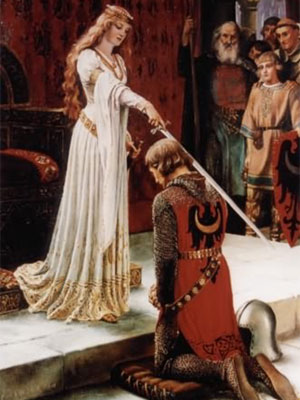
Henry V at Agincourt. Throughout the book, I am fascinated by the ways in which the legends of Camelot fuelled the monarchy's veneration of martial victory.
I am very excited to say that my new book A History of the English Monarchy: From Boadicea to Elizabeth I was released this week by MadeGlobal Publishing. I've been writing about the monarchy on this blog for a few years, so it was great fun to write the story of the Crown from its beginnings under Roman rule, right the way through to the accession of the first 'British', as opposed to English, sovereign in 1603. Thank you so much to everyone who has commented on my royal history posts in the past; for those who order History, I hope you enjoy it! Throughout, I was fascinated by the influence of the Arthurian legends in shaping how English kings, and their subjects, viewed and shaped the early monarchy. I was also particularly interested in telling the story of how the English Crown interacted with its Welsh, Scottish, and Irish neighbours, so chapters 3, 4, and 7 are heavy on exploring the often surprising story of how each part of the British Isles related to one another in that fascinating, bloody, compelling period of History. UK customers can order the book here; US and Canadian customers here.

The blurb reads: In A History of the English Monarchy, historian Gareth Russell traces the story of the English monarchy and the interactions between popular belief, religious faith and brutal political reality that helped shape the extraordinary journey of one of history’s most important institutions. From the birth of the nation to the dazzling court of Elizabeth I, A History of the English Monarchy charts the fascinating path of the English monarchy from the uprising of the Warrior Queen, Boadicea, in AD 60, through each king and queen up to the 'Golden Age' of Elizabeth I. Russell offers a fresh take on a fascinating subject as old as the nation itself.

INFORMATION: Each chapter is divided into sections, chronicling the monarchy’s story.

Chapter 1 - Conquest: The violent birth of the monarchy
* Britannia
* The Barbarian Conspiracy
* Seven Kingdoms
* Praying men, fighting men, and working men
* Edward the Confessor


Chapter 2 - God, Life and Victory: The coming of the Normans
* The Conqueror
* The Red King
* Beauclerc
* When Christ and His saints slept
* The Lioness in Winter


Chapter 3 - From Scotland to Spain: The empire of the Plantagenets

* Eleanor
* Henry
* Diarmait na nGall
* Murder in the Cathedral
* Family Strife
* Come, and see the place
* Sic Gloria Transit Mundi


Chapter 4 - Diluted Magnificence: The birth of Parliament
* The Wrath of God abideth upon him
* Crowned with a bracelet
* Know, Sire, that Llywelyn ap Gruffydd is dead
* The Jewish Diaspora
* Until a king is provided


Chapter 5 - Enemies Foreign and Domestic: The fourteenth-century monarchy
* Our friends do fail us all
* The glory of the English
* Shameless fire was thus mixed with sacred flame


Chapter 6 - Spilled Blood Does Not Sleep: The Wars of the Roses

* Necessitas non habet legem
* This story shall the good man teach his son
* The lords in England kill their enemies
* The sun in splendour
* No more sons of the royal blood


Chapter 7 - As the Law of Christ Allows: The rule of the Tudors
* The Welsh Moses
* Bluff King Hal
* The Rise and Fall of Anne Boleyn
* Deborah and Josiah
* The Queen of Scotland rises on the world
* That Good Old Princess


Epilogue - The word 'must'

Thursday, 10 January 2013

The Protestants of Ireland know nothing of their history and this is the price we pay


Part of the reason why I'm still a unionist is because I'm convinced it must be right in some way, because how else could it have survived for so long given its leaders? It has been Irish unionism's fate to be led, and controlled, by a combination of people who are either unpleasant, incompetent or both. No other political creed in history has enjoyed such longevity, whilst also being led by such a gallery of grotesques. Its survival is also all the more remarkable when one considers that, unlike Irish nationalism, Irish unionism has no real links to its past; only vague, and often confusing, messages, almost all of which resort to defining itself in opposition to nationalism. In a nutshell, what nationalism is, unionism is not. It has, moreover, no real heroes - again, unlike nationalism, most unionists know next-to-nothing about the great "heroes" of the unionist past. While figures like William III and Sir Edward Carson may gaze out haughtily from the banners of the Orange Orders or from six-foot-tall murals, the details of these men's biographies are practically unknown. Devoid of political folklore, unionism therefore resorts to putting much of its cultural identity into symbols, rather than people - the monarchy, the army, the RUC, the Poppy, the parades and, above all else, so it would seem, the flag. Once you understand that, you begin to understand why they're so protective of things that seem trivial to outsiders.

On 3rd December 2012, Belfast City Council voted to remove the British flag from flying above City Hall. A majority of councillors wanted it to remain, but a republican-backed initiative to have it taken down forced a split in the unionist vote and the resulting decision was that it should fly only on designated days, like state holidays or royal birthdays. The corresponding explosion of sentiment across Northern Ireland took everyone by surprise. But it shouldn't have. This has been coming, in one way or the other, for years. Like a penny machine in an old arcade, there was always going to be something that pushed everything right over the edge. And on 3rd December, we found out what that was.

Riots swept the city, particularly in the working-class and Protestant-dominated east. The estimated cost, so far, to local businesses is somewhere in the region of £15 million in losses. And while life ticked along as normal in the city's wealthier quadrants, like Malone, Stranmillis or Ballyhackamore, and the vicious drip-drip-drip of unionism's thinly-suppressed snobbery (even for its own compatriots) led everyone there to dismiss the riots as the actions of ill-educated, jobless and tracksuit-wearing scum, to anyone who knows (or cares) about unionism and loyalism's increasingly-unstable sense of identity, these riots were not only a long-time coming but a warning. A warning that everyone is doing their level best to ignore. 

When the Good Friday Agreement of 1998 brought the Troubles to an end, the onus was very much on the Protestants of Northern Ireland to make the concessions. For years, they had been (and still were) the majority; it had been in deference to their wishes and the aftermath of the First World War that Northern Ireland had been created in the first place back in 1921. They had squandered much of this honour by creating a state apparatus that served their own interests first and the Catholic minority's second. That is reductive and it is not the entire truth, but there is much truth in it. Many of the symbols of old Northern Ireland were, fairly or unfairly, loathed or mistrusted by Ulster's nationalist population. Attempts were made to reform this in the 1960s, but the Troubles took over. By 1998, in order to create a functioning pluralist democracy, some of the symbols of "old" or "unionist" Northern Ireland were quite simply going to have to go. The bitterest pill to swallow for many unionists was the dismantling of the police force, the Royal Ulster Constabulary, and its replacement with the less-unionist-sounding Police Service of Northern Ireland. As far as unionism had a folklore, the RUC was woven into it. Stories of bombs under cars, young constables ambushed by IRA men hiding in bushes after answering false burglary calls and maimed veterans walking in the Remembrance Day service, had all elevated the RUC to the status of the de facto heroes of Northern Irish Protestantism - particularly to the upper and middle-classes. When it went, as everyone knew it must go to gain nationalist support for the peace process, Unionists regarded it as the ultimate sacrifice - the ultimate pledge of good faith, if you like, in the shared future. History would teach us that all these things - a new police force, a power-sharing executive, amnesty for ex-terrorists (oh, how that one stuck in the throat for thousands and not just unionists) - were part of a process of compromise. Peace was the prize; compromise was the price. Unionists may have muttered, bitterly in some quarters, but they ultimately accepted that it had to happen if they wanted their children to grow-up in a world where army road blocks were not a feature of everyday life. Why then, after accepting all that with only a few murmurings, did the working-class sections of Irish loyalism explode into petrol-bomb-throwing wrath over the issue of a single flag over one building in the city centre which can still fly on certain designated days? They hadn't been anywhere close to this angry when an ex-IRA commander was appointed Minister of Education back in 1999. What was it about the flag, years after the peace agreement, that made them so angry? 

Well, part of it is that the flag issue seems like a deliberate slap in the face from Sinn Fein, the major party of Irish republicanism. Why, unionists ask, when the flag had been there for years did they try to take it down now? Why, when so much has been given up already and at a time when thousands of young Northern Irish men and women are abroad serving to defend that flag in Afghanistan and Iraq, did the nationalist parties decide to pick a fight over the city hall standard? Why did the liberal Alliance Party "help" them? And why, oh why, did the unionist leadership not do more to stop it? These are all valid questions and, for what it's worth, I think far less of Sinn Fein for kicking the hornet's nest. (I think far less of the DUP for not trying to calm the hornet's nest, but then I have no faith, really, in any of our political parties anymore.) Anyway, while we can maybe reach an understanding of why the vote happened in the way it did, no-one seems to be asking why so many working-class Protestants have been so terrifyingly angry about this one flag?

Part of it is, undoubtedly, that most of the rioters come from disadvantaged backgrounds, in which they cannot find work, have little education, few opportunities and an inveterate distrust not just of authority, but also of the hated outsiders. In their case, heartbreaking to say, outsiders equate with Catholics. Equally, the unionist leadership has never been able to control the working-class segment of its electorate. Anyone with a good knowledge of Irish history would recall how Southern unionism had struggled to rein in the dragon of the Orange Order at the end of the nineteenth century, only to lose spectacularly. The unionist leadership's deafening silence about these riots is a tribute not just to their cowardice, but also to their uselessness. They fear that they will not be listened to. So rather than take the risk, they do nothing and hope the problem will eventually go away. But there is a bigger issue here and it speaks right to the heart of both the tragedy and the folly of Irish unionism. Where nationalism is built far, far too much on its own concept of its history, unionism does not teach its history, does not know it and definitely does not understand it. 

Many Catholic schools in Northern Ireland should be wrapped harshly over the knuckles for the frankly shocking way in which some teach Irish history. In many schools, but by no means all, it can often amount to little more than a party election broadcast for the ghosts of Michael Collins, Eamon de Valera or Cathal Brugha. Equally, many state schools should be wrapped even more harshly for the fact that they don't teach it, at all. When they do teach twentieth century Irish history, they generally teach the nationalist movement, but they teach it in a curiously passionless way. Unionism, if it's mentioned at all, is the sideshow. A policy which I'm sure has a lot of students gaping in confusion when 1921 rolls around and 1/3 of Ireland was preparing to burn itself to the ground rather than be separated from Britain. The upshot of this dereliction of duty by  our country's educationalists is that Irish nationalism still has a cultural tendency to not consider unionists to be "real" Irishmen and women, it makes next-to-no effort to understand any of Irish Protestantism's attachment to the military or the monarchy, and it has completely written unionism out of the grand narrative of Irish history - which always seems to start with the words "800 years ago," and then a never-ending list of the wrongs done on Hibernia from Henry II to Cromwell to Thatcher, all of them, apparently, sprung from the same heartless vortex of Hell as Judas and Nero. 

But if nationalism knows too much of its own history, then loyalism does not know enough and because of this it is allowed to trundle on like some sluggish dinosaur, carrying all of its old bigotries and prejudice because it's never been properly educated about what really happened in this island's past. There is much to be proud of or, at the very least, interested in. The achievements of the Ascendancy in the eighteenth century are nothing to be sniffed at; neither is the industrial miracle of Ulster and Belfast in the nineteenth and twentieth centuries or the heroism of the Irish battalions in the great wars. There were also brave and noble men from Ireland who believed deeply and truly in the unionist message - that unity within the British Isles could bring more benefits than separation. Men and women who believed that it was possible to maintain an Irish identity, whilst also keeping British loyalties. A firmer knowledge of their past - and pride in its better moments - would give all unionists, whether rioters or not, something to focus on and an appreciation of Ireland's complex history. As it is, most unionists operate under the festering fear that once a united Ireland happens, they'll have to flee for their lives and every bit of their culture will be swept away in a relentless torrent of nationalist triumphalism. That may be a paranoiac fear, but things like the flag vote fan it; they speak right to the deepest of unionism's fears. A fear which, I think, has kept its pulse beating for years. 

A knowledge of Ireland's Protestant history, however, could also teach and warn, as much as it could inspire. After all, isn't that the point of history? Just as nationalism must eventually confront the darker side of its history, unionism could learn much from looking back at its less savoury moments. The Protestant Ascendancy's role in kick-starting the Gaelic Revival might allow Ulster Protestants to stop reacting with such revulsion and anger to things like the Irish language or arts; a knowledge of Edward Carson's plea that the new Northern Ireland should not become a sectarian state could show them that unionism was once-upon-a-time supposed to be a creed for all religions, not just one; Lord Craigavon's repulsive proclamation that he had fashioned a Protestant country for a Protestant people could finally allow Protestants to understand that mistakes had been made and that the bitterness of sectarianism can only poison for generations; Lord Brookborough's petty and vindictive sectarian legislation; Protestant nationalists; Catholic unionists; agnostics (here's looking at you, King Billy, and that handsome young chap you liked to go everywhere with. Don't tell the DUP, though...); the nobility and purpose of many nationalist politicians and figures; moments of compromise between both sides; the forgotten legacy of southern unionism. All of this could let loyalists see that this is not a "them and us" situation, it's not a simple situation and that parts of unionism once tried to overcome the bigotry of many of its followers. So far, only the Alliance Party has made any real and concerted effort to put that principle into practice. 

There is much, in any community's history, to be proud of and to be ashamed of. There is much simply to be interested in. These riots spring from a community that does not know enough about its own past but fears that one day, when the last British flag is taken down in this part of Ireland, that they and everything they know will vanish. Although they do not know it, they are carrying with them the greatest of Irish Protestant fears - the fear that sprang from the massacres of 1641. But they don't know that date, or what it means, even though it's shaped every moment of their political lives and every major piece of Unionist action for the last four hundred years. They don't know anything about themselves, not really, or the people they're allegedly fighting against. It's ignorance and fear - blind and stupid, vicious and lethal - that has prompted this community to take to the streets in a repulsive display of lawlessness and cruelty. They're clinging desperately to that flag because they don't think they have anything else left. 

Irish unionism's history is one of great achievements and repellent prejudice. But then, so is Irish nationalism's. And it's only once you understand that that you can begin to understand that all these big questions - British crown or Irish republic - have to be decided on the basis of today and tomorrow, not yesterday. It's only once you understand history that you can let it go. But because we don't understand it and because we've reduced it to a myth, oft-repeated but seldom-understood, we can't let it go. This strange, bastard, butchered version of history is all that most of us have in Ireland. So we cling to it. We cling to things like the flag, because it's where we came from. And because many of us still think that one day, somehow, one side in Northern Ireland has to "win". But we're not going to win if we keep trying to score one-up on each other. There haven't been any winners in Irish history, not really - not for the last century or so, if not longer. Next time you look into the masked face of a boy barely more than a child as he hurls bricks at a police officer's head, remember that. We are all paying a heavy price for our ignorance, but they're paying the highest. For them, this folly is all they have. 


Wednesday, 21 November 2012

21st November, 1920: Ireland's Bloody Sunday


Today is the anniversary of the so-called "Bloody Sunday" of 1920. It was a gruesome day in the middle of the Irish War of Independence, or the Anglo-Irish War, depending on one's terminology, in which thirty-one people lost their lives in a cycle of increasingly-unhinged violence. It was neither the first time, nor the last time, that such a thing would occur.

Since the end of the First World War, just over two years earlier, Ireland had slid inexorably into violence. Like most of Ireland's historical violence, it was presented as a conflict between two rival nations - Ireland and Britain - when, in fact, it bore all the hallmarks of a civil war. The failure of the republican Easter Rising of 1916 and the British administration's lethally incompetent, and cruel, repression of it had radicalised Irish nationalism and pushed many into the arms of the republican paramilitary movements. In the northern province of Ulster, Protestant hysteria at the proposed implementation of Home Rule for Ireland had led to widespread sectarian violence, particularly in rural areas, and there was little doubt in the British government's mind that any attempt to force the northern-most six counties to participate in any form of all-island independence would result in unparalleled civil unrest - if not a bloodbath. 

In the south, the who's who and the what's left of the Irish aristocracy, known as the Ascendancy, were quietly preparing themselves for the liquidation of their way of life and the whole island suffered through attacks and counter-attacks. In Dublin, the British-born and Ascendancy-related Lord Lieutenant of Ireland, Lord French, was struggling to hold on to power through increasingly desperate measures, all the while being undermined by the hunger strike-suicides of republican prisoners, republican-led spy-rings inside Dublin Castle, various attempts on his life and assassinations of numerous politicians, military service personnel and policemen. The main party of Irish republicanism, Sinn Féin, had been outlawed; many of its leaders were in jail. In retaliation, republicanism's military wings, like the IRA and the Volunteers, had carried out numerous night-time attacks. In Sligo, Mayo and Clare, the homes of the local aristocracy were torched to the ground, leading some of the Ascendancy to characterise the republican movement as the second coming of the French Revolution. The Volunteers' newspaper, An t Óglach, had declared that its supporters should used "all legitimate methods of warfare against the soldiers and policemen of the English usurper" and "slay them if necessary". The behaviour of a supplementary force of British ex-soliders, known as the Auxiliaries or "the Black and Tans," because of the colour of their uniforms, was borderline psychotic and capriciously cruel. Earlier in the year, they had burned the entire southern city of Cork to the ground, reminding many Irish nationalists of the dark legends of Oliver Cromwell and the inherent cruelty of the British.

It was in this environment of death, civil war, repression and reprisal, that Bloody Sunday took place.

Friday, 5 October 2012

Long to reign over us: A brief history of the British monarchy (Part 2)

Her Majesty the Queen is the second-longest reigning  monarch in British history, so far. She acceded to the throne following the death of her father, King George VI, in 1952 and she celebrated her Diamond Jubilee in 2012.

James VI of Scotland did not have an easy start in life. As parental dysfunction goes, James had parents who made Jason and Medea's marriage look like the front cover of House and Garden. When he was still a baby, his father Lord Darnley was found dead amidst the smoking ruins of a house on the outskirts of Edinburgh. Who authorised Darnley's assassination is probably one of the most famous unsolved murder mysteries in British history, but at the time suspicion fixed on James's mother - the ethereally beautiful and scandal-prone Mary, Queen of Scots. Mary was already unpopular with many of her subjects; most of them had embraced the new hard-line form of Protestantism known as Presbyterianism and so they subsequently resented their stunning young queen for her French upbringing and Catholic faith. Shortly after James's first birthday, she was overthrown in a Presbyterian-led coup and fled to neighbouring England. Nineteen years later, she was executed for her alleged complicity in plotting the murder of her Protestant cousin, Queen Elizabeth I.

Robbed of both his parents, little James VI found himself king before he could walk or talk. The Scottish monarchy was pitched into another period of prolonged instability, with coups, rebellions and counter-coups shaping the young king's life. It's hard to doubt that James's adult obsession with defending the Divine Right of Kings sprang from his childhood experiences, in which he had seen the consequences of a monarchy that had been reduced to being the plaything of ambitious politicians. Everywhere he went, James's personal skills were limited by the all-powerful Presbyterian Kirk and the aristocrats who supported it - the so-called "Lords of the Congregation." James himself was phenomenally bright and very well-educated, but he had precious few opportunities to employ his talents and even his personal life was subject to the whims of his Presbyterian minders. As a young teenager, he fell violently in love with his French cousin, the handsome and sophisticated Duke of Lennox, but the Presbyterian lords around him disapproved; they lured James to Ruthven Castle where they kidnapped him and then banished Lennox back home to France. Lennox died eighteen months later, allegedly of heartbreak, and James wrote a poem in his memory called An Ode to a Phoenix, in which he allegorised Lennox as a beautiful bird killed by the envy of others.

Six years later, James did his duty and married Anne, the daughter of the King of Denmark and Norway (then ruled by the same monarchy.) Anne of Denmark (left) was a vivacious and fun-loving blonde, who found life in Edinburgh almost as difficult as her husband did. Presbyterians have never exactly been famous for being flash with their cash and Lutheran-raised Anne resented the fact that her allowance as queen was so restrictive. Despite James's teen obsession with the late Duke of Lennox, as an adult he produced seven children with his Danish queen - Henry-Frederick, Elizabeth, Margaret, Charles, Robert, Mary and Sophia. In 1603, James received news that his elderly cousin, Queen Elizabeth, had passed away in London and he was now King James I of England and Ireland. He and the queen travelled south to London, where they were duly crowned and Anne was finally given free rein to spend as she liked in the magnificent palaces of the English royals - Whitehall (the largest palace in Europe at the time), Richmond, Greenwich, Hampton Court and Windsor Castle. Not content with these and the turtle-shell bed she felt was an essential purchase, Anne eventually decided she needed a little chez of her own and the King duly built the pretty riverside mansion called Queen's House in Greenwich for her, which stands to this day and was the sight for some of the equestrian events of the 2012 London Olympics. Dripping with jewels and spending like a maniac, I don't think Anne of Denmark missed life in the shadow of the Kirk too much. The lairds would have been even further riled to know that, in London, Anne openly expressed sympathy for the persecuted Catholic minority.

James, however, struggled with his new role as king of a united Britain. He had several key political aims - the first was to create a united British state, the second was to maintain the monarchy (rather than parliament) as the dominant political power in Britain and the third was to end England's long-running war with Spain. In the latter, he was certainly successful; with Elizabeth I and her old adversary, Philip II, both dead, their successors, James and Philip III, were able to end the hostilities that had persisted since the defeat of the Spanish Armada. With peace concluded, there was even talk of marrying James's son to Philip's daughter, Maria-Anna. (The talks fell through when pious Maria-Anna point-blank refused to marry a Protestant.) However, in his aims to create Great Britain, James was thwarted. England, Scotland and Ireland may all have had the same king, but each of them had their own parliaments that met in London, Edinburgh and Dublin; they had their own customs, needs and laws and they were reluctant to unify under one parliamentary system. Even the subject of a British flag was unpopular, despite James's enthusiasm for the idea. But perhaps his greatest failure as monarch was in trying to ameliorate the power of Parliament. Everything he did seemed to antagonise them.

As far as James was concerned, kings and queens were closer to God than they were to rest of mankind. Parliament's role was therefore simply to advise the king, but he was under absolutely no obligation to take that advice. When Parliament attempted to force the king to do things that he didn't want to do (like harsher measures against Catholics or an end to the extravagance of the royal court), then James would react with apoplectic fury. Where the late Queen Elizabeth had deftly manipulated Parliament by flattering them into voting her the money she needed, James I harangued them and demanded, not requested, their financial assistance. By the time James died in 1625, after twenty-two years on the British thrones, relations between Parliament and the monarchy were at an all-time low and James's twenty four year-old son, Charles I, inherited a particularly unenviable situation. 

It would therefore be easy to write James VI/I off as a political failure. However, whilst the British Isles could not be united legislatively, they had been united by the monarchy and it would be this unity which eventually gave birth to the United Kingdom and, through it, the British Empire. He was also responsible for the mammoth cultural task of translating the Bible into perfect English - thereby giving the world the hauntingly magnificent King James Bible. He had survived the Gunpowder Plot of 1605, which aimed to blow up the King, his heir and the Houses of Parliament in retaliation for the penal laws in place against English and Welsh Catholics. He had been clever enough to balance the very different religious requirements of his kingdoms - he had been raised in the Calvinist-Presbyterian tradition in Scotland, but wisely did not attempt to impose the more liberal Anglican view of Christianity on them once he became Governor of the Church of England in 1603. He had admittedly done nothing to end the legal discrimination against Catholics or Puritans in England and Wales, but he had not caved in to populist demand that he start a kind of Protestant Inquisition against them, either. He had fathered heirs with his wife, despite the fact that he was far more attracted to his own gender. (After Lennox, he was obsessively devoted to the Earl of Somerset and, after him, the King got all in a fluster over the muscular legs of the gorgeous Duke of Buckingham, whom everybody else seemed to find insufferably annoying.) He had been a great patron of the arts, music, architecture and literature (Shakespeare received more backing from James I than he ever did from Elizabeth I.) He had overseen the expansion of British colonies in Ulster and America. And he had attempted to impose the new view of monarchy, prevalent with most European philosophers in the seventeenth century - that royal power should be absolute, that regional characteristics must be subordinated to a centralised culture and government, and that only a unified state could be a strong one. It's undeniable that James blundered and made many errors, but to dismiss his entire reign as a grotesque embarrassment is to misrepresent it. Whatever his failings, James I had arguably made the monarchy central to the emerging notion of being British. In doing so, he had successfully tied the Crown to a sense of national identity; the monarchy was, and arguably still is, far more central to the emotional identity of the British than parliament ever could be.

Tuesday, 11 September 2012

Golf, Rory and the ghost of the Anglo-Irish


23 year-old Rory McIlroy is, almost without question, the most globally-successful sportsperson to come out of Northern Ireland. Right now, he is the highest ranking golfer in the world. But in the last week far more attention has being paid to his nationality than to his achievements. Today's edition of the Belfast Telegraph ran the provocative headline: "Rory: I feel more British than Irish." The reason being that in a recent interview, McIlroy had expressed ambivalence about who he would compete for if golf was included as a sport in the 2016 Olympics in Rio: Team GB or Team Ireland? McIlroy stressed that he had not made his mind up yet. In fact, he hadn't even made up his mind if he would compete, but he acknowledged that whoever he competed for, he'd probably end up annoying somebody. 

To re-cap, Rory McIlroy is a Catholic, which on the basis of statistics means that he's expected to consider himself Irish rather than British. On the other hand, he's from Holywood and attended Sullivan Upper School, both of which are right slap-bang in the heartland of Northern Ireland's yacht, country and golf club scene. It's a place where the only tricolour you're likely to see is a French one at a wine and brie party. When it comes to his golfing career, he's so far competed under the umbrella of Ireland, because in golfing, the tournaments are still organised on all-island basis, rather than around political borders. But, if golf goes ahead to the Rio Olympics in 2016, that won't be the case. For the first time in his life, Rory McIlroy will have to choose to compete under the Union flag or the Irish tricolour and whether he'll be standing for God Save the Queen or Amhrán na bhFiann at the ceremonies

McIlroy himself is, understandably, a little piqued that his recent success has been drowned out in the media speculation about his preferred nationality. In an open letter, posted via his Twitter account, he eloquently expressed his frustrations and tried to put an end to the debate: -

Having just won three out of my last four tournaments, including a second Major Championship, I was hoping that my success on the golf course would be the more popular topic of golfing conversation today! However, the issue of my cultural identity has re-emerged, and with it, the matter of my national allegiance ahead of the Rio Olympics in 2016. 
I am in an extremely sensitive and difficult position and I conveyed as much in a recent newspaper interview. 
I am a proud product of Irish golf and the Golfing Union of Ireland and am hugely honoured to have come from very rich Irish sporting roots, winning Irish Boys, Youths and Amateur titles and playing for Ireland at all levels. I am also a proud Ulsterman who grew up in Northern Ireland, which is part of the United Kingdom. That is my background and always will be. 
I receive huge support from both Irish and British sports fans alike and it is greatly appreciated. Likewise, I feel like I have a great affinity with American sports fans. I play most of my golf in the US nowadays and I am incredibly proud to have won both the US Open and the US PGA Championship in the last two years. 
As an international sportsman, I am very lucky to be supported by people all over the world, many of who treat me as one of their own, no matter what their nationality, or indeed mine. This is the way sport should be. 
Since turning professional at 18, I have travelled the world playing the game that I love and consider myself a global player. As the World No 1 right now, I wish to be a positive role model and a sportsperson that people respect, and enjoy watching. 
I feel very fortunate to be in a position to play the sport that I love professionally and to have enjoyed the success that has come my way. 
I wish to clarify that I have absolutely not made a decision regarding my participation in the next Olympics. On a personal level, playing in the Olympics would be a huge honour. However, the Games in Rio are still four years away and I certainly won’t be making any decisions with regards to participating any time soon. 
The Olympics will be great for the growth of golf on a global scale, but my focus right now is on being the best player I can be, trying to win Major Championships and contributing to what will hopefully be a victorious European side at the forthcoming Ryder Cup Matches against the USA. 
Lastly, I would like to thank everyone for the amazing support that I receive around the world every time I play. It is hugely appreciated . . . Rory


If one was to look solely at Rory McIlroy's dilemma, then it undoubtedly seems silly and facetious to be kicking up a fuss over what team he might play for in four years time if he decides to go ahead and compete. It seems a bit like fighting over where to have your wedding, before receiving a marriage proposal. But the debate does shine light on an area of Irish modern culture that receives the old Irish problem of too much attention and too little understanding: Where do we stand on our national identity?

Northern Irish Protestants, particularly ones who have lived in Northern Ireland all their lives, are known to get quite angry if someone refers to them as "Irish." On the one hand, this seems stupid and pedantic. After all, before 1921, the phrase "Irish" was used to describe their ancestors. On the other, why shouldn't they have the right to embrace a new national identity, in the same way Czechoslovakians did after 1918 or Germans did after 1871? Simply because Northern Ireland hasn't been around forever doesn't mean that it has no right to exist or that people have no right to emotionally invest in it. 

Equally, Rory McIlroy's position as a cradle Catholic who self-identifies as British represents one of the great silent minorities of Northern Irish demographics. Since the days of Daniel O'Connell, Irish nationalism has not traditionally been very kind to Catholics who see themselves as British; the ugly sobriquet of "West Brit" was, and is, hurled at them because it's felt as if they've somehow let the side down. They're often seen as deficient and nobody, really, likes to talk about them. But they do exist and in fairly sizable numbers, particularly as you move "up" the socio-economic pyramid. Time after time, every census and every report that comes back about Northern Ireland indicates that there is a significant segment of the northern Catholic community who would not back a united Irish republic, either because of pragmatic, economic or sentimental reasons. Why are they not being acknowledged? And why, even more incredibly, are they not been targeted by the Unionist parties, particularly the moderate Ulster Unionist who, quite frankly, need every vote they can get? And why, when there is a Northern Irish British Catholic like Rory McIlroy, who is prepared to talk about it, do we all seem so incredulous?

But for me, the dilemma faced by Rory McIlroy and by thousands of people of our generation in the North summons up, Banquo-like, the ghost of the Anglo-Irish. The great losers of Irish historiography. Abandoned by their northern allies, who were only concerned with "saving Ulster" and in creating a new "Northern Irish" identity at the expense of the old Irish one, and completely written-out of the great myth of Irish nationalism, in which everything with the word "Irish" in it must ipso facto by anti-British, hardly anybody talks about the Anglo-Irish today. (If they've even heard of them, at all.) But their situation, and the hyphen in their nationality, is perhaps the one most relevant to Northern Ireland today; it merits being talked about.

The Anglo-Irish were a social group descended from the Norman invaders of the twelfth century, who subsequently intermarried with the native Gaelic aristocracy and also with the wider Irish population. They existed predominantly in the southern three provinces of Ireland - Leinster, Connaught and Munster - and they had little to do with the seventeenth-century plantations of Ulster, which saw the creation of the unique, if misunderstood, Ulster-Scots community. In the aftermath of the Boyne, the Anglo-Irish made up between about a tenth and a fifth of the overall Irish population; they are almost all members of the Church of Ireland and a significant number made up the aristocratic Ascendancy. Some of their more famous sons included the author Jonathan Swift, the "Iron" Duke of Wellington, the great politician Edmund Burke (below), the playwright Richard Brinsley Sheridan, the novelist C.S. Lewis, the famous Nationalist leader C.S. Parnell and the nineteenth century Foreign Secretary, Lord Castlereagh. And, of course, W.B. Yeats, who captured the Anglo-Irish view that some people should be poor and some should be rich because the world was prettier that way. A view, incidentally, which still survives on the Malone Road.  


Prior to the eighteenth century, the term "British" was hardly ever used - especially not in Ireland. One was simply an English/Irish/Cornish/Scottish/Welsh subject of the Crown. By the time the rising tide of nationalism was sweeping across Europe in the aftermath of the French Revolution, the Anglo-Irish community had already been settled in Ireland for six hundred years. It was far too late for them to suddenly get a new identity, just because everyone else on the European continent seemed to be rushing hell's-bells for a national label with which to define themselves and everything to do with their culture. (Edmund Burke, like his hero Marie-Antoinette, found the whole thing a bit unsettling, to say the least.) By the end of the nineteenth century, it was quite clear that the Anglo-Irish were on the wrong side of history, as Ireland pulled itself apart over the issue of independence from Britain. Unionism was strongest in the North and the orange-and-purple militancy of the Ulstermen had no time for the wishy-washy Anglo-Irish, with their fondness for old Irish culture. As far as the Nationalists were concerned, the vast majority of the Anglo-Irish were traitors. Loyalty to the King was loyalty to a foreign, hostile power. Since they didn't fit into either polarity, by the time Partition occurred in the 1920s, the Anglo-Irish simply vanished from the history books. For Northern Ireland to work, Unionists had to make it seem as if partition was predestined - a kind of six counties' manifest destiny, if you like. An historical view grew-up that the North had always been so inherently different from the South that separation was basically inevitable. In that version of events, there was no room for the 15% of the population who lived in the South, but who had self-identified as both royalist and Irish. For Nationalism, of course, it was easier to blame the English for everything, rather than to concede the awkward reality that there was a significant number of Irishmen and women who had not wanted independence.

It would be easy for me to stand on my historical pedant's drum and demand that we pay attention to the history of the Anglo-Irish because once upon a time they existed and, because of that, they deserve to be properly studied like any other part of history. It would equally be valid for someone to riposte that  I'm over-sentimentalising them, in order to make a point about modernity. Throughout the eighteenth and nineteenth centuries, the vast majority of the wealthiest member of the Anglo-Irish community had been far more concerned with preserving the privileges of the aristocracy against (what they saw) as the French Revolution-inspired hysteria of nationalism and from the jumped-up working-class demagogues of the Orange Order, who the Ascendancy loathed just as much as they did the IRA. Maybe there isn't much in the history of the Anglo-Irish that's actually worth emulating? Maybe they were predominantly selfish, reactionary and backward? Maybe the reason why they ultimately vanished from history was because they were an eighteenth century social class trying to live in a twentieth century world? (See below: enjoying their bling-tastic lives.)


But the point about the Anglo-Irish is that they chose and that the real reason that they were written out of Irish history wasn't because of what they did, but because of what they were. And that's the biggest problem in Ireland, then and now: we are far more concerned with what you are than with what you do. What Rory McIlroy captures is a generation that's sick and tired of having their identity forced upon them by history and other people's expectations. Why can't we acknowledge that the past happened and not keep trying to revive its divisions?

Basically, whether you like it or not, eight hundred years ago, in a period with radically different morals and attitudes to war, the English invaded Ireland. They came, they settled, they intermarried. They conquered Ireland, and then they ruled Ireland, with the help of the Irish themselves. Expecting every vestige of a British identity to vanish from the entire island of Ireland is a bit like expecting every immigrant group to vanish from the continental United States. Then again, another awkward fact: whether you like it or not, British rule quite clearly didn't quite work out for everyone and over the centuries, they didn't exactly set themselves to winning hearts and minds, did they? Seven hundred years after the invasion, the vast majority of Irish people chose to expel imperial rule and to become an independent nation. These two developments are historical fact, both the invasion of the 1100s and the independence of the 1900s brought good and bad things. Most things in History do. They have left a whole litany of national identities to chose from. The Anglo-Irish believed themselves to be a fusion of Ireland's cultures; the majority of them were strong monarchists, but many were also enthusiastic supporters of the Gaelic Revival, the Irish language, music, literature and the arts. They were, for better or worse, the original products of a mixed marriage. 

It's been nearly a century since Partition. It shouldn't surprise us that people are beginning to question their identities and that we're once again beginning to see a generation that's comfortable calling themselves Irish subjects of the British crown or Irish citizens of the United Kingdom. If you see yourself as solely British, solely Irish or as uniquely Northern Irish, then that's your prerogative. Go for it. 

And for all their many faults, perhaps that should be the legacy of the Anglo-Irish: take an interest in all the parts of Ireland's fascinating history, but be prepared to bend the rules a little. People fought and died for it a long time ago; you don't need to fight the same battles again. Don't be too rigid; don't be stuck in any one category. And while you're doing that, do what Rory McIlroy has done - have a strong sense of civic pride and make your homeland proud. After all, despite what we've done to it, it's still one of the best places on Earth. Maybe that's why we get so worked-up about it. 

Monday, 3 September 2012

The Uncrowned Queen of Ireland: The Life of Isabel of Gloucester


"And if his name be George, I'll call him Peter;
For new-made honour doth forget men's names."
- From William Shakespeare's King John

Isabel of Gloucester was the first woman since 1066 to marry a future king of England, who never became queen herself. She shares that rather sad honour with only four other women in English history - the aristocratic Mary de Bohun, who died before her husband seized the throne as Henry IV in 1399; the feisty Lady Anne Hyde, the mother of Mary II, who died whilst her husband (the last Catholic King of Britain) was still Duke of York; Sophia-Dorothea of Celle, who was divorced and imprisoned in a grim German castle on grounds of adultery, long before her equally-adulterous husband became King George I in 1714 and, of course, one expects, the late Princess Diana, who was divorced and subsequently died in a tragic car crash when her ex-husband is still heir-apparent.

Isabel of Gloucester has more in common with Sophia-Dorothea and Diana than she does with Mary de Bohun and Anne Hyde. Like them, the reason she never made it onto the consort's throne was because she was divorced, not because she died prematurely. Isabel had no say in her divorce, nor in her life after it. In many ways, Isabel's story is a sad reflection of the stultifying and miserable lives that many medieval women were forced to lead - particularly the women of the upper classes. Although they, theoretically, lived lives of far greater comfort than the vast majority of the population, their bodies were so integral to the merger and acquisition of aristocratic lands and assets that most daughters of the nobility were shuttled around depending on their menfolk's whims and political aspirations. For a very long time, there was a pervasive view amongst male historians that the royal and aristocratic women of the Middle Ages had been nothing more than "animated title deeds." And whilst glamorous or tenacious queens like Eleanor of Aquitaine, Marguerite of Anjou, Matilda of Scotland and Matilda of Boulogne might suggest that this is far too simple a view, the lives of women like Isabel of Gloucester indicate that in many ways it's a grim but horrifically fair assessment of wealthy women's role in medieval society.

For instance, despite the fact that she was one of the greatest heiresses of her generation and married to a future king, we are not even one hundred percent sure of Isabel's Christian name. In part, this was because of the multi-lingual nature of the English empire at the time and the Middle Ages' promiscuous attitude towards spelling, but at various points Isabel is referred to as Isabella, Isobel, Avisa, Joan, Eleanor, Hawise or Hawisa. She was born sometime around 1173, probably on one of her father's vast estates. It was a year of rebellion, in which the elder sons of King Henry II openly rebelled against their father's authority and attempted to carve out political careers for themselves. Henry's wife, Eleanor of Aquitaine, sided with her boys against her husband, causing international scandal in the process. Isabel's father, William FitzRobert, Earl of Gloucester, was the King's cousin and he loyally sided with him to oppose the Queen and the princes. 

William, Earl of Gloucester was a grandson of the heroically fertile King Henry I, who had ruled England between 1100 and 1135. Unlike King Henry II, however, the Earl was not descended in the legitimate royal line. His father, Robert, had been one of Henry I's many bastards. (As another sign of how lowly women were esteemed, we have no idea who Robert's mother was - several women from Oxfordshire have been suggested, but so has a racy Welsh princess.) This generous dose of royal blood, coupled with his father's loyalty to Henry II's mother during the great civil war of the 1140s, meant that William of Gloucester stood high in the King's favour and he had managed to expand his considerable aristocratic holdings to become one of the great lords of the realm by the time of Isabel's birth. Through her father, the baby Isabel was not just related to the Royal Family, but also to some of the most powerful players in the Anglo-Norman nobility. Her uncle Roger was the Bishop of Worcester, her aunt Matilda was the phenomenally wealthy Countess of Chester and her late uncle Hamon had died a hero's death at the 1159 siege of Toulouse.

Isabel's mother was born Lady Hawisa de Beaumont, the daughter of the Anglo-French Earl of Leicester, who had served as England's de facto prime minister between 1155 and 1168. A powerful politician and a generous benefactor of the Church, Leicester's service to the King was yet another link between Isabel's family and the royals. Through him, Isabel was the niece of the current Earl of Leicester (earl then being the highest title available to the English aristocracy) and the Countess of Huntingdon and Northampton (whom Isabel may have been named after.) 

Despite her father's loyalty to the King during the princes' rebellion, for some reason Henry II began to regard the Earl of Gloucester with suspicion. Desperate to recover royal favour and to prove his loyalty to the regime, the Earl gave Bristol Castle (below) as a gift to the middle-aged monarch, when Isabel was about two years old. Of course, it says something for the Gloucesters' wealth that they were able to part with a castle and still remain one of the most affluent families in the empire. The gesture obviously worked, albeit temporarily, because a few years later Isabel's father accompanied the King on his journey to arbitrate a dispute between the kings of Navarre and Castile. There is some evidence, though, that he fell out of favour again and he was deliberately detained on the King's orders when the princes once again rebelled against their father. Whether this was because of the King's paranoia or because Gloucester had actually done something to justify his suspicions is hard to say.


We know very little about Isabel's childhood or her relationship with her parents, but it is safe to hazard the guess that she would have come as a disappointment to them. Isabel's only brother, Robert, had died before she was born and without a male heir, Lord Gloucester had been forced to negotiate a deal with the King, which would see all of the Gloucesters' vast wealth devolve to the Crown once the Earl passed away. Henry II's youngest, and favourite, son was Prince John, later enshrined as a villain in the Robin Hood legends. With the eldest son due to inherit his father's kingdoms in England and Normandy, the second set to inherit the Queen's ancestral duchy in the Aquitaine and the third married off to the heiress to the duchy of Brittany, King Henry was anxious to provide an inheritance for his youngest son, who was already being cruelly nicknamed "Lackland" by snickering courtiers. The Gloucester inheritance was perfect, because it would turn Prince John into a great magnate in his own right. The agreement hammered out between the King and the Earl therefore prepared the way for John to inherit everything when the Earl died, in return for marrying one of the Earl's three daughters - Mabel, Alice or Isabel.

Why Isabel was picked over her sisters to marry Prince John is anybody's guess, but the two were engaged when Isabel was only about three years-old. Isabel was quite probably the eldest of the three girls, since it is hard to believe that anything like her looks or personality would have influenced the royals in what was, essentially, a balance transfer. Her father died when she was about ten years old, leaving the lion's share of the inheritance to the de facto male heir, Prince John. Mabel later married the Seigneur de Montfort and Alice married the Earl of Hertford.

Saturday, 28 July 2012

What's God got to do with it: Religion, Ireland and the Troubles


The Irish are always particularly hostile to outsiders' "interference." Woe betide the first foreign national who tries to pontificate upon an internal Irish matter. I was once at a party in America where someone informed me that Northern Ireland was nothing more than an imperialist occupation. Blood nearly streamed out of my eye-balls and I nearly couldn't finish my tequila. (That's how serious it was.) The northern Irish, in particular, are prone to getting especially antsy about it. Nothing irks them more than being told that their country is either a glorified warzone (entirely untrue) or that the troubles of the 1970s, 1980s and 1990s were the result of religion (debatable). As far as most northerners are concerned, it's got absolutely nothing to do with religion and only an ill-informed idiot could possibly assume that it had. 

I mean, when was the last time someone chucked a petrol bomb over the stigmata of Padre Pio or bricked a policeman because they didn't agree with justification by faith alone?

The Troubles in Ireland were political, not religious. They arose from a desire by one-third of the northern population to unite with the independent south and a conflicting desire by the other two-thirds to stay united with Britain. Over time, the demographics have shifted, but the issue remains the same. Shared sovereignty would be equally unpalatable to both sides of the debate. What it all comes down to is Ireland's relationship with Britain, not Jesus. Even some historians agree. In his recent book The Elizabethans, A.N. Wilson painted a brilliant and very witty portrait of everyday life under Elizabeth I (looking blingtastic, I might add. Me loves me some sceptres.) Wilson's book begins by looking at life in sixteenth-century Ireland; he argues that it was the Tudors who messed Ireland up for centuries to come, but that nationalism's cosy links with Catholicism only arose because of how much everyone hated the English, not how much they loved Catholicism. As Wilson points out, when the Reformation first occurred in the 1530s, the Irish went along with it far more easily than the English did: "It was not, initially at least, a specifically religious matter, though by the end of the sixteenth century the rebels Hugh O'Neill and Hugh O'Donnell, could see themselves as champions of 'Christ's Catholic religion' against the English heretics. The fundamental point of contention, though, was English interference in Irish affairs: English attempts to make Ireland less Irish. As a matter of fact, in the early stages of the Reformation, the Irish went along with Henry VIII's religious revolution more peaceably than the English did. There was no Pilgrimage of Grace, there were no Irish martyrs for the faith, no Irish Thomas More or Bishop Fisher. More than 400 Irish monasteries and abbeys were sold to Irish laymen during the reigns of Henry VIII and Elizabeth I. The Irish did not protest when Henry VIII made George Browne the Archbishop of Dublin - that was, the former Augustinian friar who performed the marriage ceremony between the King and Anne Boleyn. Perhaps, if a Gaelic Bible and Gaelic Prayer Book had been available in Ireland, as a Welsh Bible and Prayer Book were in Wales by 1567, Ireland might have remained Protestant." It didn't, of course.

What is frustrating from an historian's point of view is how little people in Northern Ireland actually know about history, but how much they use history to shape their views. (The phrase 'A little knowledge is a dangerous thing' springs to mind and has never been more applicable.) In 1641, when thousands of Irish Protestants were massacred by their Catholic neighbours, hundreds of Catholics joined a Catholic confederacy that pledged to stop further massacres and to support the rule of King Charles I in Ireland. Cromwell's infamous attack on Drogheda and Dundalk in 1649 was as much an attack on Irish royalists, who continued supporting Cromwell's fallen enemy, the King, as it was an attack on Irish Catholics. William of Orange won the Battle of the Boyne in 1690 with the help of the Pope. When the first serious rebellions against British rule broke out in 1798, most of its leaders were Presbyterian-Protestants. It was not until the early 19th century that a clear link between one religion and a corresponding political side could be seen in Irish politics. (Some people still blame Daniel O'Connell for this, but the lad needed to get himself some votes and we shouldn't be too nasty to the man who won Catholic Emancipation.) 

Anyway, the defenders of the idea that religion has nothing to do with Ireland's bullet-and-the-ballot-box history point out that at no moment has a theological debate formed the nexus for an outburst of violence. On the surface, it therefore seems very clear that what caused the Troubles (and lingering sectarian resentment today) was not faith, but instead questions of identity, culture, nationality and politics. 

But is it as clear cut as that? Anyone from Northern Ireland will know that the words "Protestant" or "Catholic" are used far more often in conversation than more accurate terms like "unionist" or "nationalist." It's a short-hand and instantly-recognisable way to convey what someone's political opinions are. And what their view of history is. Anything that can prove the other side wrong is met with metaphorical dances of joy. (Literal ones would be totes undignified.) For instance, recently, when I was tutoring a friend about Ireland's medieval past, his face lit up with a euphoric glow at the revelation that the English invasion of Ireland had actually been blessed by Pope Adrian IV. "So, let me get this straight: the Pope that they all adore actually ordered the English to invade?" (I didn't know that there were many "Pope Adrian IV fan clubs" around, but whatever. That's nice for him. Frankly, more 12th century personalities should have fan clubs. Eleanor of Aquitaine, for instance. Maybe he just meant popes, in general? I don't know. Oh, those crazy Catholics. Still, though - the Eleanor of Aquitaine thing should be considered.) 

You see, it's my contention that religion actually does matter in Ireland's troubles. And that it matters, a lot. Just because no-one ever started a fight over the perpetual virginity of Mary or the existence of Purgatory does not mean that faith doesn't influence us. Religion, in a strange way, is still everything in the north of Ireland. For most people, whether they like to admit it (and usually they don't), it establishes all the essential elements of someone's personality. It may reveal what school you went to, who you're likely to vote for, what sports you play, what national anthem you'll stand for, what you're likely to get offended by and what your world-view will be. Religion flows, subtly, beneath the surface, shaping everything above it.

How, though? Well, to put it in a nutshell - and I'm being reductive here, so I apologise - Catholics tend to think they're better at being Irish and Protestants think they're better Christians. And in both cases, it's annoying.

Northern Irish Protestants are brought up to believe that Catholicism is nonsense. Even if that phrase is never specifically said, there are numerous tiny influences in an Ulster Protestant's childhood that lead them to the inescapable conclusion that Catholicism is not "real" Christianity. That it's all superstition, Mary, saints, statues, priestcraft, paedophile priests and spiritual idiocy. Even if you get older and you claim to respect Catholicism because "we're all Christians," most Protestants are still utterly convinced, in their heart of hearts, that Protestantism is "real" Christianity. Okay, maybe Catholics aren't bad, but they're certainly wrong. Because of Protestantism's assertion of sola scriptura (Scripture alone) and its belief that the Bible is literally true (i.e. what you see is what you get), it's impossible for many of them to appreciate that Catholicism is, in fact, an enormously complex system of beliefs that happens to be based on the Bible just as much as Protestantism is, but through a different set of textual interpretations. 

This belief gives most Protestants a sense of rather irritating spiritual superiority. Even "bad" Protestants who go to church twice a year, who leave the service early, who shag all around them, swear, drink and generally have a good time, can still feel better about themselves, because no matter how shaky their own faith is, they're still automatically better Christians than every single Catholic they know. ("Bad" Protestants who are smug, nasty and self-righteous feel this all the time, but I digress.) For most Protestants, Catholicism is the "fan fiction" of Christianity; it's the unofficial spin-off. It's not quite real. At a recent table quiz, half the Protestants in the room did not know the name of the last book in the Bible. Had you pushed them though, they would still have sworn blind that they were more authentic Christians than the most devout of Catholics. (Btw, seriously? Revelation, guys. Isn't that general common knowledge?)

Northern Irish Catholicism breeds its cultural superiority in a different way to Protestantism. What happens in Sunday Schools, youth groups and Scripture Unions for Protestants, often happens in the school system for many Catholics. Whilst there are some schools that are nearly 100% Protestant, it is illegal for any school to have a purely Protestant ethos. There are, however, numerous Catholic-only schools - many of whom have excellent exams results. Mercifully (or hopefully) few of these schools teach a sectarian message; although many do teach a rather one-sided version of Irish history ("Protestant" schools often fail to teach it, at all.) The major point, however, is that in a school (or any social organisation) where there is no risk of offending anyone, it is permissible for ribald sectarian banter to run un-checked. What Northern Irish Protestants and Catholics say when they're in mixed company is a world-apart from what they say when they know that only their own "kind" is in the room. What they say to foreigners (including the English) is often outright, politically-correct, rose-tinted lies. For seven years, thousands of Catholics spend most of their time in an environment in which there is zero need for them to moderate what they say about politics or religion and they have zero daily interaction with Protestants. I am in favour of faith schools, but in Northern Ireland specifically, I do sometimes worry about them. That kind of environment can breed both a casual sectarianism and an innate, unconscious attitude that Protestants are "foreigners"; that they're somehow not really Irish and, as a result, that they don't belong here. Far too many Catholics think that Protestants all behave like mini-Ian Paisleys; too many Protestants think that all Catholics had a childhood that was basically a cross between The Magdalene Sisters, Titanic Town and Angela's Ashes.

In a recent survey conducted of Ireland's Catholic population, 80% stated that they did not believe in Transubstantiation - one of the core tenets of the Catholic faith. Few Protestants can name all the books of the Bible; even fewer know the relevant history, context and textual debate about what they emphatically believe to be the revealed Word of God. Ireland's relationship with faith is therefore a troubled one - to put it mildly. No wonder outsiders get it wrong so often. Sometimes, I don't even particularly understand it myself. We get angry about how religion is misused in our communities, but then we feel guilty about criticising people from our own "side" when they behave in a sectarian manner. We feel as if we're letting the side down; as if condemning an individual's actions is somehow condemning the whole community. It's stupid and it's spineless. And I've been guilty of doing it myself.

There are many other causes that keep sectarianism alive in Northern Ireland; just as there are also many factors which are, mercifully, slowly beginning to strangle it and starve it of oxygen. Religion is not the cause of the Troubles, but I can't help but think that it is still one of the reasons. If it doesn't cause the tensions, it certainly re-enforces them. And if that is the case, then the verse that springs to mind is the shortest in the Bible and one worth remembering for all believers: "Et lacrimatus est Iesus." (John 11:35 - "And Jesus wept.")

Friday, 28 October 2011

A woman out of legend: The Life of Eleanor of Aquitaine, Queen of France and Queen of England (Part 2)


After a very long delay to this blog's Lives of the Queens of England series, here is part II of the three-part life of Eleanor of Aquitaine. Part I - Daughter of Riches - can be read here.

"My life, when it is written, will read better than it lived. Henry Fitz-Empress, first Plantagenet, a king at twenty-one, the ablest soldier of an able time. He led men well, he cared for justice when he could and ruled, for thirty years, a state as great as Charlemagne's. He married out of love, a woman out of legend. Not in Alexandria, or Rome, or Camelot has there been such a queen."- Henry II in the play The Lion in Winter by James Goldman (1966)


History loves a good romance. Some of its most famous couples, like Tsar Nicholas II and the Empress Alexandra, are remembered because of the intensity of their love for one another. Others, like Marc Antony and Cleopatra or Henry VIII and Anne Boleyn are remembered not so much for the nature of their love, but because of the melodrama that surrounded them. On 18 May 1152, a newly married couple emerged from the cathedral of Saint Pierre in the city of Poitiers in modern-day France (below). They were Henry of Anjou, nineteen year-old heir-presumptive to the English throne, and Eleanor of Aquitaine, the twenty-something ex-wife of the King of France. Henry and Eleanor emphatically belong to the latter category of famous historical couples. With them, it’s the drama, not the sentiment, which entices. Their marriage, celebrated less than two months after Eleanor’s divorce from her first husband, was born from political expediency, but it ended in civil war, rebellion, mutual recriminations, heartbreak and imprisonment.

Sunday, 14 August 2011

The return of the Ascendancy


Ever wondered what it would be like to spend a week, an evening or a weekend living like a member of the Irish Ascendancy? Well, The Irish Times has just profiled one of my favourite places in the country - the absolutely beautiful Montalto estate, a few miles from where I live, and currently administered by my childhood Sunday school teacher, David Anderson MVO MBE. The estate, which dates from the early eighteenth century, was originally the home of the earls and countesses of Moira and it represents one of the triumphs of Italianate architecture amongst the homes of the Irish aristocracy. During the rebellion of 1798, there was considerable fighting on the estate between those who supported the rebellion and those who were loyal to the Crown. At that time it was the home of the 2nd earl of Moira, who later became Marquess of Hastings, a hero of the British army during the American War of Independence and later British Governor-General of India. The marquess sold the estate in 1802, four years after the rebellion, whereupon it passed into the hands of the Ker family and later the earls and countesses of Clanwilliam in 1912. In his amusing history of the estate, Lord Belmont in Northern Ireland reports that one countess of Clanwilliam refused to live in the house "because of the regrettable infestation of ghosts."


The house and estate has now lovingly been restored and, believe me, it's absolutely beautiful. With all the modern conveniences, it somehow still manages to feel as if someone magically stopped the clock in 1910.

For The Irish Times article on its restoration, click HERE.

And many congratulations to David, the Wilsons and everyone at Montalto. It's a magnificent place and beautifully restored.

Monday, 23 May 2011

The past is a foreign country: The Queen's speech in Dublin


There are moments when you are aware that we are all living through History and that it can happen very quickly. At an almost bewildering rate, something which once seemed impossible and best left to the imagination of fiction writers suddenly becomes hard fact. One such moment was the speech given by Her Majesty The Queen at the official state dinner in Dublin to mark Her Majesty's visit, along with His Royal Highness the Duke of Edinburgh, to the Republic of Ireland last week. It was the first time a British Sovereign had visited the republic and the first time a British monarch had set foot on southern Irish soil since the Queen's grandfather, King George V, visited Dublin in 1911, one hundred years ago. By the time King George returned to Ireland, it was to Belfast in 1921 to formally inaugurate the new Northern Irish parliament and mark the partition of the island, the only solution available to prevent civil war - a tragedy which was not avoided in the south, where many republicans attacked the new Irish government for accepting the partition of the island.

The ghosts of Partition and civil war lingered in the air during the Queen's visit, but not too much. The ghosts, too, of those slaughtered in thirty years of Troubles in Northern Ireland, including the Duke of Edinburgh's uncle, Lord Mountbatten, murdered by an IRA bomb in 1979, could not be totally ignored. But, with the Queen and President Mary McAleese, herself born in Northern Ireland, visiting the Garden of Remembrance where the President laid a wreath for those who had fought for the independence of Ireland and the Queen laying down a wreath of poppies for the Irish men and women who had given their lives for the British Empire and for Ireland in the First World War, the ghosts of the past did not seem to make themselves heard too loudly. Which made a pleasant change. Like Argentina, Ireland has a notorious inability to let go of the past and an alleged refusal to undergo any form of historical exorcism. Sometimes, I think, forgetfulness can be no bad thing. Especially here. We're a religious country, apparently, but for many years we haven't really embraced the biblical teaching that you shouldn't blame a child for the sins of his ancestors. We cling too much to what went before us, with dates like 1641, 1649, 1690, 1798, 1847, 1912 and 1916 all spoken about as if they are moments in the recent past. And all of it carrying the dangerous, unspoken warning of "careful it doesn't happen again!" Protestant women and children might once again lie slaughtered and dashed off the rocks, Irish families will once again endure famine and be forced out onto the moors to starve. Magdalene Laundries will spring up the length and breadth of Ireland or the Black and Tans will sweep through the streets again. Who stole what from whom, who started which conflict, who has the right to be here and who doesn't, who lied, who cheated, who bombed where and when. For some reason, given the horrors that stalked Irish history, we don't like to forget. We cling too much to that which went before us. Ireland's past was, until last week, the eternal present.

And then, all of a sudden, you feel goose pimples shoot up and down your arm when the Queen begins a speech in Irish. It's then that you realise that the world has changed and that Ireland isn't a place of  ghosts, rebels, blood and loyalists. It's 2011 and it's a great place to live. It's a small country, one of the smallest of the English speaking nations, and yet its national saint's day is a holiday in one of the largest; Irish charm, hospitality, friendliness, ease of living, inappropriate sense of humour and the indefinable quality of craic is known and praised throughout the world. On both sides of the border, despite the south's current economic crisis, high standards of living are enjoyed and in the north, economic prosperity is made all the more remarkable when, as the Queen reflects, it's been just over a decade since it emerged from what was one of the most vicious political conflicts in western Europe after the Second World War. In Ireland, everyone's supposed to know what you are, who you vote for, what sports you follow and which type of passport is sitting in your bedside drawer. Our identities have all been very clearly drawn, right down to the way you pronounce the letter "h." We're pros at telling through a dozen subtle signals what type of church you pray in on a Sunday and, based on that, which national anthem you'll stand for. And then, the Queen of England speaks Irish.

The "wow" of President McAleese was pretty much my reaction too. Any attempt at staying jaded had vanished. Both ladies deserve tremendous applause for their work last week and in fostering Anglo-Irish relations. We're neighbours, not enemies. Garret Fitzgerald, the man who served as Taoiseach of Ireland in the 1980s, and who had striven to improve relations between northern and southern Ireland as well as between England and Ireland, died during the Queen's visit, but Irish newspapers are reporting that before he died he had the opportunity to see the Queen dining with the Irish President. I certainly hope it's true.

Throughout her visit, the Queen acted with grace and charm, as did President McAleese and the vast majority of the Irish public, who were keen to show the visiting British royals the (rightly) world famous Irish hospitality. The finest local produce (Guinness obviously included!), the major sites of Dublin and the Irish countryside, the premier politicians from both north and south of the border and welcoming crowds helped drown out the protests of those thirty or so hardline

The Queen's speech in Dublin was the highlight of her visit and it made me very proud of both identities I hold, as a British subject and as someone born on this side of the Irish Sea. You can, finally, feel to be both. This speech, for me, is one of my favourites and one of the Queen's best. I hope people enjoy it.

Related Posts with Thumbnails