Showing posts with label Sophistication. Show all posts

Thursday, 23 December 2010

Anne Boleyn's Christmas presents

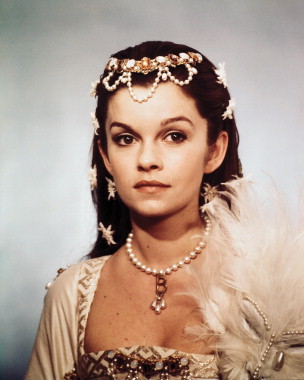
Claire Ridgway over at The Anne Boleyn Files posts a fascinating article on the presents Anne both gave to and received from King Henry VIII. Anne (above played by Quebecois actress Geneviève Bujold in the 1969 Oscar-winner Anne of the Thousand Days) was known to have a taste for the finer things in life. One of her favourite arguments in response to those who said such a love for materialism was incompatible with being a Christian was to quote a work of French theology, L'Ecclesiaste: "Should I say for all this that it is prohibited for to be merry and that Jesu Christ hath only chosen sturdy people: seeing that He Himself hath helped at feasts ... No surely!" 

As a young socialite, Anne had already acquired a reputation within the narrow world of the English upper-classes for the fine food and wines she served at her dinner parties, as well as the dances, gambling parties and hunting afternoons she organised. Dr. David Starkey writes that thanks to her childhood in France, she acquired "a gourmet's palette." She apparently did not eat very much, since she was very concerned to remain thin, but what she did eat seems to have been of an exceptionally high standard. Above all else, of course, Anne was famous for her sense of fashion - both as a debutante and in her early career as a lady-in-waiting to Katherine of Aragon, Anne was noted for being "the glass of fashion ... the most observed of all observers". When she became queen, she struck such a glamorous figure that even one of her bitterest enemies called her "the rose of state."

As Claire points out, giving presents at Christmas rather than during the Christmas festivities is a fairly recent phenomenon. England in the time of Henry VIII tended to function more like modern day Spain, in which the bulk of the presents were given in or on January 6th, the day which the Church usually celebrated as the anniversary of the visit of the Magi to the Infant Christ Child and the Holy Family in Bethlehem. When Anne became the King's wife-to-be, she suddenly found that she had a near-unlimited bank balance to finance her expensive tastes and Henry evidently took great pleasure in spoiling her. For example, when she was twenty-three, in the short period between Christmas and Saint Valentine's Day, Anne received a veritable treasure trove of jewels to mark the festive season, including: -

1. "Nineteen diamonds for her head" (Anne had a special fondness for weaving jewels through her long brown hair for balls or special occasions. As a virgin, she was still allowed to wear her hair down and uncovered in public. Only queens were allowed to do the same after they were married.)

2. Two bracelets each crafted from ten diamonds and eight pearls

3. Nineteen diamonds set in "trueloves of crown gold"

Friday, 10 December 2010

December 9th, 1793: The Death of Gabrielle de Polignac


'Who is this? And what is here?
And in the lighted palace near
Died the sound of royal cheer;
And they crossed themselves for fear,
All the Knights at Camelot;
But Lancelot mused a little space
He said, "She has a lovely face;
God in His mercy lend her grace,
The Lady of Shalott."'
- Alfred, Lord Tennyson

Illustration above: An anonymous royalist pamphlet from 1793, showing the Angel of Death inscribing a monument to the Duchesse de Polignac


On December 9th, 1793, one of the last and the most exquisite of the ancien régime's socialites, Gabrielle, Duchesse de Polignac, died in exile in Vienna, less than two months after the execution of her friend and patroness, Queen Marie-Antoinette. She had been ailing for some time, although what precisely caused her death is still something of a mystery. In his 1974 biography Louis and Antoinette, Vincent Cronin wrote "Gabrielle de Polignac contracted a sudden illness in December 1793 and was dead within twelve hours". It may be that the duchess's death was hastened by a sudden infection caught in the depths of the Austrian winter, but it seems clear to me from my own research that for quite a few years prior to her death, Madame de Polignac had not been in good health. Her young and pretty daughter wrote in a letter to one of her mother's many English friends that since the news of the Queen's execution in October it had been possible to see Death written all over Gabrielle's face. The former court painter, Madame Le Brun, living nearby, wrote that in the final months of her life Gabrielle's "still lovely" face had been drained of its colour by the combined effects of sorrow and illness. Lady Antonia Fraser, author of Marie Antoinette: The Journey surmises that the cause of La Belle Gabrielle's death may therefore have been terminal cancer, exacerbated by suffering. At the time, others suggested it may have been consumption (tuberculosis.)

Having written Gabrielle in as one of the major characters in my play The Audacity of Ideas, set at Versailles on the eve of the Revolution of 1789, I have grappled with what killed her. I would like to quote from my author's note for that play and also show the scene in which Gabrielle is informed by the court physician, Dr. Lassonne, about her condition - four years prior to her death. No disclaimer is needed for the educated, but it is always worth bearing in mind that the scene between the duchess and the doctor is, of course, fictional.

At the time of her death, Gabrielle was survived by her husband, Jules, her daughter and her three sons - Jules (the future Prime Minister of France), Armand and Camille. Today, Gabrielle's descendants sit on the throne of Monaco.

Monday, 11 October 2010

Fit for a Queen

The blog Marie Antoinette's Gossip Guide to the 18th Century is hosting a rather fun video, celebrating the legendary wardrobe of the last Queen of France and her contemporaries.

The dress above is one of the cumbersome but magnificent gowns required by Versailles etiquette to be worn by the great ladies of the Court on formal occasions of State. Marie-Antoinette was not a fan of this particular style of dress, but she made the best of it by employing the talents of her famed dress-maker, stylist and so-called "Minister of Fashion," Madame Rose Bertin, who American Vogue credited with inventing the entire concept of haute couture in their September 2006 issue.

The personal style of Marie-Antoinette and her confidantes is something often misrepresented. Like earlier queens, such as Anne Boleyn and Henrietta-Maria, Marie-Antoinette was genuinely interested in fashion for fashion's sake - she enjoyed the touch and sight of gorgeous fabrics and daring, fashion-forward gowns. Unlike other sovereigns, such as Elizabeth I or Louis XIV, the Queen did not enjoy dressing for the sake of grandeur or political display. Her decision, in the 1780s, to patronise the movement for simpler, elegant lawn dresses was one of her more controversial, but is also indicates that the Queen preferred style to splendour and innovation to tradition when it came to fashion.

Perhaps unsurprisingly, given her own obsession with fashion and her appreciation of the power of aesthetics, Marie-Antoinette's set was known for being a fairly fashionable one. Her brother-in-law, the Comte d'Artois, was generally considered to be the best-dressed man in France, while several of the Queen's ladies-in-waiting were praised for their sense of style - the imperious but entertaining Princesse d'Hénin, a friend of the Comte d'Artois', had a preference for sophisticated and generally fairly conservative cuts in clothing; the pretty Thérèse-Lucy de Dillon, married to the Governor of Tobago and chatelaine of a beautiful townhouse on the rue du Bac, generally followed where the Queen led, but her love of the latest fashion and complimentary, highly-feminine styles were commented upon with approval by many of the courtiers at Versailles.

Amongst the Queen's extended circle, perhaps the most adventurous dresser was Victoire, the Princesse de Guéménée, wife of one of the highest-ranking aristocrats in the kingdom and related by blood to another of the nation's "first families." Victoire was noted for the general fabulousness of her lifestyle, her extravagant parties, her sophisticated manners, her luxurious homes, her gambling addiction, her financial recklessness, her love for her pet dogs and her dazzlingly decadent dress-sense. Madame de Guéménée dressed in the most lavish and ostentatious style, which so many of us associate in our heads with the last days of the ancien régime in France. Perhaps unsurprisingly, Madame and her husband were the only French aristocrats in the entire century who actually faced bankruptcy - a financial scandal which rocked the nobility and titillated the gossips of Paris and Versailles for months to come. The Queen, who was not particularly close to Madame but enjoyed her parties, arranged for a loan to be given to the couple to spare them the humiliation of debtors' prison, but the Guéménées were still forced to quit the capital for awhile, in order to live-down the disgrace of their bankruptcy.


Perhaps the keenest of the Versailles fashionistas, after the Queen herself, was her friend and Superintendent of her Household, the Princesse de Lamballe. A pretty society widow, the Princesse was not only one of the highest-ranking women in France as a Princess of the Blood, but also one of its wealthiest, thanks to the enormous fortune she had inherited when her young but immoral husband died at the age of twenty from advanced syphilis, leaving her everything but an infection. Mercifully, Madame de Lamballe had avoided contracting venereal disease, since her husband had quit his wife's bed for that of a dancer, Mademoiselle Chassaign, shortly after the wedding. That the Lamballe marriage had been abusive had long been whispered in the corridors of Versailles and with the inheritance received from her husband, it was cruelly (but accurately) reported that the prince had given his wife far greater pleasure in death than he ever had in life. Deeply religious, morally upstanding, highly sentimental, emotional and lady-like, Madame de Lamballe showed no wish to re-marry and instead used her vast fortune to give generously to her favourite charities and to maintain an extravagant yet elegant life as one of the French aristocracy's premier socialites. She kept two large homes - her town-house of the Hôtel de Toulouse (where the recent film Marie-Antoinette starring Kirsten Dunst was partially filmed; Madame's home was used to film the scenes of Marie-Antoinette's youth in Vienna) and her beautiful country house of the Château de Rambouillet (above left.)


Monday, 13 September 2010

"Wait for Me!": The memoirs of the last of the Mitford girls


"Money and illness and sex were not talked about in those days and they are the only things people talk about these days, aren't they? ... Self-pity and self-esteem, which are now the key things in school, were not allowed. Self-esteem? Nanny used to say, 'Who's going to look at you?'" - Deborah Cavendish (nee Mitford)

"This last surviving member of the Mitford clan has written a memoir old-fashioned in its unwillingness to spill the beans, yet one which is still rich enough in anecdote to be unputdownable."

Bel Mooney at The Daily Mail reviews the newly-published memoirs of Her Grace the Dowager Duchess of Devonshire, perhaps better-known to the world by her maiden name of Deborah Mitford. Known within the family as "Debo," the Dowager Duchess's memoirs sound fascinating and I've ordered my copy to keep as a treat for finishing Popular's sequel in October - along with the official biography of Queen Elizabeth the Queen Mother, C.J. Sansom's new novel Heartstone, Charlaine Harris's Dead Until Dark and re-reading Elena Maria Vidal's Madame Royale and William Boyd's Any Human Heart. So looking forward to two weeks of doing absolutely nothing.

I've always had a great admiration for the Duchess. My grandmother told me a story that, during the Blitz, coming across a working-class woman sitting amidst the bombed out ruins of her house, Deborah walked over and handed her her diamond engagement ring, to sell and re-start her life with. It's easy to see why she is so respected and why she managed to keep-up amicable relations with all over her, often-quarrelling sisters. However, some harsh words are reserved in the memoirs, apparently, for the brilliant but difficult Nancy, who (it was recently discovered) was actually one of the sources writing to the British government recommending the imprisonment of her pro-fascist sister, Diana, during the Second World War.

Copies of Wait for Me! can be ordered here. (And, on a side note, I couldn't agree any more with Miss Mooney's description of inheritance tax/death tax/death duties as a "crippling abomination.")

Sunday, 6 June 2010

Sandra Bullock's Acceptance Speech


Sandra Bullock, who this year won an Oscar for her performance in The Blind Side and became the adoptive mother of baby Louis Bardo, has had an otherwise difficult year with the break-up of her marriage amidst the tabloids' revelation of the repeated adultery of her husband, Jesse James.

Sandra is also well-known for her work in the Miss Congeniality series of movies and has worked on more "serious" movies like The Prince of Egypt, Infamous and Crash. In the above video she is making her first public appearance since the sad news about her marriage to receive the "Troops Choice Award for Entertainer of the Year" at the Spike TV's Guy Choice Awards ceremony.

As ever, she is gracious, funny and she gives a very moving, modest and thoughtful speech. That's how real class is done.

Sunday, 30 May 2010

The Mitfords and Marie-Antoinette


The Mitford girls have to rank alongside the Boleyn sisters, the Lennox girls and the Brontës as amongst the most famous sibling units produced by the English upper-classes. Born between 1904 and 1920, the six sisters were the children of Tory country squire, Lord Redesdale, and his wife, Sydney, and each was to lead an extraordinary life and to capture the attention of high society and the tabloid press. Their lives have been immortalised on screen, on stage and in musicals, with their childhood being memorably lampooned by the scathing wit of the eldest sister in her fabulous best-selling novel, "The Pursuit of Love." One sister is today the personal heroine of J.K. Rowling, the creator of Harry Potter, another (the only still living, sadly) is the curatrix of one of the most splendid private homes of the British aristocracy and another is a regular player in inaccurate and wild conspiracy theories that Hitler had a secret love child. There was also a brother, Tom, born between Pamela and Diana, who had a school-time fling at Eton with the future acclaimed architect, writer and socialite, James Lee-Milne, before becoming something of a ladies' man and who was tragically killed on active service in Burma in 1945.

Sunday, 2 May 2010

May 2nd, 1536: The Queen's Arrest


"And down the river's dim expanse
Like some bold seer in a trance,
Seeing all his own mischance --
With a glassy countenance
Did she look to Camelot.
And at the closing of the day
She loosed the chain, and down she lay;
The broad stream bore her far away,
The Lady of Shalott."

- Alfred, Lord Tennyson (1809 - 1892), The Lady of Shalott

On the morning of May 2nd 1536, Anne Boleyn awoke as usual in her luxurious four-poster bed, with its silken sheets and golden tassels imported from Florence. Despite her husband's abrupt departure from the Mayday jousts the day before, there was no sign that this day was going to be different from any other.

The Queen's ladies of the bedchamber were already waiting to dress her in the morning’s preliminary outfit – a long robe, a bit like a dressing gown, was placed over a relatively simple linen dress and the Queen ate breakfast in the privacy of her rooms before a screen was erected in front of her for Mass. Since she was in her dishabille, it was customary for the Queen to hear the morning service from behind a screen on days which were not holy days or great festivals. So, with a mantilla draped over her head and her prayer book in her hands, Anne heard one of her chaplains celebrate the Mass, before she retired back to her bedchamber to be dressed properly.

Noted for her interest in fashion, as well as for her extravagance, Queen Anne usually spent about £12,000 ($18,000) on clothes in an average month – not counting expenditure for great events of State, when her outfits were famously breathtaking. Even on "normal" days, like this one, she was always immaculately coiffed and styled and even one of her most hostile critics described her as "the glass of fashion."

Related Posts with Thumbnails