Sunday, 2 March 2014

"The Gate of the Year"


This week, my newest play The Gate of the Year is premiering in the Belvoir Players' Studio in south Belfast. The Gate of the Year imagines the events of the French Revolution from a few months before the famous attack on the Bastille fortress until a few days before the fall of the palace in October, as if they had taken place in the modern-day. It focuses on the high court nobility, led by the King's youngest brother the Duke of Artois (played by Belfast actor David Paulin) and his friend, the elegant but manipulative Duchesse de Polignac (played by Rebecca Lenaghan), as they struggle against the growing forces of the revolution. It also contains the storyline of the notorious journalist Jean-Paul Marat (Conor Doran) and the young idealistic republican Charlotte Corday (Nuala Davies).

One of the joys of writing The Gate of the Year after writing the story of the actual events of the French Revolution, The Audacity of Ideas, a few years ago, is to re-imagine the events and personalities to fit with a more modern setting. Marie-Antoinette, played here by the wonderful Emma Taylor who played Imogen in both stage versions of Popular, was seen by many as the inventor of what later came to be called haute couture, by public fascination with her soon turned ugly and in this alternate reality, she becomes the victim of invasive and crushing media attention. Trying to keep the ghosts of Grace Kelly and Princess Diana at bay was tricky, but luckily Marie-Antoinette's own involvement, last-minute, in the politics of the French monarchy meant her story took on a very different hue regardless of her modern-day similarities.

History, I think, has eternal themes and balancing those with the characters of those who lived and died in the 1790s has been a hugely rewarding experience and one of the highlights of any challenge I have faced as a writer thus far. In this world, The Marriage of Figaro controversy becomes about the same-sex marriage debate and Marie-Antoinette complains of the paparazzi, but words like "recession" and "hunger strikers", words that have such an immediate emotional impact on people today, particularly in Northern Ireland, slotted right into the story with surprising ease. 

From left-to-right. In rehearsal for The Gate of the Year, Emma Taylor as Queen Marie-Antoinette, David Paulin as the Duke of Artois and Tom Flight as Louis XVI. 
The French Revolution casts a long shadow over the two centuries that came after it and perhaps the most surprising thing is not how much needed to be changed but how much could remain the same. The events of The Gate of the Year are very different to the chronology of what happened in 1789 - with modern technology, it was impossible to have Louis XVI (Tom Flight) and Marie-Antoinette's eldest son die of tuberculosis as he did in 1789, here, they are the parents of four surviving children - but at the end of it all, I can't help but think that the feeling of what that euphoric and horrific summer must have been like for the people living through it has remained the same.

The Gate of the Year is open to the public at the Belvoir Players' Studio Theatre in Belfast on Friday 7th March at 8 p.m. and Saturday 8th March at 8 p.m. An industry performance is taking place on Thursday 6th. For more information, you can visit the theatre's booking page here. 

Saturday, 28 December 2013

Some of my favourite reads of 2013

Tudor: The Family Story by Leanda de Lisle. Leanda's biography of Lady Jane Grey and her sisters Katherine and Mary is my favourite historical biography and I loved this take on the well-trodden story of England's most dysfunctional Royal family. De Lisle's writing style is so delicious that if it were edible, you'd almost certainly end up the size of a house and/or Henry VIII, the porky sovereign who for once is not allowed to stand centre stage in this dynastic tale of wife-changing, religious revolution and palaces more blinged up than an MTV crib. The women and minor members of the family are allowed their day in the metaphorical sun and de Lisle's refusal to play favourites guarantees fair treatment for all. Buy it, read it and I'm sure you'll love it. 

Cloud Atlas by David Mitchell. Originally published in 2004, I half-read it at my friend Colin's suggestion at university but returned to it when the wonderful movie adaptation (below) starring Tom Hanks, Halle Berry, Jim Sturgess, Doona Bae, Susan Sarandon, Jim Broadbent, Hugh Grant, Hugo Weaving, James D'Arcy and Ben Whishaw was released. The story of various reincarnated souls passing through the centuries from pre-abolition America, the inter-war years in Britain, a nightmarish twenty-second century Korea and a dystopian future is haunting, clever, nimble, beautifully written and very moving. If the story of Sonmi-451 doesn't devastate you, see a therapist immediately.


A Place of Greater Safety by Hilary Mantel. Once you can get past the trademark horrors that Hilary Mantel seems to make of all her female characters, this 1992 novel inspired by the biographies of three male revolutionaries - Georges Danton, Camille Desmoulins, and Maximilien Robespierre - is actually a beautiful novel that captures perfectly how even the leaders of the Great Revolution of 1789 began to fear its strength and wonder how it would all end. (Hint - not happily for more or less anybody involved whose surname wasn't Bonaparte.) A Place of Greater Safety even manages to make Desmoulins interesting, charismatic and almost sympathetic - no mean achievement. A wonderful example of historical fiction.

The Night's Dark Shade by Elena Maria Vidal. The festering underbelly of the Cathar movement and the clash between two rival faiths in thirteenth-century France make this novel very interesting, very enjoyable and, reading for pleasure this time, one of the most intriguing takes on religious controversies of the Middle Ages. If you are a fan of medieval stories, then this one is certainly worth picking up.


A Night to Remember by Walter Lord. Famous for inspiring the 1958 movie of the same title (above), I had never actually read this minute-by-minute dramatisation of the Titanic disaster of 1912. Lord interviewed many of the survivors, had previously travelled on the Titanic's nearly-identical sister ship the Olympic, and approached the story of the sinking with a respect that bordered on the reverential. Unlike the 1997 take on the story, there are no fictitious love stories at the centre of Lord's novel. Instead, it's a gripping and almost forensic account of one of the greatest tragedies in maritime history. It also manages to capture the syntax and attitudes of 1912 perfectly. I loved this book and I wish I had read it earlier. 

Shiverton Hall by Emerald Fennell. Released early this year by Bloomsbury, this children's story is, and I kid you not, actually as close as I can come to the horror genre without suffering nightmares and/or dousing my room with water from Walsingham. A glorious return to the Victoriana world of camp macabre and horror, Shiverton Hall is the perfect book for a child who loves to read, anyone who enjoys a good boarding school tale or, for the adults in your life like me, who like to be scared but only within due reason. There'll be no Norman Bates meets Emily-Rose in my nightmares, I can assure you.

The War that Ended Peace: How Europe abandoned Peace for the First World War by Margaret Macmillan. No one but Margaret Macmillan could have approached the story of how "Europe's century" ended in the horrors birthed by 1914 and produced something so compulsively readable. Focusing on both the wider social context of the Gilded Age and the political figures who helped make the terrible decisions which resulted in a global conflict, Macmillan has produced a book that is irreverent, thoughtful and wonderfully written. 

The Creation of Anne Boleyn: In Search of the Tudors' Most Notorious Queen by Susan Bordo is a cultural biography of how Anne Boleyn acquired posthumous immortality, what attracted her legion of modern-day fans and critics, and how her story has been used and abused by subsequent generations. With interviews with two of the actresses most famous for bringing Boleyn to life on screen, this is a fascinating book with its finger kept firmly on the pulse of modern culture. Scholarly, but also funny, wry, sarcastic and emotive. And as the UK cover proves, we always knew Annie B could rock a pair of aviators. Once a fashionista...

The Assassination of the Archduke: Sarajevo 1914 and the Murder the Changed the World by Greg King and Susan Woolmans. Any suspect story about Archduke Franz Ferdinand is perhaps rightly declared as something to be treated with caution and scepticism in this book, while similarly improbable and damning anecdotes about any of his blood relatives are repeated as fact. Thus, the title figure emerges as a devoted family man, while his elderly uncle is described as a border-line autistic syphilitic and Franz Ferdinand's brother, Otto, was apparently a sadomasochistic pervert if Viennese gossip was to be believed. It's one standard for Ferdy and another for the rest of the Hapsburgs, which is a shame because otherwise this was a fascinating and wonderful biography of a man who is probably the most important assassination victim in history. Greg King and Susan Woolmans deserve great praise for rescuing his personality and his tragic love story with Sophie Chotek from obscurity. Fast moving, sympathetic and engagingly written, The Assassination of the Archduke was a truly gripping biography of the first victim of the First World War. Highly recommended.

Counting One's Blessings: The Selected Letters of Queen Elizabeth the Queen Mother by William Shawcross. The late Queen Elizabeth's biographer returns with a volume of her selected letters, chosen from across the remarkable century of her life and eight decades in the public eye. The late Queen's wit, impish sense of humour and inimitably effervescent mode of expression come across alongside her steely determination, quick intelligence and pathological ability to avoid anything too unpleasant until the last possible moment. A beautiful book from the pen of a celebrated and popular Royal, Counting One's Blessing was a joy to read. And made me hanker for a gin in the Highlands.


Sunday, 8 December 2013

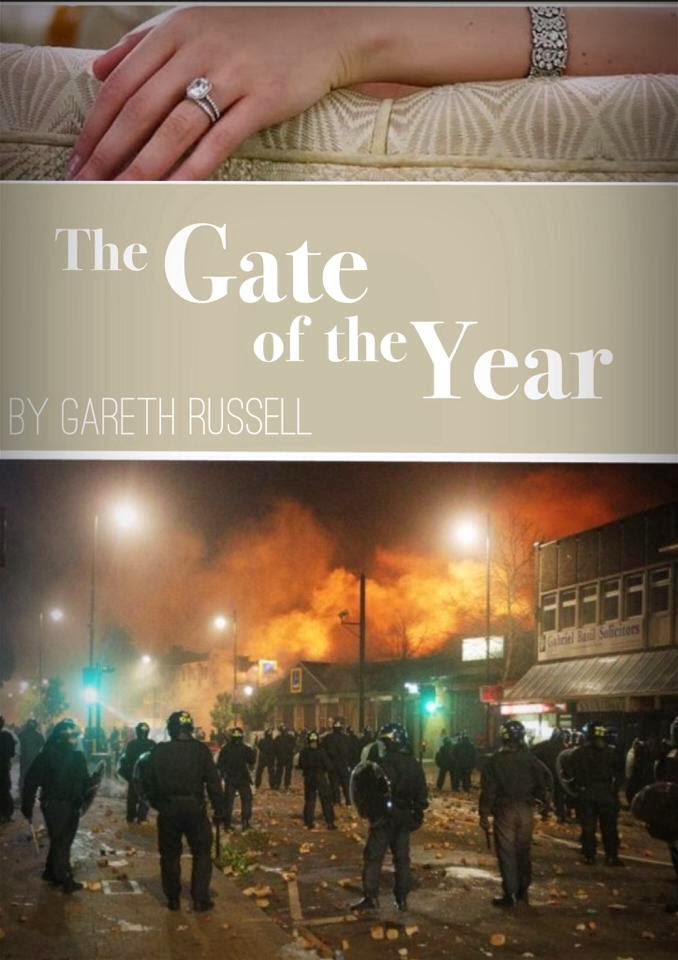
Auditions for "The Gate of the Year"


I am very excited about a performance in February of my new play, The Gate of the Year. If anyone in the Belfast or County Down area is interested in auditioning, the information is below: -

A new play by Gareth Russell, author of Popular and A History of the British Monarchy, is a re-telling of one of the most famous events in history - the French Revolution - told from the point of view of the upper classes, who stood to lose everything as their world shattered around them. 
Set in the modern day, The Gate of the Year imagines the events of the revolution as if they occurred in the twentieth century. Inspired by real events, its characters include the charming and mysterious Queen Marie-Antoinette, the fiery revolutionary Jean Marat, the quiet conservative Marc de Bombelles and the beautiful but unpopular duchess, Gabrielle de Polignac. 

The Gate of the Year will run at the Belvoir Studio in Belfast for three nights from 20th February 2014 and rehearsals will start in January, although they will be flexible due to exam commitments. Auditions will be held on 17th and 20th December, at the Rainbow Factory on College Square North (17th) and Belvoir Players Studio (20th). Audition extracts are now available by contacting popularauditions@yahoo.com. Please contact ASAP to reserve a spot!

Saturday, 16 November 2013

Resounding to the Name of Mary: British queens and the Virgin


16 November is the Feast of the Patronage of Our Lady in the Roman Catholic communion and in honour of the Virgin's feast day, I would like to briefly profile the queens of England and Scotland who shared her name.

Marie de Coucy was the second wife of King Alexander II of Scotland. The daughter of a French lord, when her husband died of a fever in the Hebrides in 1249, Marie moved swiftly to ensure the succession of their seven year-old son, Alexander III. The boy, who went on to be one of medieval Scotland's greatest kings, was crowned at Scone at the height of summer. With the kingdom properly established under her son, Marie was able to remarry to a fellow Frenchman, to undertake pilgrimages to the great shrine of Saint Thomas Becket in Kent and to split her time between France and Scotland. She died in her native country in 1285, in her late sixties. Her death spared her from enduring the death of her son, who was killed in a riding accident a year later. 

Wednesday, 6 November 2013

The mothers of the queens of England


To mark the completion of my new book on the British royal families (release date, 2014), I thought I'd post on the mothers of the English queens, from 1066 to 2013. It's technically a slightly disingenuous list, because I've also included the mothers of the male consorts, but for ease of titling, I hope no-one will mind recourse to the feminine title. I have also included those men and women who never became royal consorts, despite the fact that their spouses were, at one point, sovereigns.

Sunday, 3 November 2013

Claire Bloom discusses playing Lady Marchmain


Award-winning actress Claire Bloom has played some of history's most famous women, including Katherine of Aragon in Henry VIII, the Tsarina Alexandra in Anastasia: The Mystery of Anna and Queen Mary in The King's Speech, as well as appearing in adaptations of Richard III,  The Brothers Karamazov and acting opposite Charlie Chaplin. In 1981, she won critical acclaim for her fantastic and intelligent performance as Teresa Flyte, the Marchioness of Marchmain (above), in one of the most successful British television dramas - a twelve-part adaptation of Evelyn Waugh's novel, Brideshead Revisited.
 
Central to Brideshead's themes are its treatments of both the English aristocracy and the Catholic faith, with Bloom's Lady Marchmain operating as their greatest proponent. Trapped in a failing marriage to her estranged husband, who cavorts in Venice with his mistress while Lady Marchmain divides her time between their London townhouse and palatial seventeenth-century home at Brideshead Castle, the marchioness's devotion to her religion has led to her described as either the heroine or antagonist of the story. For some, Teresa's quiet elegance and charm masks her suffocating control over her children, that pushes at least two of them to the edge of a nervous breakdown. In the novel, she is unfailingly polite and dignified, leading her son Sebastian's unhappiness with her to baffle the novel's narrator, Charles, although he too eventually comes to regard her sumptuous charm with suspicion. In the 2008 movie version of the story, which saw Emma Thompson take up the role (left), Lady Marchmain was cast squarely as the root of all her children's problems, with Lord Marchmain actually referring to her "crucifying" their second son, Sebastian, with her controlling ways.
 
However, in her autobiography, Claire Bloom defends Lady Marchmain with, I think, a very fair personal take on the character she played.
 
"I still find it puzzling when I am told I played a manipulative and heartless woman; that is not how I saw her. Lady Marchmain is deeply religious, and her dilemma includes trying to raise a willful brood of children on her own, while instilling them with her rigid observance of the Catholic code. Sebastian is both an alcoholic and a homosexual, and from her point of view, he lives in a state of mortal sin. She has to fight for his soul by any means in her power, with the knowledge that her efforts may lead to his destruction. A born crusader, the Marchioness confronts her difficult choices head on; her rigidity of purpose, which I don't in any way share, is understandable in context. The aspect that rings most true is her sense of being an outsider, a Catholic in Protestant England. Not such a leap from being a Jew in Protestant England as one would imagine."


Wednesday, 16 October 2013

A "popular" Kindle Fire and Amazon giveaway!


My wonderful publishers and I are involved in a Halloween spectacular give-away that's aiming to promote awareness for young or first-time authors. "Popular" is involved and it's wonderful! Basically, you can win a Kindle Fire along with $200 of Amazon.com vouchers, if you enter the competition. You don't need to buy anything, but you enter by clicking on some of the pages to see which new authors are available to like, read about, tweet about, etc. It's a fantastic competition and much better than my latest Halloween idea, which was to write a scene with Imogen turning up to a party dressed as God's Gift - in an enormous bow-dress with a card attached saying, "Dear World -- you're welc, love, God." 

All the info's here. I now also kind of want a Kindle Fire, but I assume it's probably not appropriate for me to enter. -

Here is the link! Please give it a go and I hope everyone is having a good week! Work on my next book is nearly finished and it will be strange to let it go. 
Related Posts with Thumbnails