Showing posts with label Food. Show all posts

Saturday, 31 January 2015

A few days in Oxford


Good morning! This was my view as I emerged from work yesterday afternoon. I am back in Oxford, carrying out some research for my biography of Catherine Howard, Young and Damned and Fair, which will be out next year. I'm so happy to be back here, working in the Bodleian again. When I was an undergrad here, I had my own preferred place to work, and the habit has stuck. My current nook of choice is in the Bod's Upper Reading Room, down by the windows that overlook the Bridge of Sighs, behind me, and the entrance to Holywell Street and what was once the History Faculty Library. Now, all the History books for the faculty are kept in the Gladstone Link, an underground facility with a tunnel that runs beneath the cobblestones. It's a bunker of books.

I got in yesterday morning and stayed at the Randolph Hotel again. I am a sucker for a good poached egg, and along with not being able to carry any kind of musical note in song, not being able to execute the perfect one myself is a huge regret. (Resolution for 2015?) The poachies this morning were fantastic - so I have no excuse after a good breakfast not to be as productive as possible for the rest of the day. The library closes a little early at the weekends, so this evening I'm having dinner with one of my favourite people in the world, a dear friend who I first met in these cobbled streets. I'm telling myself that these evening plans are a good incentive to plough through some very questionable handwriting, even by sixteenth-century standards. I'll think of it as earning rewards, and whatnot.

I am going to keep you all posted about how the research is going over the next few months, and where I'm off to. In the meantime, I'm off to some sixteenth-century wills. Have a wonderful day. 

Thursday, 23 December 2010

Anne Boleyn's Christmas presents

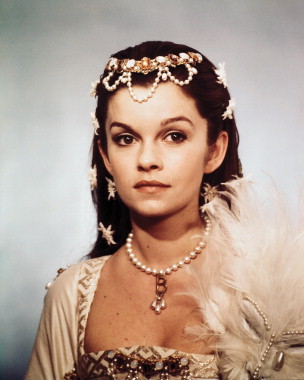
Claire Ridgway over at The Anne Boleyn Files posts a fascinating article on the presents Anne both gave to and received from King Henry VIII. Anne (above played by Quebecois actress Geneviève Bujold in the 1969 Oscar-winner Anne of the Thousand Days) was known to have a taste for the finer things in life. One of her favourite arguments in response to those who said such a love for materialism was incompatible with being a Christian was to quote a work of French theology, L'Ecclesiaste: "Should I say for all this that it is prohibited for to be merry and that Jesu Christ hath only chosen sturdy people: seeing that He Himself hath helped at feasts ... No surely!" 

As a young socialite, Anne had already acquired a reputation within the narrow world of the English upper-classes for the fine food and wines she served at her dinner parties, as well as the dances, gambling parties and hunting afternoons she organised. Dr. David Starkey writes that thanks to her childhood in France, she acquired "a gourmet's palette." She apparently did not eat very much, since she was very concerned to remain thin, but what she did eat seems to have been of an exceptionally high standard. Above all else, of course, Anne was famous for her sense of fashion - both as a debutante and in her early career as a lady-in-waiting to Katherine of Aragon, Anne was noted for being "the glass of fashion ... the most observed of all observers". When she became queen, she struck such a glamorous figure that even one of her bitterest enemies called her "the rose of state."

As Claire points out, giving presents at Christmas rather than during the Christmas festivities is a fairly recent phenomenon. England in the time of Henry VIII tended to function more like modern day Spain, in which the bulk of the presents were given in or on January 6th, the day which the Church usually celebrated as the anniversary of the visit of the Magi to the Infant Christ Child and the Holy Family in Bethlehem. When Anne became the King's wife-to-be, she suddenly found that she had a near-unlimited bank balance to finance her expensive tastes and Henry evidently took great pleasure in spoiling her. For example, when she was twenty-three, in the short period between Christmas and Saint Valentine's Day, Anne received a veritable treasure trove of jewels to mark the festive season, including: -

1. "Nineteen diamonds for her head" (Anne had a special fondness for weaving jewels through her long brown hair for balls or special occasions. As a virgin, she was still allowed to wear her hair down and uncovered in public. Only queens were allowed to do the same after they were married.)

2. Two bracelets each crafted from ten diamonds and eight pearls

3. Nineteen diamonds set in "trueloves of crown gold"

Sunday, 31 October 2010

Mr. Jefferson in Paris


"Are all men created equal, Mr Jefferson, or should this read 'all white men are created equal'?" 

So asks a French aristocrat in the 1995 movie Jefferson in Paris, gazing at the ambassador for the new United States with a slightly amused sneer.

Over at The Guardian newspaper, Alex von Tunzelmann reviews the movie, fifteen years after its release, commenting that its two leads "have the sexual chemistry of a pair of recalcitrant pandas." A phrase I found delightfully hilarious. Read the full review here. 

Over at Tea at Trianon, novelist Elena Maria Vidal comments on a recent article about how Mr. Jefferson, despite claiming to hate the decadence of pre-revolutionary French high society, was in fact secretly enthralled by it - especially its culinary delights. As always, it's the puritans you need to watch-out for... 
"Though disgusted by the excess of Parisian society, Jefferson couldn't help but be drawn to its art, architecture, music, food and wine. A man of contradictions (he was adamantly against slavery yet never freed his 200 slaves), Jefferson socialized with the bourgeoisie and aristocracy, and was known to host lavish dinner parties in his Parisian apartment on the Champs Elysees (Bordeaux was his wine of choice). He employed four French chefs and had his slave, James Hemings, learn the art of French cooking." 

Tuesday, 20 July 2010

The Finnebrogue Estates in Northern Ireland


Lord Belmont in Northern Ireland offers a fantastic account of one of the oldest and finest homes of the Protestant Ascendancy in Ulster - Finnebrogue.

The estate and the area, which lies near to my old school and was once owned by the Perceval-Maxwell family, is also famed for its production of the finest venison in the Province.

It's proved particularly interesting because I am working on a television script based on life amongst the Ascendancy in Ulster in the years surrounding the Partition of Ireland. Many of the show's characters will be real, including the designer of the Titanic, Thomas Andrews, who was himself part of the Ascendancy and various real-life politicians like Sir Edward Carson, Viscount Brookeborough, the fabulous Marchioness of Londonderry and the celebrated Jewish-Unionist, Sir Otto Jaffe, who twice served as Lord Mayor of Belfast. However, the show's main characters will be fictitious and the plan is for most of the story's fictitious families to have titles that did, in fact, once exist in the Irish aristocracy, but which had died out by the time the story commences (1911.)

In relation to Finnebrogue, one of the supporting characters - Helena FitzEustace - is the daughter of Baron Portlester (the real Portlester title died out in the reign of King Henry VII) and in the story, Helena marries Lord Wingfield Cromwell, the heir to the earldom of Ardglass. The Earls of Ardglass were Cromwells (from Thomas's side, not Oliver's) and the real family founded the area on which my school now stands. However, in reality, the Ardglass earldom died out in the reign of King James II, when the last earl, Lord Vere Essex Cromwell, died without heirs. However, in my script, the long-dead Vere did have children and so the Earls of Ardglass are still alive and flourishing in County Down into the 1900s.

The courtesy title enjoyed by the earl's heir was that of "Viscount Lecale" (Lecale was one of my school houses) and the Finnebrogue Estate actually came into existence partly through the generosity of the real Earls of Ardglass in the 17th century and their sons, the Viscounts Lecale.

As with many members of the Ascendancy class, the residents of Finnebrogue House played an important role in the life of Northern Ireland after the country was formally created in 1921, as Lord Belmont relates of the last of the Perceval-Maxwell to live on both house and estates: -

"Major John Robert Perceval-Maxwell DL, of Finnebrogue (1896-1963), was a farmer, a breeder of Shorthorns and Herefords and an active figure in the political and cultural life of Northern Ireland. He was a member of both the House of Commons and the Senate, and from 1945 to 1949 was Parliamentary Secretary in the Ministry of Commerce. He was also a founder member of the Northern Ireland Regional Committee of the National Trust (NT) in 1936 and for a time the Government of Northern Ireland's nominee on the Council of the NT in London. He was appointed a Deputy Lieutenant of County Down in 1935, and was High Sheriff in 1937."
Related Posts with Thumbnails